If you only have one morning in Prague but still want to experience one of the city’s most meaningful and historic neighborhoods, you’re in luck. Prague’s Jewish Quarter (Josefov) is compact, walkable, and easy to explore in just a few hours — without rushing and without blowing your budget.
This guide gives you a simple, efficient route through the Quarter, covering the most important synagogues, the Old Jewish Cemetery, and the stories that make Josefov one of Prague’s most unforgettable areas.
This post may contain affiliate links. If you make a purchase, we may earn a small commission at no extra cost to you. Our goal is to provide valuable and helpful content, and any commissions help us to mantain this site.
Contents
ToggleGet your Prague Essentials!
- Find cheap flights to Prague
- Find hotels or hostels in Prague
- Find activites and tours for Prague
- Compare hire car prices and train tickets
- Get an eSIM for Prague. Use our code ‘TBTravellers to receive 5% OFF any eSIM!
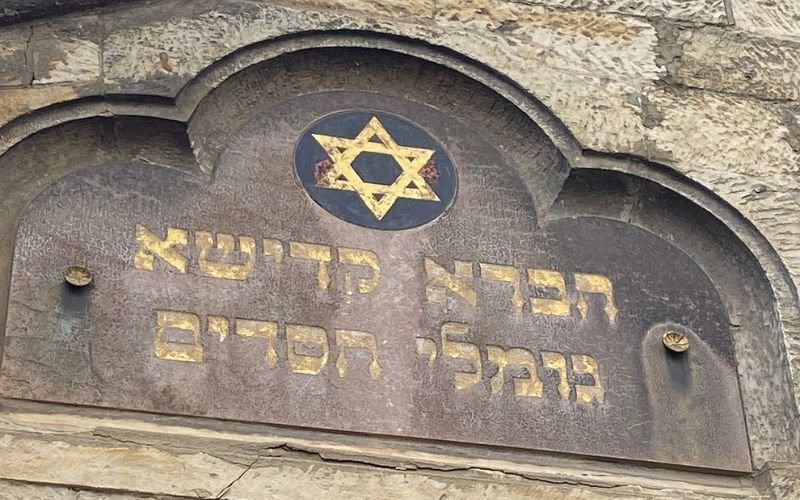
Why the Jewish Quarter Is Perfect for a Morning Visit
Josefov (Prague’s Jewish Quarter) sits right next to Old Town Square, making it incredibly accessible. Most major sites are within a few minutes’ walk of each other, and the Jewish Museum’s combined ticket lets you see multiple landmarks in one go.
A combined ticket for the Prague Jewish Museum (Jewish Town Ticket) costs approximately 600 CZK for adults, covering the Old Jewish Cemetery, main synagogues (Spanish, Pinkas, Maisel, Klausen), and the Ceremonial Hall.
How Much Time You’ll Need
A well‑paced morning visit takes 2.5 to 3 hours, depending on how long you spend in the cemetery and synagogues.
Suggested timing:
Start around 9:00 AM
Finish by 11:30 AM
Continue to Old Town Square or the riverfront afterward
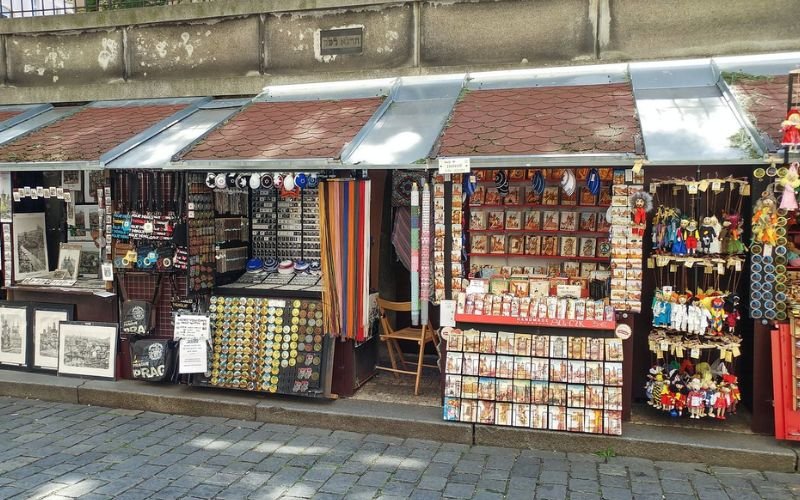
Your One-Morning Route Through Josefov
Stop 1: Pinkas Synagogue
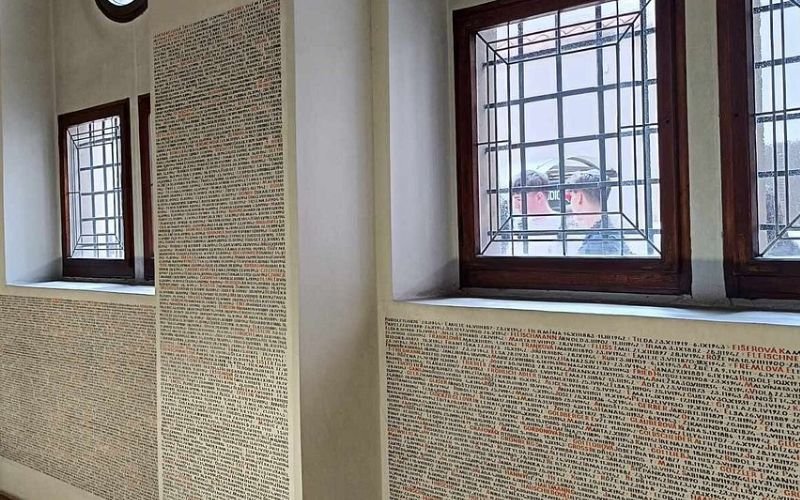
Begin your morning at the Pinkas Synagogue, one of the most moving places in all of Prague. Built in the 16th century, it now serves as a memorial to nearly 80,000 Czech Jews who were murdered during the Holocaust.
Every inch of the interior is covered with handwritten names: families, children, grandparents, entire communities that vanished. Seeing them in the quiet of the morning, before the crowds arrive, makes the experience even more powerful.
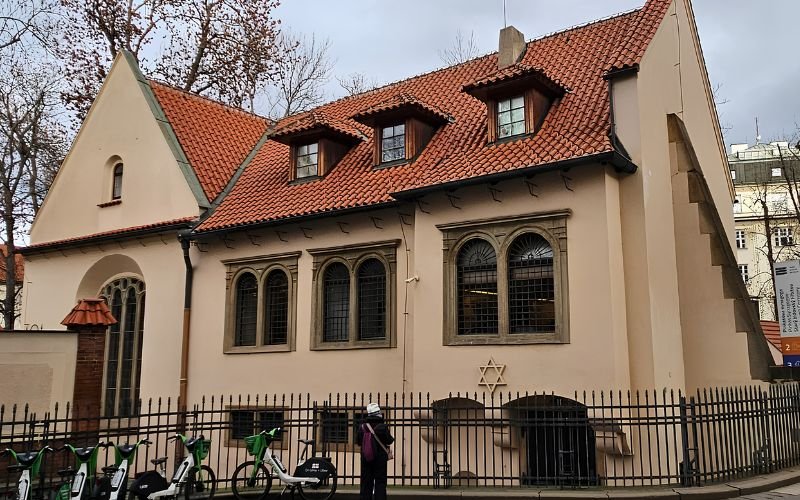
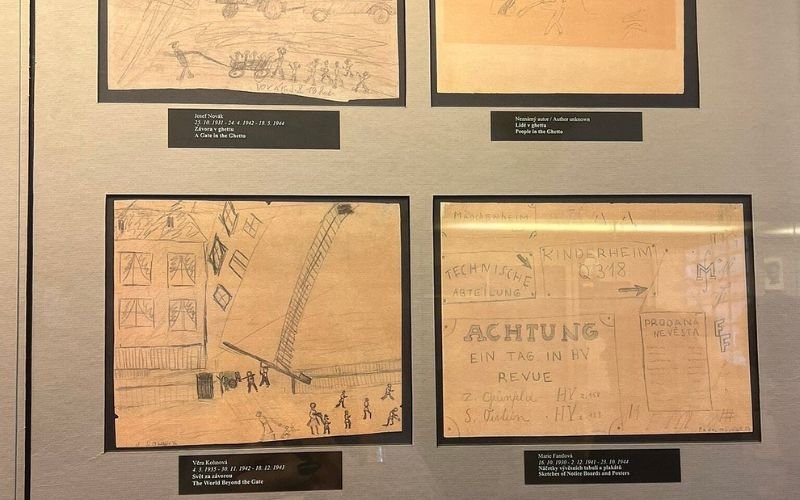
The synagogue also houses drawings created by Jewish children imprisoned in the Terezín ghetto. These sketches — some hopeful, some heartbreaking — offer a deeply personal glimpse into lives interrupted. They’re displayed with care, and they add a human voice to the names on the walls.
Stop 2: The Old Jewish Cemetery
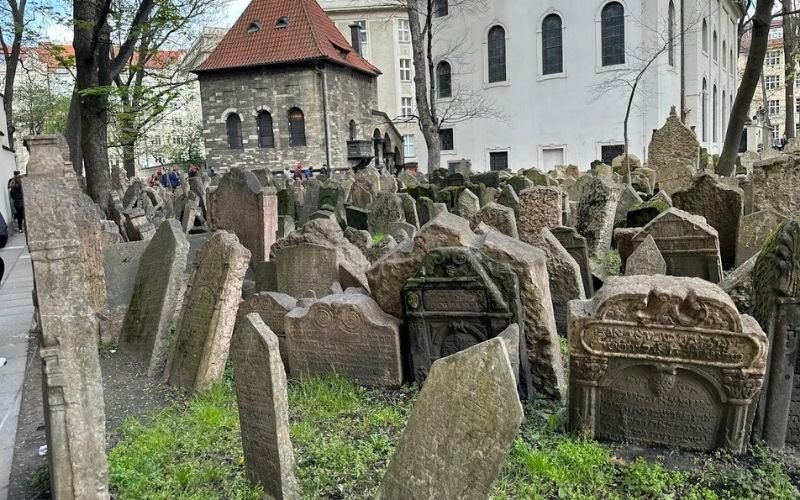
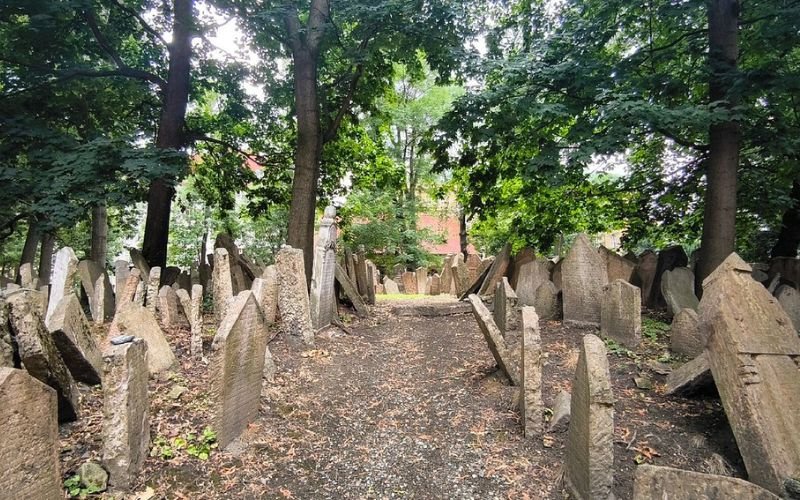
From the Pinkas Synagogue, you’ll step directly into the Old Jewish Cemetery, one of the most iconic and visually striking places in Prague. It’s impossible not to pause for a moment when you first enter — the sight of thousands of crooked, timeworn tombstones rising at odd angles feels like stepping into another world entirely.
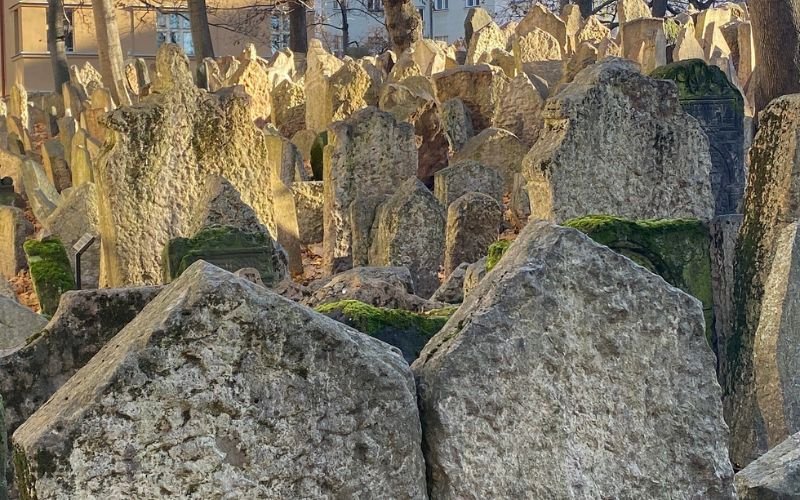
Because the Jewish community was restricted to this small plot of land for centuries, graves were layered one on top of another, sometimes up to 12 deep. The result is a dense, almost surreal landscape of stone markers, each one representing a life, a family, a story. Moss clings to the edges, Hebrew inscriptions fade into soft curves, and the trees overhead cast shifting shadows that make the whole place feel alive with memory.
Time needed: 20–30 minutes Budget tip: Entry is included in the Jewish Museum ticket.
Stop 3: Klausen Synagogue
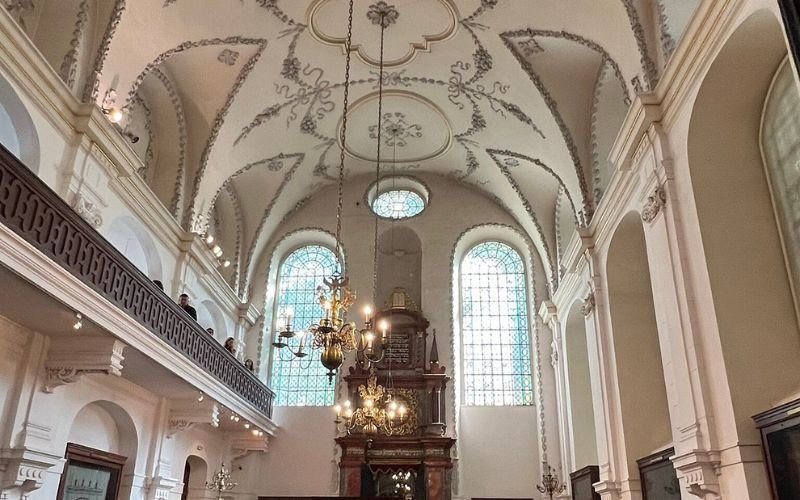
Right next to the cemetery sits the Klausen Synagogue, a place that adds essential context to everything you’ve just seen. While the Pinkas Synagogue and the Old Jewish Cemetery are deeply emotional stops, the Klausen Synagogue shifts the focus toward understanding — helping you connect the history of Prague’s Jewish community with its everyday traditions, rituals, and beliefs.
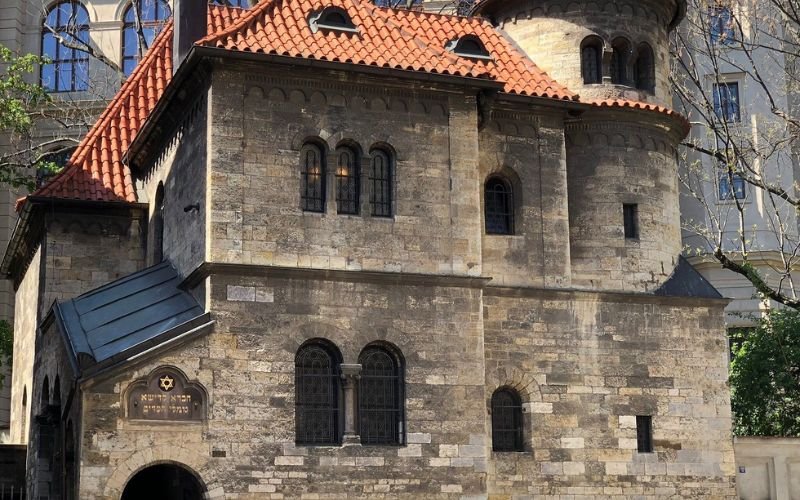
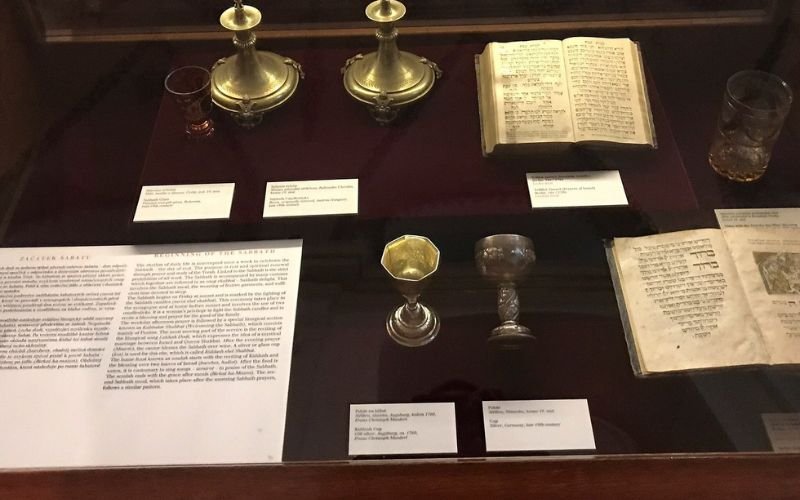
Inside, you’ll find one of the most comprehensive exhibitions on Jewish life in Central Europe. The displays walk you through the rhythm of Jewish daily life: how families celebrated holidays, how children learned, how communities gathered, and how traditions were passed down through generations. There are beautifully preserved ceremonial objects, Torah ornaments, prayer books, and household items that make the past feel tangible rather than distant.
You’ll learn about everything from the significance of the Sabbath to the meaning behind various symbols you may have noticed in the cemetery.
Why it’s worth a quick stop: The displays are clear, visual, and easy to absorb even if you’re short on time.
Stop 4: Spanish Synagogue
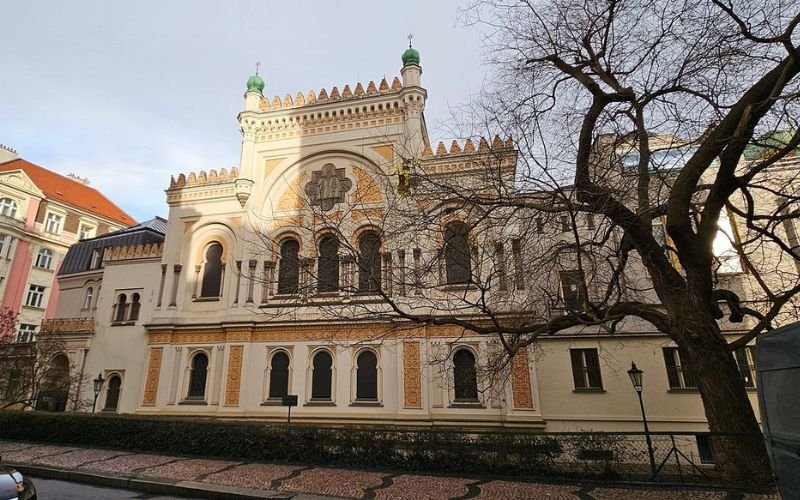
A short 5‑minute walk through Josefov’s streets brings you to the Spanish Synagogue, a building so stunning that many travellers call it the most beautiful synagogue in Europe — and it’s easy to see why the moment you step inside.
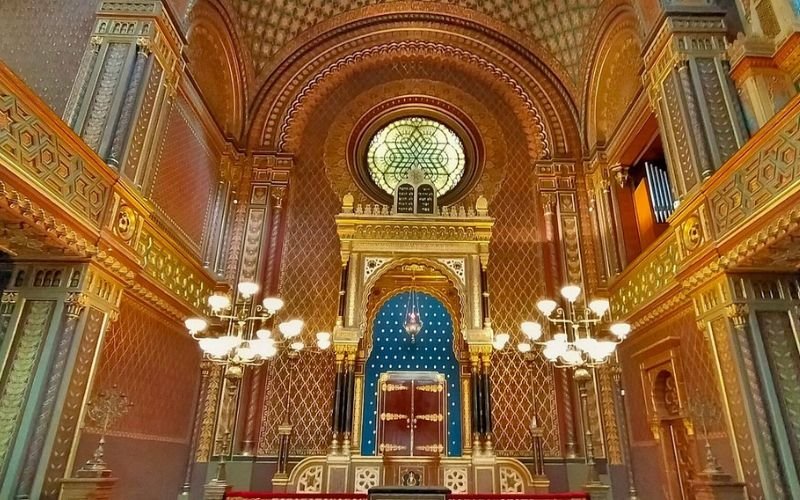
From the outside, the synagogue looks elegant but understated. But once you cross the threshold, the interior opens up like a jewel box. The space glows with warm gold tones, intricate Moorish‑style patterns, and richly detailed geometric designs that cover nearly every surface. The walls, the arches, the ceiling — everything is layered with artistry.
The synagogue also houses exhibits on Jewish history in the Czech lands from the 18th century onward, including stories of prominent Jewish figures, musicians, writers, and community leaders.
Morning advantage: The light streaming through the windows makes the interior glow.
Old‑New Synagogue
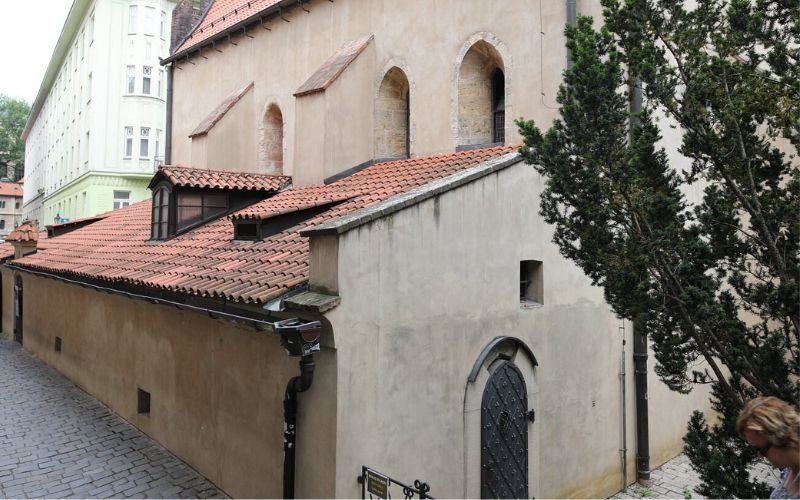
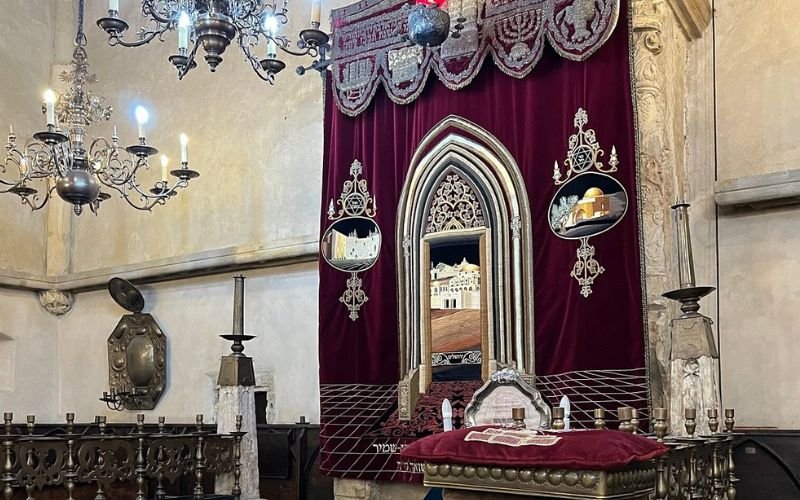
If you have extra time, make your way to the Old‑New Synagogue, a building that feels like it has one foot in the present and one firmly planted in the 13th century. This is one of the oldest active synagogues in Europe.
It’s not ornate like the Spanish Synagogue, nor as visually dramatic as the cemetery, but its power lies in its endurance. This synagogue has survived fires, wars, political upheavals, and the shifting fortunes of the Jewish community, yet it remains a living place of worship.
Because the Old‑New Synagogue requires a separate ticket, many budget travellers choose to admire it from the outside. And honestly, even a few minutes spent walking around its perimeter is worthwhile. You’ll get a feel for its age, its architectural character, and its place within the neighborhood.
Free Things to Add If You Have Time
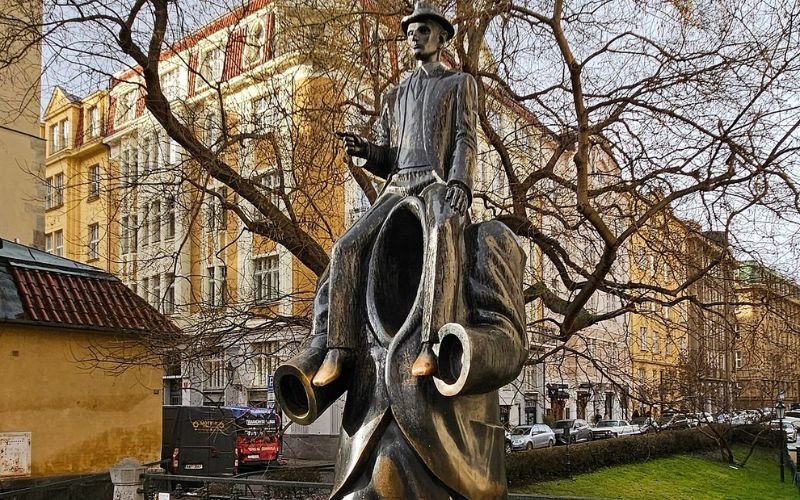
Franz Kafka Statue
Just a few minutes from the Spanish Synagogue, you’ll find the Franz Kafka Statue, a quirky and unforgettable tribute to one of Prague’s most influential writers. The sculpture, inspired by Kafka’s short story Description of a Struggle, shows a small figure riding on the shoulders of a headless, oversized suit — surreal, strange, and unmistakably Kafkaesque.
Stolpersteine (Stumbling Stones)
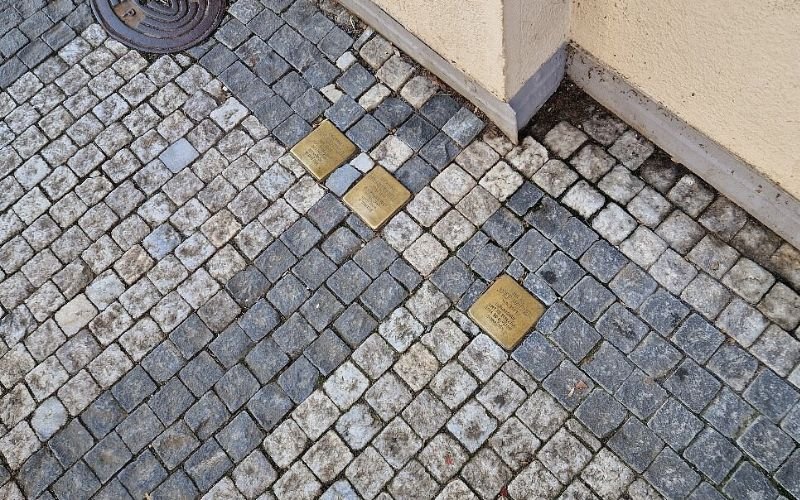
As you continue walking through Josefov, keep an eye on the pavement beneath your feet. Scattered throughout the neighborhood — and across Europe — are Stolpersteine, or “stumbling stones.” These small brass plaques are embedded in the sidewalk outside former homes of Jewish residents who were deported and murdered during the Holocaust.
Each plaque bears a name, a birth year, and a fate. They’re easy to miss if you’re not looking for them, but once you spot one, you’ll start noticing more.
Pařížská Street
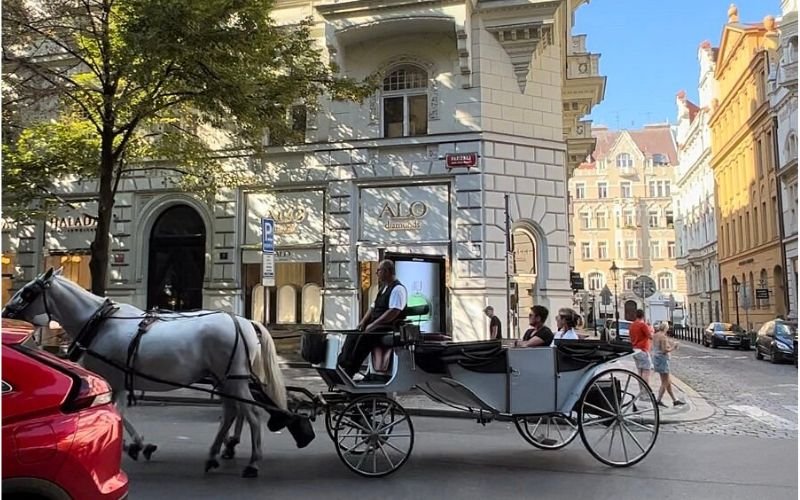
Before you wrap up your morning, take a slow stroll down Pařížská Street, one of Prague’s most elegant boulevards. Lined with grand Art Nouveau buildings, leafy trees, and high‑end boutiques, it’s a striking contrast to the centuries‑old synagogues and narrow lanes you’ve just explored.
Even if you’re not shopping — the street is worth walking for its architecture alone.
Budget Tips for a Morning Visit
Buy the Jewish Museum combined ticket — best value for multiple sites
Arrive early to avoid crowds
Bring water and snacks to avoid tourist‑area prices
Wear comfortable shoes — the cobblestones are no joke
Exploring Prague’s Jewish Quarter gave us a clearer sense of the city’s past and how much of it still shapes the present. It’s a part of Prague that adds depth to any visit and is well worth taking the time to understand. If you’re planning your trip, it pairs well with our earlier post on free things to do in Prague for a broader look at the city.