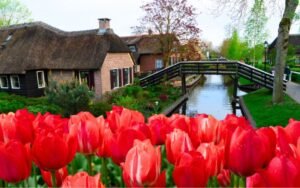
Zaanse Schans was on the top of our ‘must visit’ list — it really does feel like stepping straight into a Dutch postcard. With its historic windmills, wooden houses, cheese farms, and clog workshops, it’s a beautifully preserved slice of 18th‑ and 19th‑century Netherlands — and it’s only minutes from Amsterdam. Whether you’re into photography, history, food, or just a peaceful day trip, this village delivers.
If you’re planning your itinerary, you might also like our post on free things to do in Amsterdam, which is a great way to balance out your trip with some budget‑friendly exploring back in the city.
Below is a comprehensive guide covering how to get there, what to do and how long to stay, helping to make your visit smooth and memorable.
This post may contain affiliate links. If you make a purchase, we may earn a small commission at no extra cost to you. Our goal is to provide valuable and helpful content, and any commissions help us to mantain this site.
Contents
ToggleGet your Amsterdam Essentials!
- Find cheap flights to Amsterdam
- Find hotels or hostels in Amsterdam
- Find activites and tours for Amsterdam
- Compare hire car prices
- Get an eSIM for Amsterdam. Use our code ‘TBTravellers to receive 5% OFF any eSIM!
What Exactly is Zaanse Schans
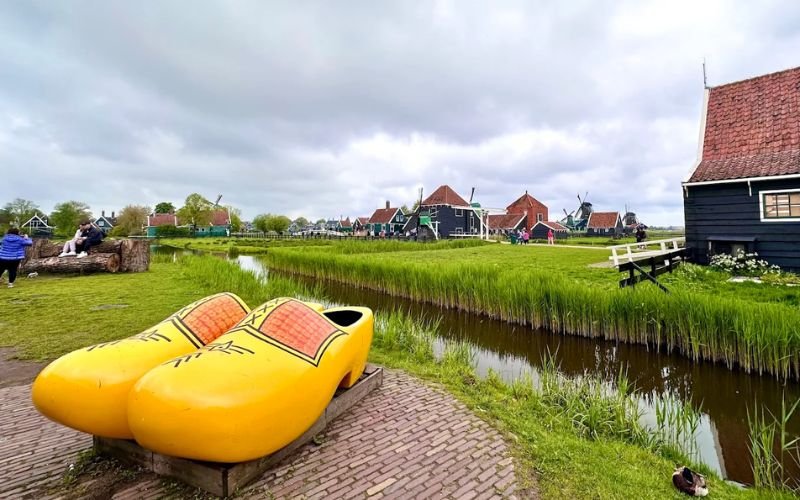
Zaanse Schans is an open‑air museum and historic village in the Dutch countryside, famous for its beautifully preserved windmills, traditional wooden houses, and centuries‑old crafts. Located just north of Amsterdam, it offers a glimpse into life in the Netherlands during the 18th and 19th centuries, when the Zaan region was one of Europe’s earliest industrial hubs.
Rather than being a recreated theme village, Zaanse Schans is a living, breathing community. Many of the buildings you see — from the green‑painted houses to the working windmills — were relocated here from across the region to protect them from demolition. Today, the area showcases the craftsmanship that shaped Dutch culture: cheese making, wooden‑shoe carving, spice grinding, and more.
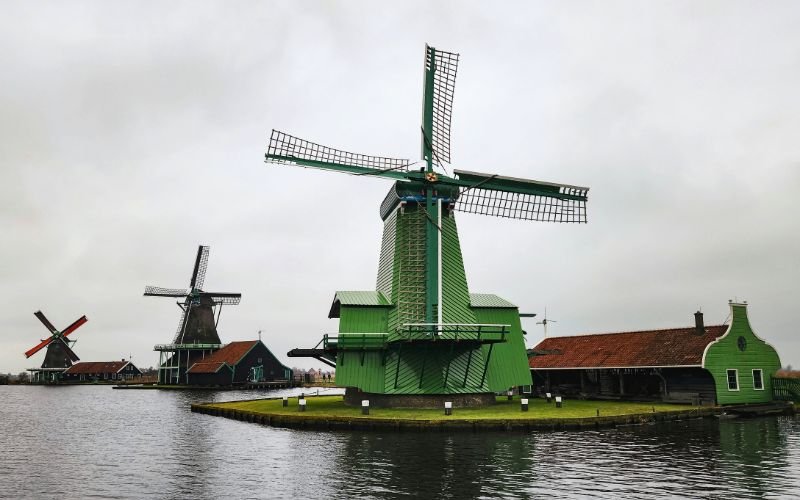
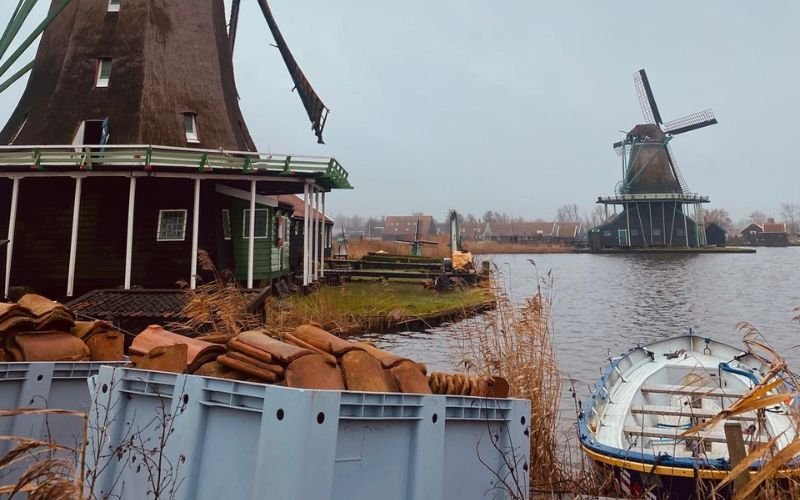
The star attractions are the historic windmills. Some still grind pigments for paint, others crush spices, saw timber, or produce oil.
Getting to Zaanse Schans from Amsterdam
By Train
The quickest way to reach Zaanse Schans is by train from Amsterdam Centraal to Zaandijk–Zaanse Schans station. Trains run frequently throughout the day, and the journey takes 17–20 minutes. Once you arrive, follow the clearly marked signs — it’s an easy 15‑minute walk across a scenic bridge straight into the village.
By Bus
If you prefer a direct drop‑off, take Bus 391 from Amsterdam Central Station. It travels straight to the entrance of Zaanse Schans, making it ideal if you who want to avoid walking from the train station. The ride takes about 40 minutes, and you’ll step off just a few meters from the windmills.
By Car
Driving from central Amsterdam takes around 20–25 minutes, depending on traffic. It’s a straightforward route, and once you arrive, you’ll find paid parking available right next to the village. This is a convenient option for families or anyone traveling with luggage. The main Zaanse Schans parking lot charges a flat rate of €15 per car per day.
By Bike
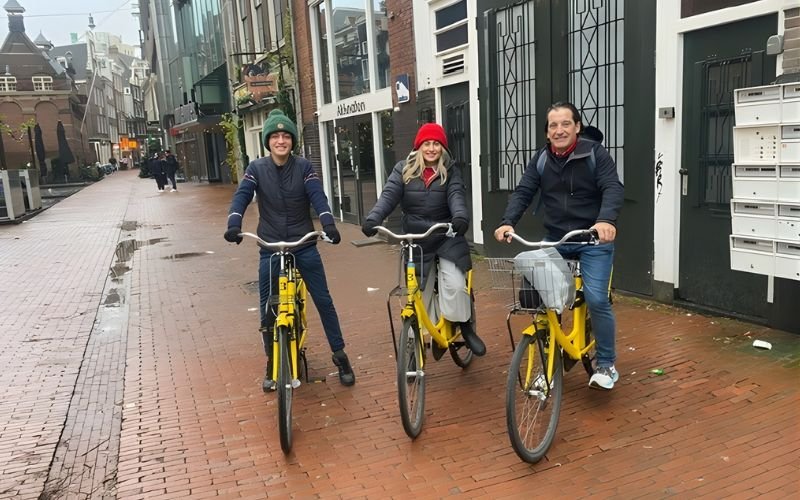
For a more local experience, cycling to Zaanse Schans is a fantastic option — and it’s the route we chose. The ride is mostly flat, well‑marked, and follows scenic paths along canals, meadows, and quiet residential areas. It took us about 60–75 minutes from Amsterdam and we did stop here and there to take some photos.
Once we crossed the IJ River and followed the bike paths north, the trams and traffic were replaced by open fields, small farmhouses, and stretches of calm water. It was amazing to see how fast the city gives way to countryside.
We simply followed the signs toward Zaandam, then continued along bike paths that wound past reed‑lined canals and quiet neighborhoods.
If you get a I Amsterdan City Card, you can hire a bike for 24 hours free of charge. We got ours from Discount Bike Rental.
What to do at Zaanse Schans
1. Explore the Historic Windmills
The twelve restored windmills are the heart of Zaanse Schans —these aren’t just decorative structures, many still operate as they did centuries ago grinding spices, sawing wood or producing oil.
Popular Windmills to Visit
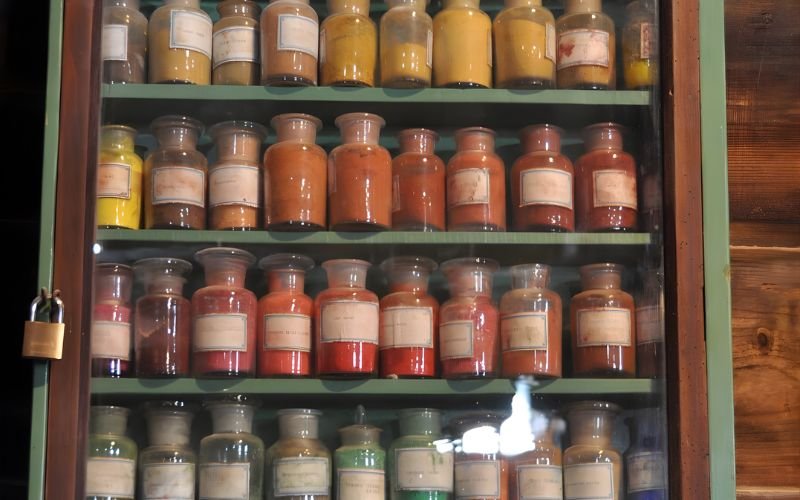
De Kat — a paint mill where pigments are still ground using traditional methods
Het Jonge Schaap — a fully functioning sawmill rebuilt using original 17th‑century blueprints
De Zoeker — one of the oldest oil mills in the Netherlands
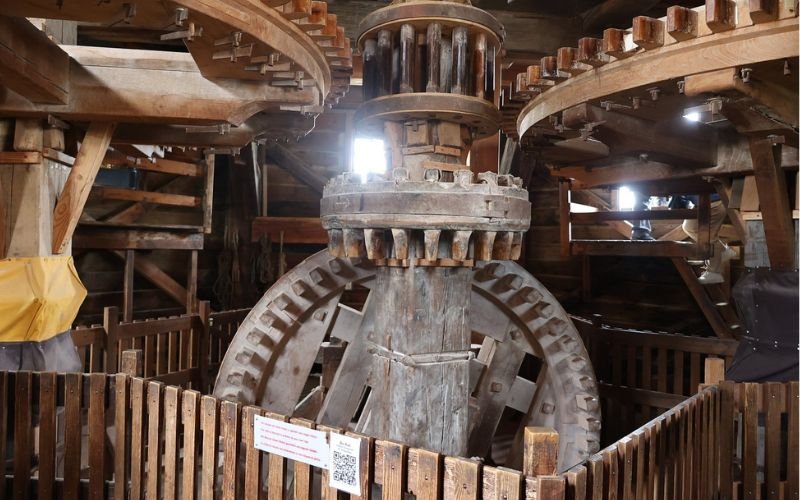
We visited De Kat, the paint mill. We climbed the narrow wooden stairs (hold the railing; they’re no joke) and stepped out onto the balcony, where the landscape opened up in every direction: green fields, grazing sheep, and the river.
From the exterior platform you can walk right around the windmill, close enough to feel the sweep of the sails as they turn. Inside, there’s even more to explore, including a steep ladder leading up to the machinery that powers the grinding stones below.
There is also a gift shop with everything from local goods to paint pigments made right at the mill. If you’re looking for the ones produced on-site, go for the pigments in paper bags — not the ones in glass bottles.
Seeing a windmill from the outside is one thing. Standing inside while it’s working is something else entirely.
Cost of Climbing the Windmills
We had the I Amsterdam City Card which allowed us access for free but normally they range from €7.50 for adults and €3.75 for children per windmill.
2. Visit the Clog Workshop
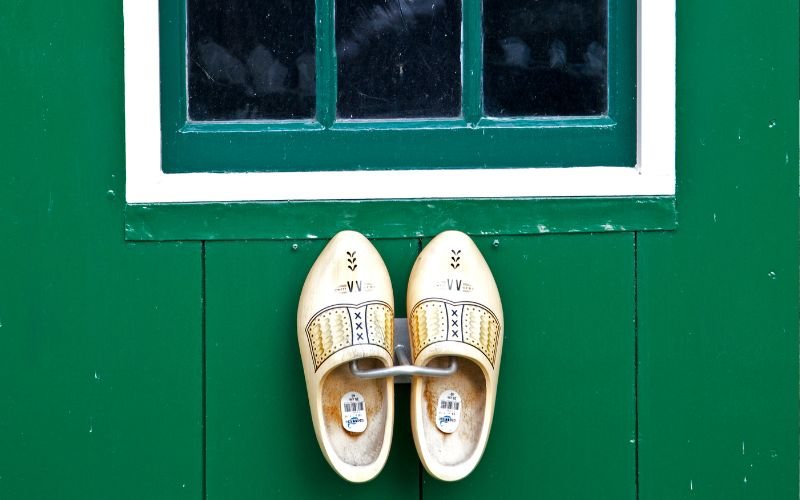
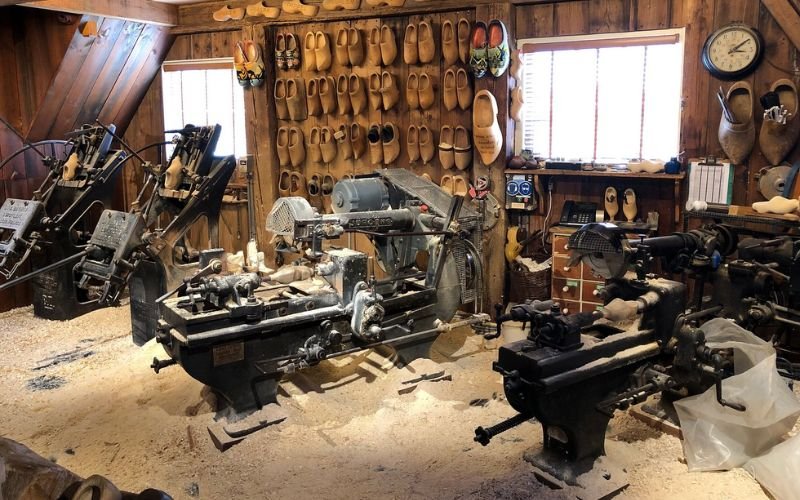
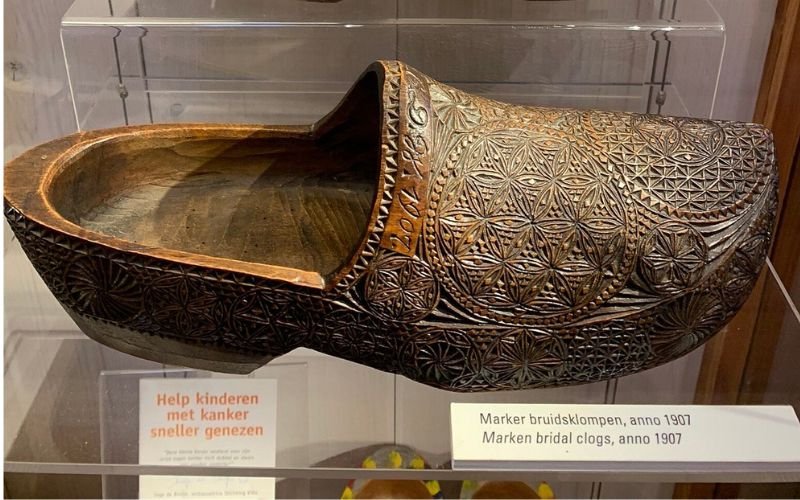
This is where Dutch tradition comes to life! The Clog Museum houses one of the Netherlands’ most impressive collections of historic wooden footwear. Its displays feature rare and remarkable pieces, from ornate bridal clogs and sturdy work clogs to the renowned Hindeloopen church clogs, some dating back as far as 1675.
They also have some quirky creations such as roller‑skating clogs, clog skates and ice clogs once worn for winter travel. The standout of the entire collection, however, is the dazzling “diamond clog,” adorned with thousands of sparkling Swarovski crystals.
Throughout the day they have live demonstrations of clog-making, artisans painting and finshing clogs by hand and machines carving wooden shoes in minutes.
Try Them On!
You can slip your feet into clogs of every size — from tiny toddler shoes to giant novelty pairs perfect for photos. We tried on a few pairs — some traditional, some painted with flowers, some hilariously oversized. Even if you don’t buy anything, it’s worth going just for the experience.
Cost of the Clog Workshop
Free including the demonstrations run throughout the day

3. Taste Dutch Cheese at the Cheese Farm
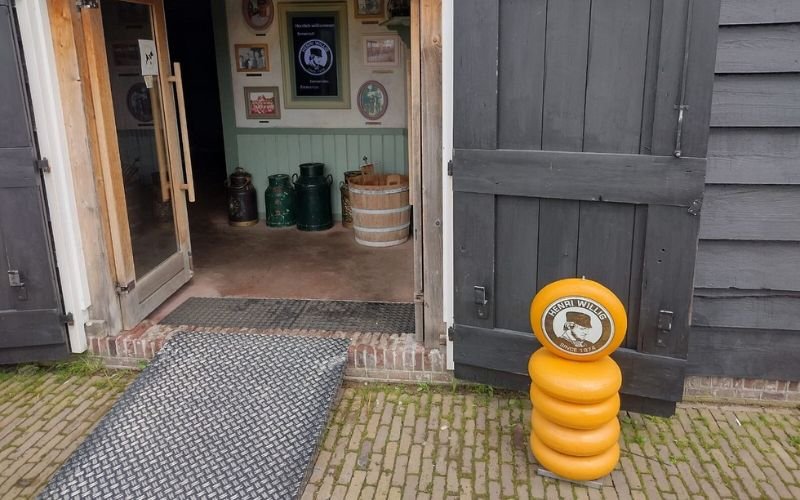
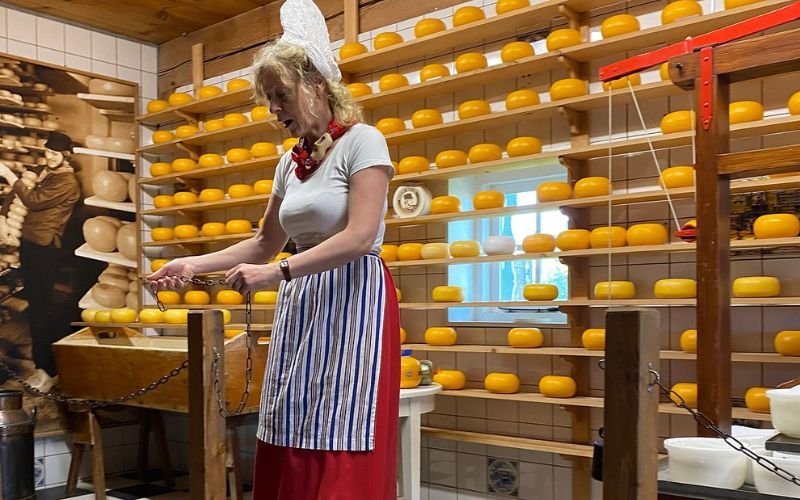
The Catharina Hoeve Cheese Farm is a paradise for cheese lovers. We enjoyed free tastings of Gouda, Edam, herb cheeses, and smoked cheeses. Make sure you try the truffle Gouda and pesto cheese, they are highly addictive! We may or may not have gone back for seconds. And thirds.
We also watched a live demonstration of the cheesemaking process, and it was great to see the staff dressed in traditional Dutch attire. There’s also an area that shares the full history of the farm, which we highly recommend taking the time to read. You can also see a few pieces of old machinery equipment on display and a short film.
It can get very busy as the farm tasting area isnt huge, so just be prepared to be patient and wait your turn.
Cost to enter the Cheese Farm
Free including all the cheese tastings.
4. Wander the Wooden Houses & Bridges
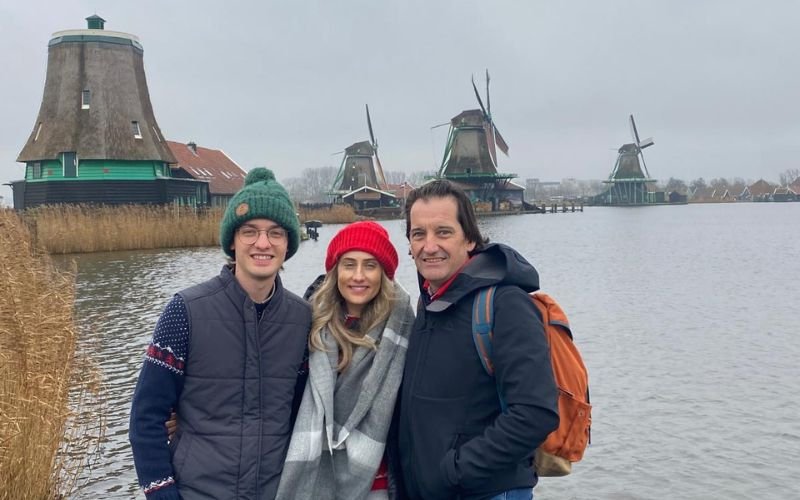
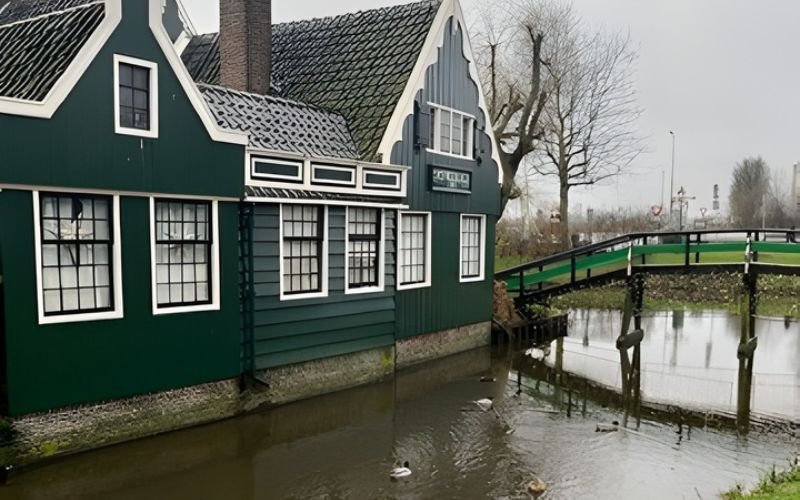
One of the best parts of Zaanse Schans is simply wandering. We strolled past green wooden houses trimmed in white, narrow bridges arching over quiet canals, ducks and swans drifting along the water, and sheep and goats grazing in the nearby fields. Flower boxes, old lanterns, and cobblestone paths added to the charm. We would have happily explored even longer, but it was an absolutely freezing December morning!
5. Visit the Zaans Museum
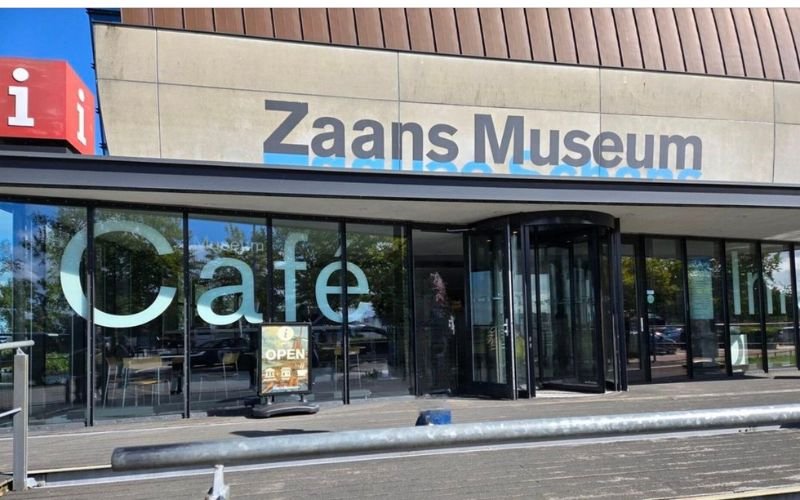
If you want to understand the region beyond its postcard-perfect scenery, the museum is essential.
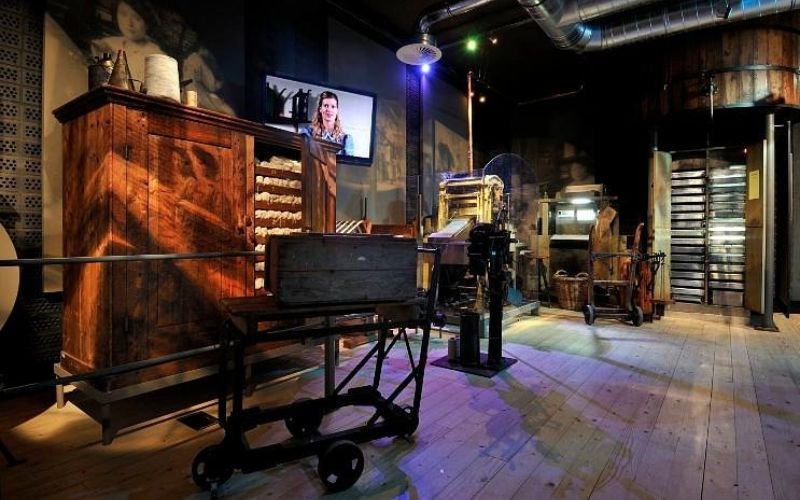
Inside, you’ll uncover the industrial history of the Zaan region, the rise of Dutch manufacturing, local art, historical artifacts, and the stories of the families who lived and worked here. The museum is much larger than it appears from the outside and is packed with fascinating insights into the area’s industrial past — from chocolate and biscuits to oil, wood, and more.
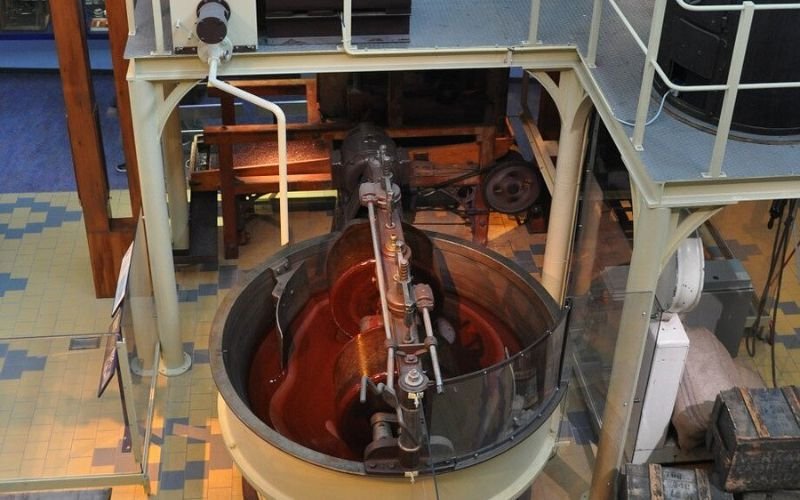
The Verkade Experience was a highlight for us probably because of the historic chocolate machines filled the space with the smell of cocoa. This section dives into the region’s food industry, with interactive exhibits about local producers, especially those behind beloved cookies and sweets. Verkade chocolate is still made nearby, and the museum offers a great look at early 20th‑century chocolate production.
The exhibition really opened our eyes to how important this region was to the Netherlands’ economic development. Once the largest industrial and trade center in Europe during the Middle Ages, the Zaan area played a major role in the growth of industries such as wood, cocoa, rice, spices, textiles, and household goods.
Cost to enter the Zaans Museum
Free with the I Amsterdam City Card or Adults: €17
Children aged 4 to 17 years: €9
Children aged 0 to 3 years: free
65+ | Students: €14
8. Shop for Local Crafts
Zaanse Schans is full of small workshops and artisan stores with many shops offering live demonstrations, giving you a glimpse into traditional craftsmanship.
What You’ll Find
Jagershuis – The Jagershuis antique shop sits in the oldest house in Zaanse Schans, built in 1623. It’s packed with quirky treasures, making it a fun place to browse for a unique souvenir. The building itself has a rich history, named after Claes de Jager, a wealthy sawmill owner. Look out for the Gothic-style king post on the roof, stained‑glass windows from a Westzaan church, and the original IJssel‑brick well in the garden.
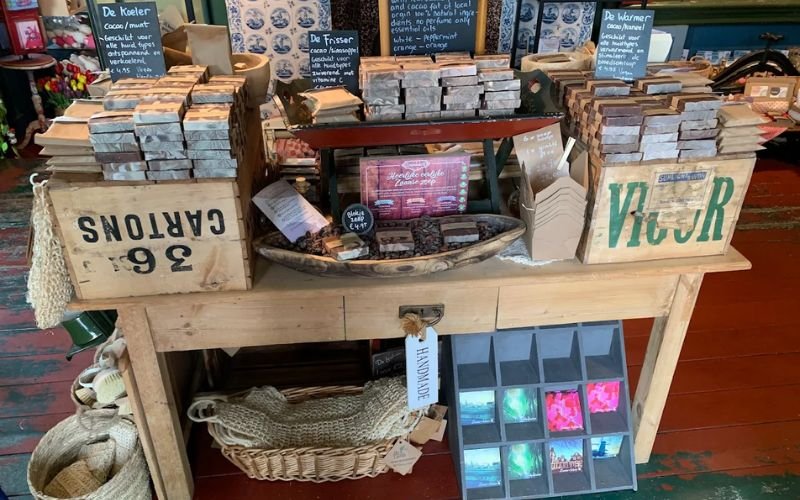
Zeepziederij – You can learn about the history of hygiene and cleaning. The workshop produces soap, perfumes, cosmetics and other cleaning products using age‑old techniques, and the adjoining shop displays some impressive historic pieces.
The Windmill Shop – It’s a unique little place, set inside part of the old De Bezem windmill storehouse. The building originally stood at the De Bezem Oil Mill, built in 1682 on Noorddijk in Wormerveer, before being moved to Zaanse Schans in 1976. The mill itself was taken down in 1896. You can find a heap of souvenirs here and some are at quite reasonable prices so a win-win!
Orse ket aan ‘t Glop – Showcases distinctive Dutch brands and is filled with stylish, typically Dutch gifts. You can also join creative walk‑in workshops held every Wednesday, Saturday and Sunday from 10:30 to 16:00. The building itself is a mix of eras: the shop section dates to the 19th century, while the rest was built in 1630. It once stood on Rozengracht in Zaandam, where it served as a bookshop with a small library. Its age is clear from the façade on Kalverringdijk, with stained‑glass windows, elegant timber detailing, and a roof still supported by old, twisted oak beams.

How Long to Spend at Zaanse Schans
From our own visit, we’d say Zaanse Schans easily deserves at least a few hours. We ended up spending around 4–4.5 hours, which gave us time to wander through the village, pop into a couple of windmills, browse the little shops, and watch a few demonstrations without rushing.
If you want to explore the museums properly, join workshops, or take your time photographing the houses, canals and fields, you’ll want half a day. And if you’re someone who loves history, it’s very easy to turn it into a full‑day outing — especially if you visit the Zaans Museum.
Even in the cold December weather, we found ourselves wishing we had just a bit more time to soak it all in however our feet were almost numb from the cold and wind!
Our day trip to Zaanse Schans was incredible — we loved diving into the history and seeing how much of the old Dutch craftsmanship is still alive today. Sure, it’s a bit touristy, but there’s genuinely so much to see and do that it never felt overwhelming. We’re already hoping to return in the summer so we can take a boat ride along the river and experience it in warmer weather.
If you’re planning your own trip, We’ve also put together a guide on free things to do in Amsterdam, which is perfect to pair with a visit to Zaanse Schans — especially if you’re trying to keep costs down while still seeing the best of the city.
Hopefully this post helps you plan your own visit and enjoy it as much as we did.