Berlin surprised us with how many great museums you can visit without paying a thing. We checked out plenty during our stay, and these were the standouts. Here’s our guide to the best free museums in Berlin.
This post may contain affiliate links. If you make a purchase, we may earn a small commission at no extra cost to you. Our goal is to provide valuable and helpful content, and any commissions help us to mantain this site.
Contents
ToggleGet your Berlin Essentials!
- Find cheap flights to Berlin
- Find hotels or hostels in Berlin
- Find activites and tours for Berlin
- Compare hire car prices
- Get an eSIM for Berlin. Use our code ‘TBTravellers to receive 5% OFF any eSIM!
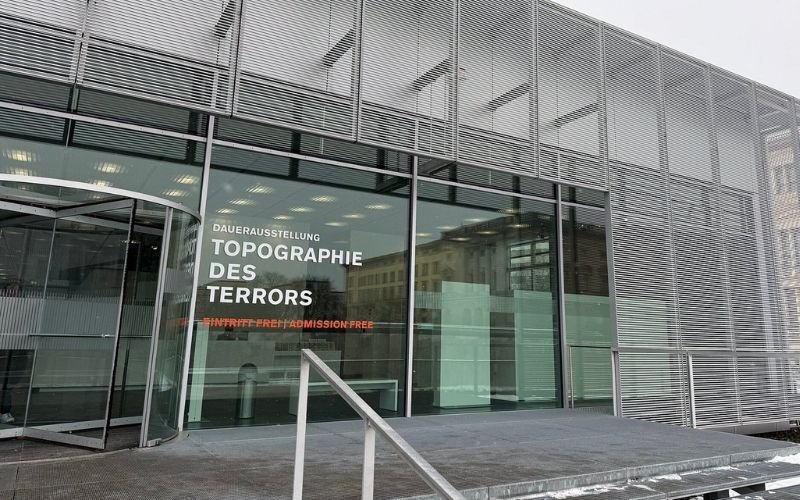
Topography of Terror
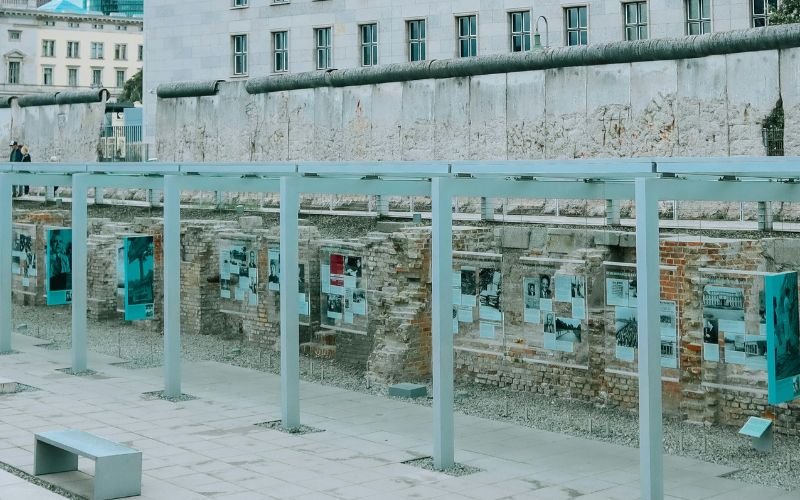
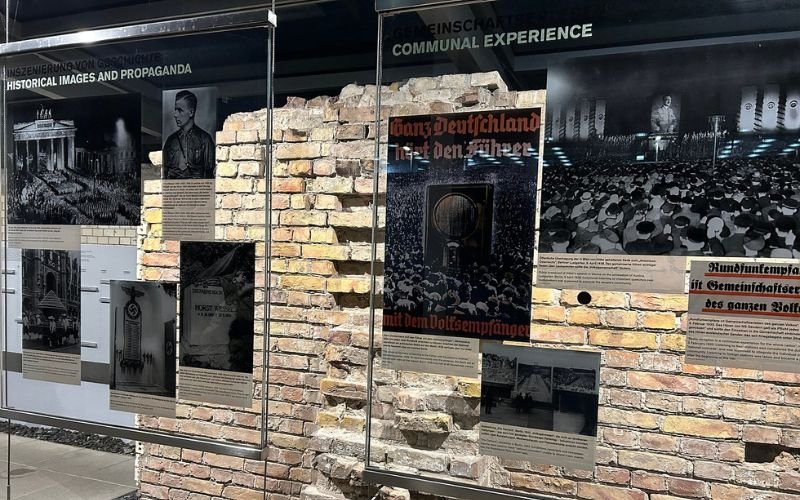
Located on the former site of the Gestapo and SS headquarters, the Topography of Terror is one of Berlin’s most visited memorial museums — and it’s always free. Inside, you’ll find powerful exhibitions documenting the rise of the Nazi regime, the machinery of terror, and the impact on millions of lives. Outside, the preserved Berlin Wall segment adds even more context, essential for understanding Berlin’s 20th‑century history.
Topography of Terror also has bathrooms inside the main documentation building, a small ground‑floor café offering drinks, snacks, and light meals, and free storage lockers near the entrance that require a €1 coin as a refundable deposit.
Location
Niederkirchnerstraße 8, right next to the Gropius Bau and just a short walk from Potsdamer Platz. The nearest public transport is
U‑Bahn: Potsdamer Platz or Kochstraße
S‑Bahn: Anhalter Bahnhof or Potsdamer Platz
Palace of Tears (Tranenpalast)
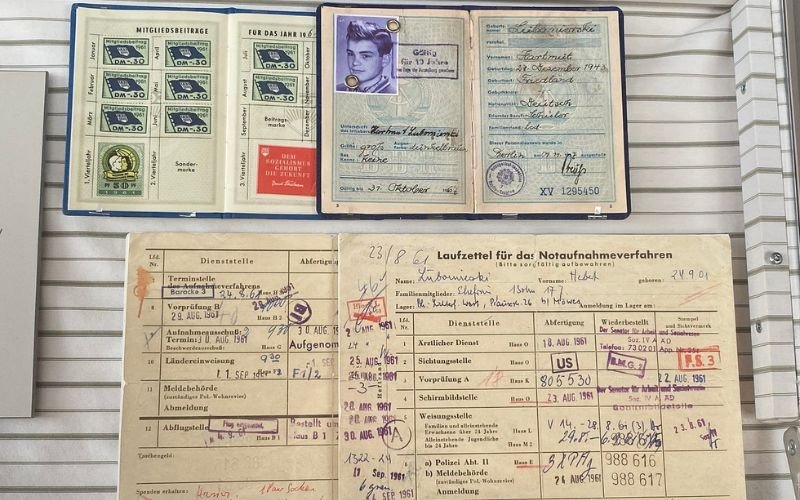
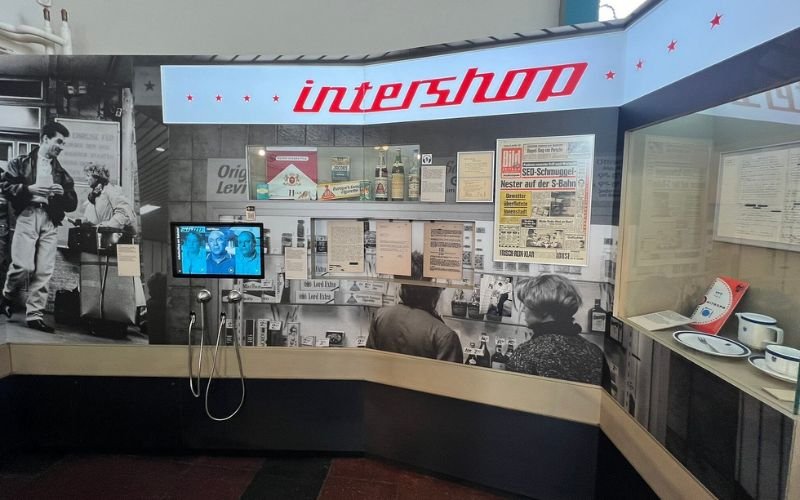
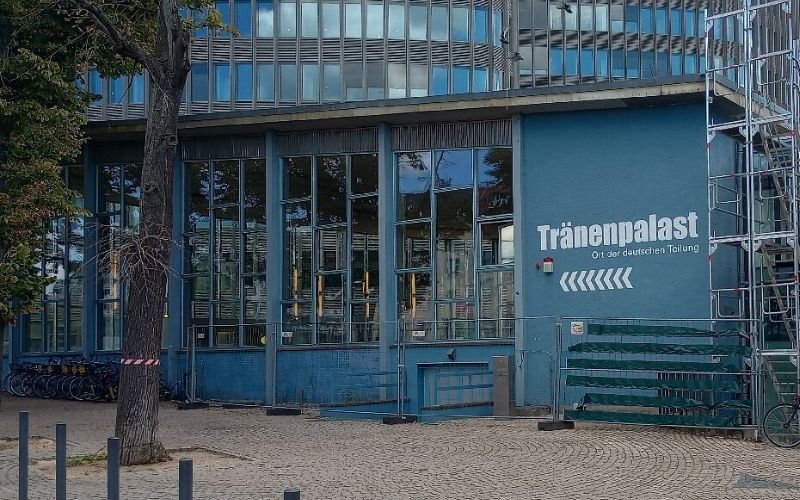
The Palace of Tears at Friedrichstraße station captures the human cost of Berlin’s division. The exhibits are small but deeply personal, making the history of the Wall feel immediate and real. The preserved immigration desks and original layout give the space an eerie authenticity, as if the moment of separation still lingers in the air.
Although the museum is compact, it leaves a strong impression. A few more information panels would help, but the QR‑code audio guide fills in the gaps. Built as a border‑control extension for West German visitors to the East, the Tränenpalast earned its name from the emotional farewells that took place under the watch of GDR guards.
It doesn’t take long to visit, yet it’s absolutely worth stopping by to understand what the divided city meant for the people who lived through it.
Location
Reichstagufer 17, right beside Friedrichstraße Station. The nearest public transport is
S‑Bahn: S1, S2, S3, S5, S7, S9
U‑Bahn: U6 (Friedrichstraße)
Trams: M1, M5, M6
Futurium
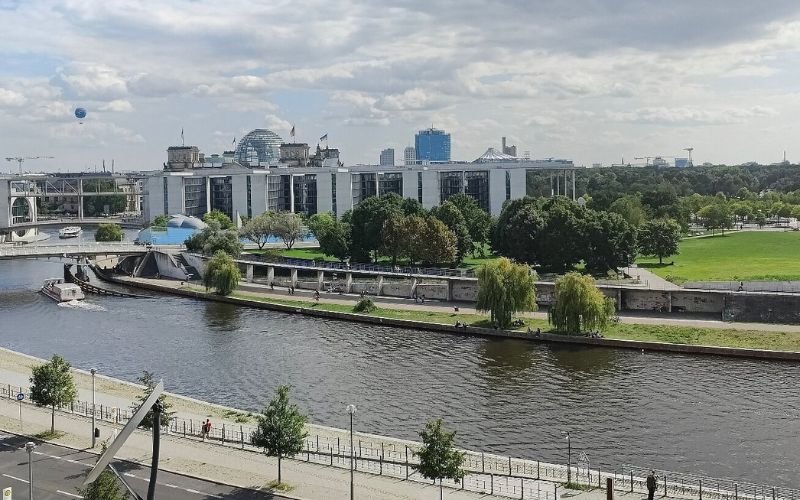
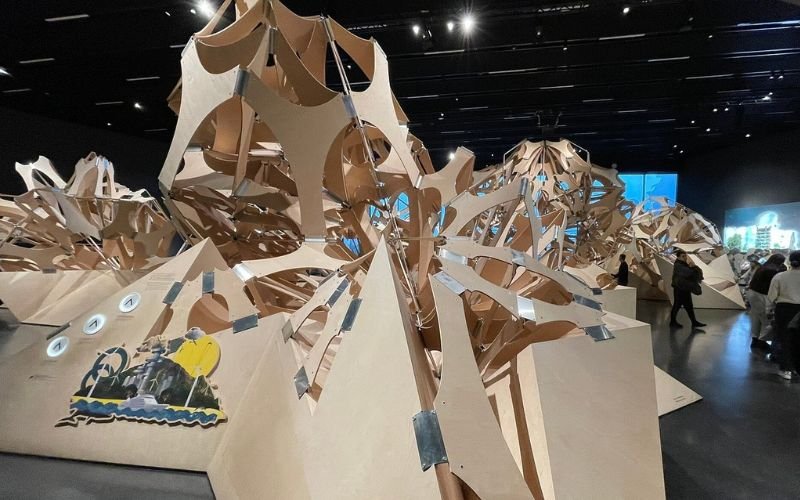
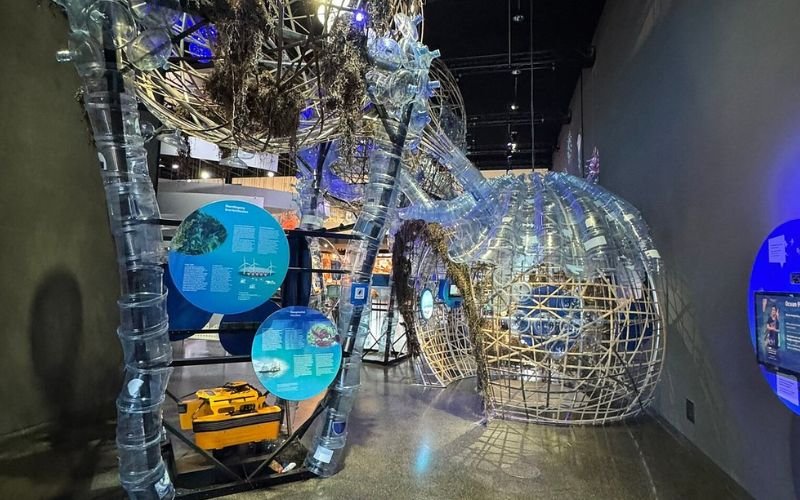
A bright, modern “House of Futures,” Futurium explores how technology, sustainability, and society might evolve — and it does it with a sense of playfulness. The building itself feels like a glimpse of tomorrow, all clean lines, reflective surfaces, and open space.
Inside, everything is hands‑on. You can test ideas, experiment with interactive displays, and explore possible futures in areas like climate, robotics, and urban living.
After days of Berlin’s intense history, Futurium is a refreshing change of pace. It’s optimistic, imaginative, and fun, offering a hopeful counterbalance to the city’s more sobering museums.
Location
Alexanderufer 2, right by the Spree River in the government district, just a short walk from Berlin Hauptbahnhof (the main train station). The nearest public transport is
S‑Bahn: S3, S5, S7, S9 (all stop at Hauptbahnhof)
U‑Bahn: U5 (U‑Bahnhof Bundestag is also close)
Bus: There is a bus stop called “Futurium” directly beside the building
Tram: M5, M8, M10 (stop at Hauptbahnhof)
US Allied Museum (Alliiertenmuseum)
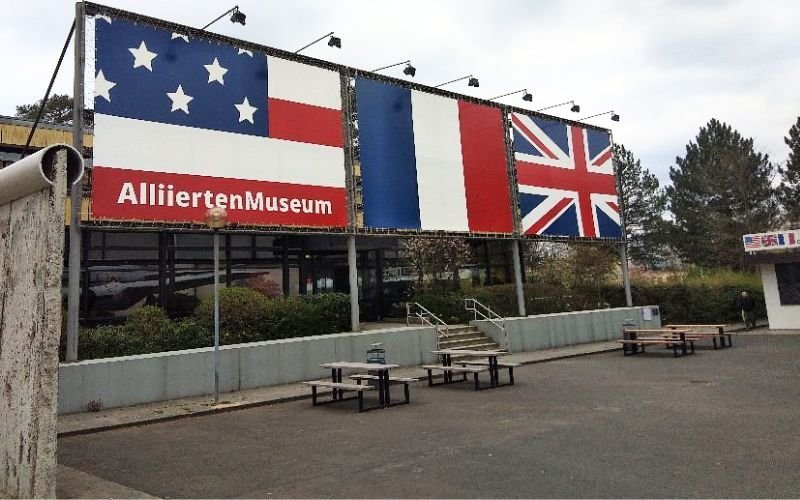
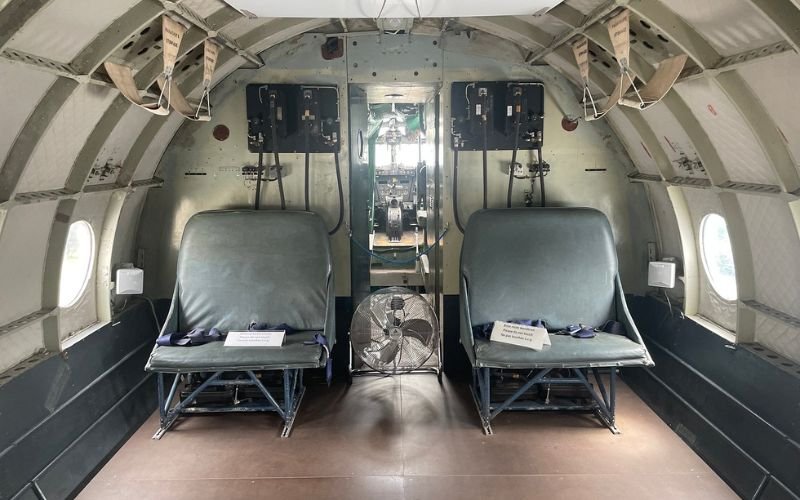
If you’re interested in Cold War history, this small museum is a great stop. It covers the Western Allies’ role in Berlin from 1945 to 1994, with highlights like the Berlin Airlift and the spy tunnel. You won’t need more than an hour, and since entry is free, it’s an easy addition to any itinerary. Stepping inside the aircraft costs just €1.
The displays are well presented, with information in English and French. The museum occupies two former U.S. military buildings; the Art Deco cinema was closed during our visit, but the main building holds the core exhibitions. Outside, you’ll find standout pieces like the original Checkpoint Charlie building, a British military train carriage, an Airlift aircraft, a border tower, and a section of the Berlin Wall.
There’s no café and younger kids may not find much to engage with, but the artefacts — especially those from the Airlift — are fascinating. The location on Clayallee, opposite the former “Little America,” adds to the atmosphere.
Overall, it’s compact but full of unique items you won’t see elsewhere. Free, accessible, and well worth a short visit.
Location
Clayallee 135, (Dahlem district). It sits in former American‑sector West Berlin, inside what used to be the U.S. Army’s Outpost Theater. The area is quiet and residential, a bit southwest of central Berlin, but easy to reach by public transport. Closest options are
Bus stop: Alliiertenmuseum — right outside the museum
Served by Bus 115
Nearby alternative: Oskar‑Helene‑Heim (about 8–10 minutes’ walk)
U‑Bahn: U3
Buses: 110, 285, 623
Nazi Forced Labour Documentation Centre
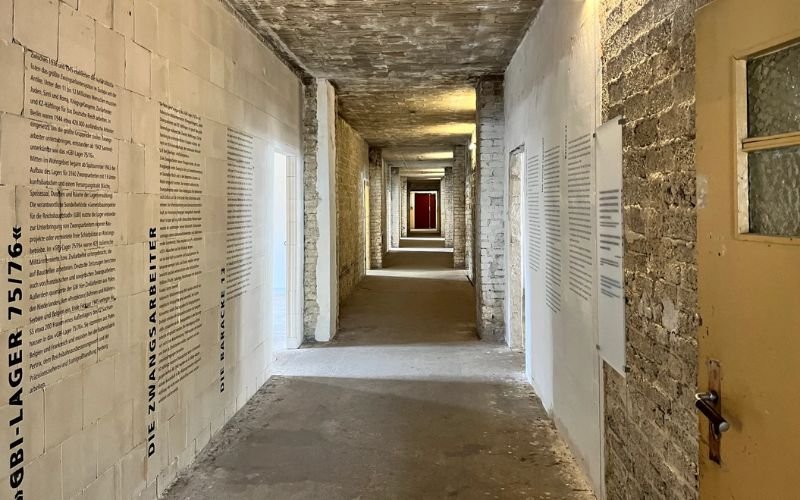
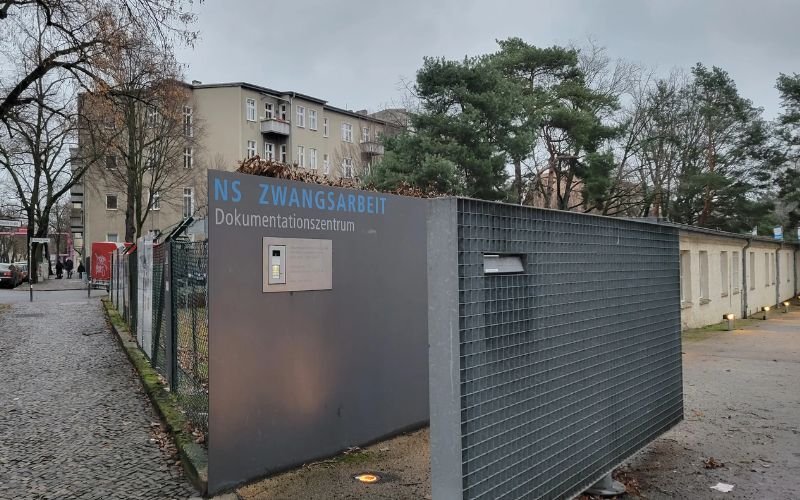
The Nazi Forced Labour Documentation Centre is one of Berlin’s most sobering historical sites. Set on the grounds of a preserved forced‑labour camp, it offers a clear, unflinching look at the millions of people exploited by the Nazi regime. The atmosphere is quiet and reflective, and the exhibitions are detailed.
What makes the site worth visiting is its authenticity — the original barracks, pathways, and surviving structures give a real sense of place. The museum explains not only how forced labour operated, but also who the victims were and how this system shaped everyday life in wartime Berlin.
It’s not as well‑known as other memorials, but in our honest opinion, it’s one of the most important.
Location
Britzer Straße 5, (Schöneweide). It sits a little outside the centre, so its a good option to pair with a day exploring Schoneweide. Nearest public transport is
Doku.-zentrum NS‑Zwangsarbeit (right next to the museum)
Served by Bus 165 and Bus 265
German History Museum (Permanent Exhibition)
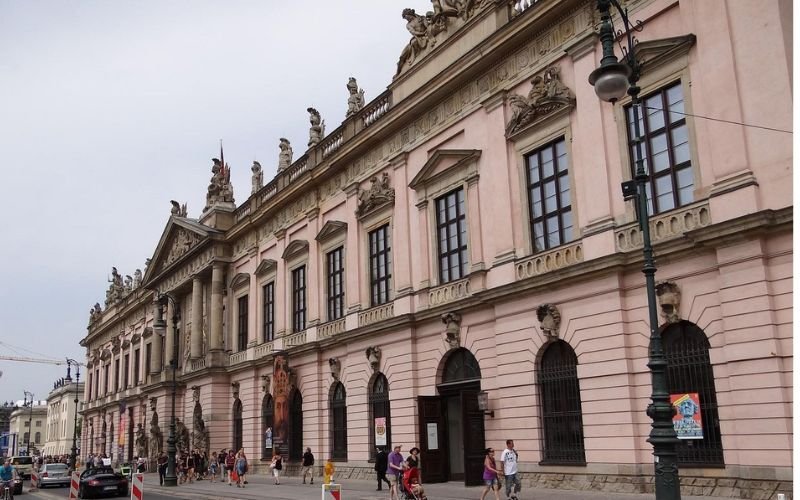
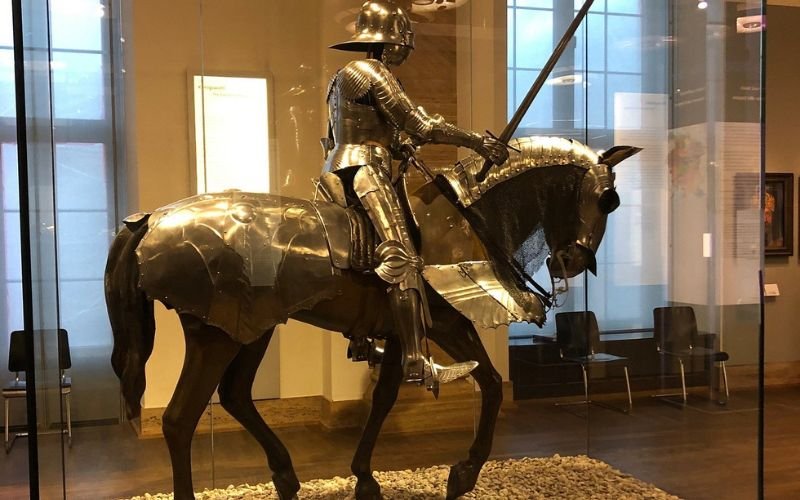
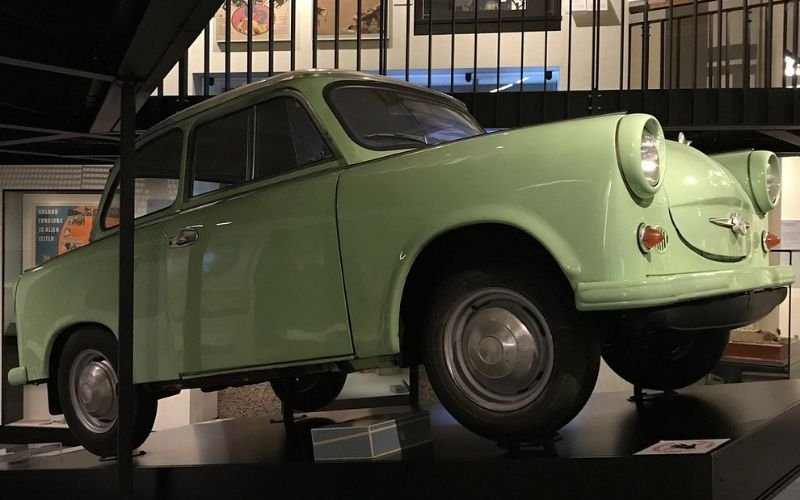
The permanent exhibition at the German History Museum is free and impressively comprehensive, covering everything from the Roman era to reunification. It’s vast — you could easily spend half a day wandering through the timelines, artefacts, and multimedia displays. If you want the best experience, going early in the morning helps you avoid the crowds.
What makes this exhibition stand out is how clearly it connects different eras of German history, showing not just major events but how society, politics, and culture evolved over centuries. It’s the most complete overview you’ll find in Berlin, and a great way to understand the broader context behind many of the city’s other museums and memorials.
Location
Unter den Linden 2, right on the famous Unter den Linden boulevard. Th nearest public transport is
U‑Bahn:
U5 – Museumsinsel (about 3–4 minutes’ walk)
Tram:
M1, 12 – Am Kupfergraben (right beside the museum)
Bus:
Bus 100 & 300 – Staatsoper (5 minutes’ walk)
Jewish Museum
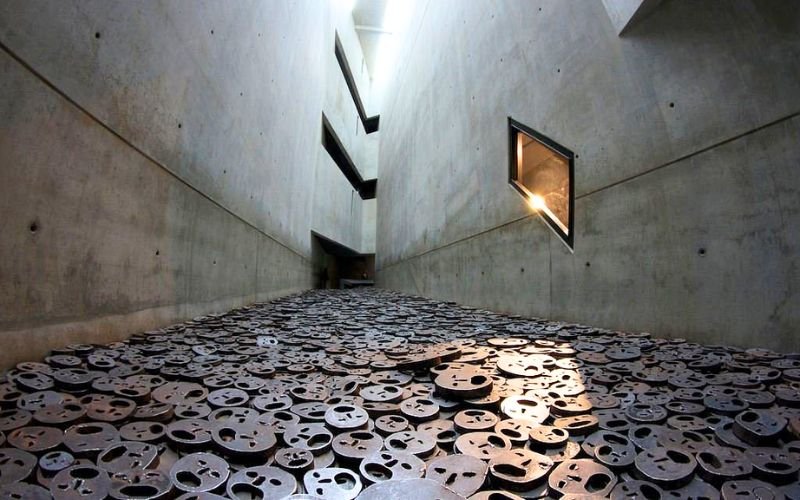
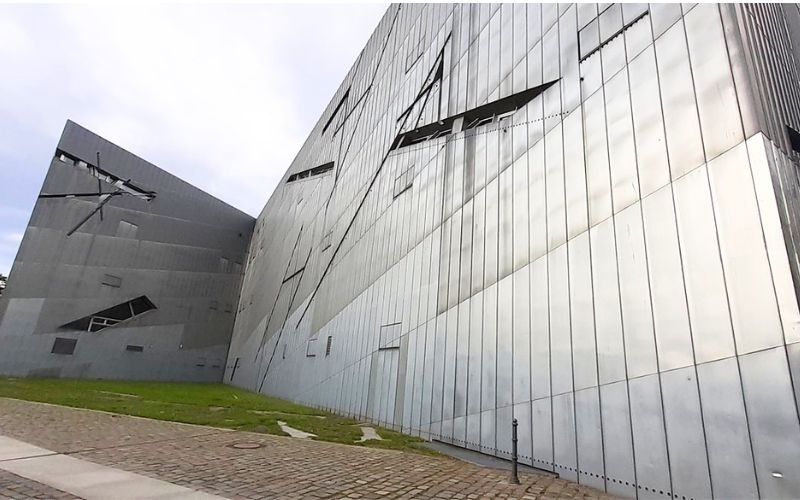
One of Berlin’s most architecturally striking buildings, the Jewish Museum offers a powerful, deeply moving exploration of Jewish life, culture, and history in Germany. The exhibitions blend personal stories, historical context, and contemporary perspectives.
The garden and outdoor installations are also free to explore. It’s an essential stop for anyone wanting to understand Berlin’s past and the communities that shaped it.
Location
Lindenstraße 9–14, in the Kreuzberg district, just south of central Berlin. Nearest public transport is
Bus stop: “Jüdisches Museum” — right next to the entrance
Served by Bus 248 (and sometimes additional local lines)
Other nearby options
U‑Bahn:
U6 – Hallesches Tor (about 7–8 minutes’ walk)
U1/U3 – Hallesches Tor (same station, different lines)
Bus:
Bus M29 – Lindenstraße/Oranienstraße
Museum Berlin‑Karlshorst
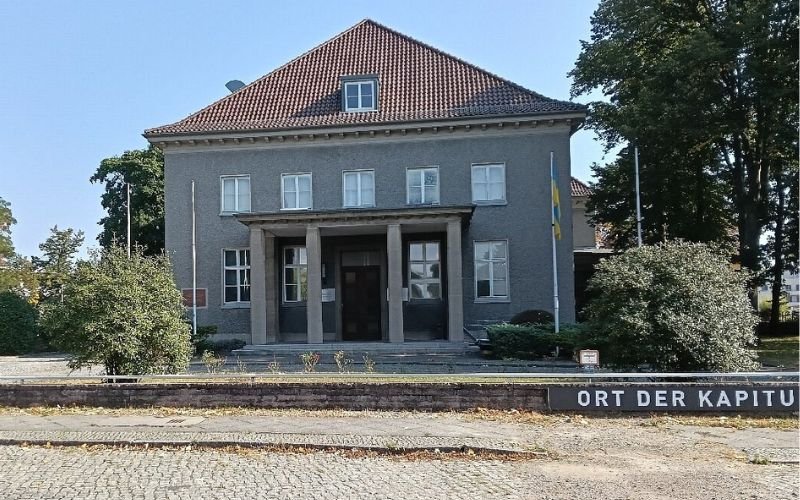
Museum Berlin‑Karlshorst stands on one of the most significant sites of the Second World War: the very building where the German Wehrmacht signed the final act of surrender on May 8, 1945. Today, the museum explores both the end of the war and the decades of Soviet occupation that followed, offering a perspective you won’t find in most other Berlin museums.
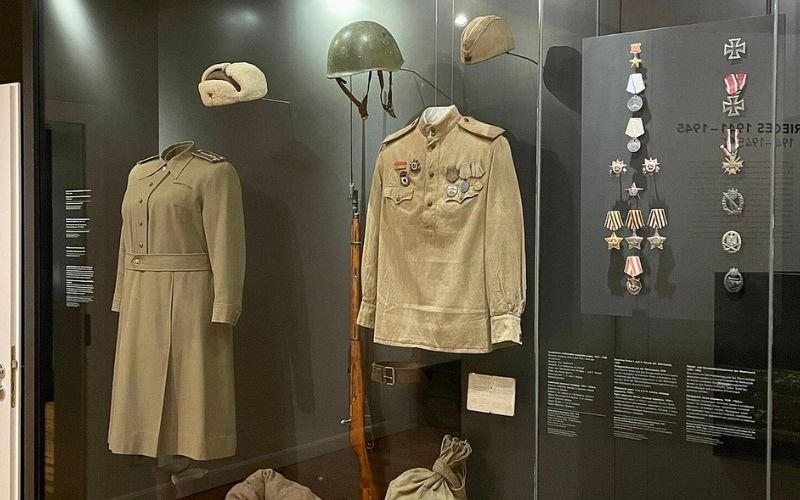
The exhibitions combine original documents, personal stories, and large‑scale military artefacts to explain the war in the East and the complex relationship between Germany and the Soviet Union.
Set slightly outside the city centre, the museum is quieter than many of Berlin’s major sites. It’s an essential stop if you want to understand how the war concluded and how Soviet influence shaped post‑war Berlin.
Location
Zwieseler Straße 4. The nearest public transport is
Bus stop: “Museum Karlshorst” — right next to the entrance
Served by Bus 296
Nearby rail option
S‑Bahn Karlshorst — about a 10–12 minute walk
Served by S3
Berlin is packed with world‑class museums, but its free ones are where the city’s history, creativity, and character really shine. Whether you’re diving into centuries of German history, exploring the future, or standing in the very rooms where history unfolded, these museums prove that some of Berlin’s most memorable experiences don’t cost a cent.