Barcelona has a way of sweeping you off your feet—sun‑soaked plazas, whimsical Gaudí architecture, and a coastline that feels made for slow afternoons. But as we found, you don’t need a big budget to enjoy it. In fact, some of the city’s most memorable experiences won’t cost you a single euro.
We spent several days exploring the city so here are our favourite free things to do broken down into categories — all tried, tested, and loved.
And be sure to read to the bottom for our top free HIDDEN GEMS!
This post may contain affiliate links. If you make a purchase, we may earn a small commission at no extra cost to you. Our goal is to provide valuable and helpful content, and any commissions help us to mantain this site.
Contents
ToggleGet your Barcelona Essentials!
- Find cheap flights to Barcelona
- Find hotels or hostels in Barcelona
- Find activites and tours for Barcelona
- Compare hire car prices and train tickets
- Get an eSIM for Barcelona. Use our code ‘TBTravellers to receive 5% OFF any eSIM!
Exploring Barcelona’s Neighbourhoods
Gothic Quarter ( Barri Gotic)
The Gothic Quarter is a maze of medieval alleyways, hidden courtyards, and centuries‑old architecture and by far our favourite neighbouhood to explore in Barcelona.
These are our ‘don’t miss’ in the Gothic Quarter’:
- Plaça Reial – The square features lamp posts designed by Antoni Gaudí, making it one of his earliest public works. Plaça Reial was built in the 19th century and is one of Barcelona’s most iconic squares. We found ourselves a bench in the square and just enjoyed soaking up the atmosphere.
- Barcelona Cathedral’s exterior – The exterior is just stunning and deserves a photo stop. Although construction began in the 13th century, the cathedral wasn’t fully completed until the 15th century and the famous neo‑Gothic façade you see today was actually added in the late 19th century. The spires of the cathedral are so tall they rise above the medieval streets and draw you in before you even get to the square.
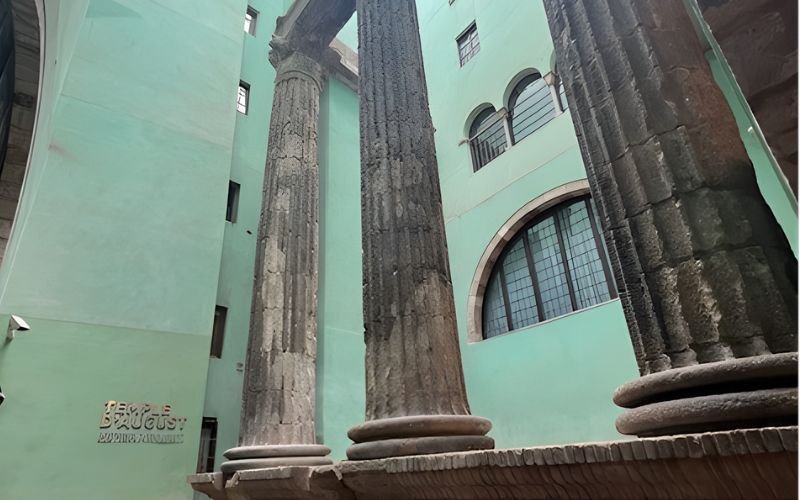
- Columnes Romanes – El Temple D’August – Are located in a quiet courtyard in the Gothic Quarter and we almost walked right past. Only four massive Corinthian columns remain, each standing about 9 meters tall. They were uncovered during 19th‑century renovations, revealing one of Barcelona’s oldest archaeological treasures.
The Gothic Quarter is an easy 13-minute walk from the centre’s Placa de Catalunya.
El Born
Right next to the Gothic Quarter, El Born is the cool, artsy sibling. Stop to check out the breathtaking Santa Maria del Mar, a cathedral‑like basilica that feels both grand and peaceful at the same time. Just around the corner is the Born Cultural Centre which we highly recommend checking out, it’s a fascinating space built around the ruins of old Barcelona, giving you a glimpse into the city’s past without feeling like a museum overload.
Best of all, El Born is only a 15-20 minute walk from Placa de Catalunya.
Eixample
If you love architecture, Eixample is your playground. The streets are laid out in a perfect grid making it easy for walking.
Eixample is Gaudí territory. Casa Batlló and La Pedrera sit right here, casually sprinkled along Passeig de Gràcia like it’s no big deal. Even if you’re not going inside (joys of budget travel!), just standing across the street and taking in the details—the curves, the colours, the weirdly wonderful shapes—is an experience in itself.
But Eixample isn’t just about the famous stuff. It’s full of elegant apartment blocks with wrought‑iron balconies and cute cafes. It’s the kind of neighbourhood where you can walk for ages without getting tired because there’s always something pretty to look at.
What we loved most about Eixample is the pace. It’s calmer than the old town but still full of life. Perfect for slow, scenic strolls, people‑watching, and soaking up that classic Barcelona charm.
Eixample is located adjacent to and north of Placa de Catalunya.
Gràcia
Gràcia is one of those neighbourhoods that makes you forget you’re in a major city. The moment we stepped into its narrow streets and leafy plazas, we felt like we wandered into a little village tucked inside Barcelona. And honestly, that’s exactly why we fell in love with it.
This area was actually an independent town until the late 19th century, which explains why it still has such a strong local identity. It’s the kind of place where you can grab a coffee, sit in a sunny plaza like Plaça del Sol or Plaça de la Vila de Gràcia, and just watch daily life unfold.
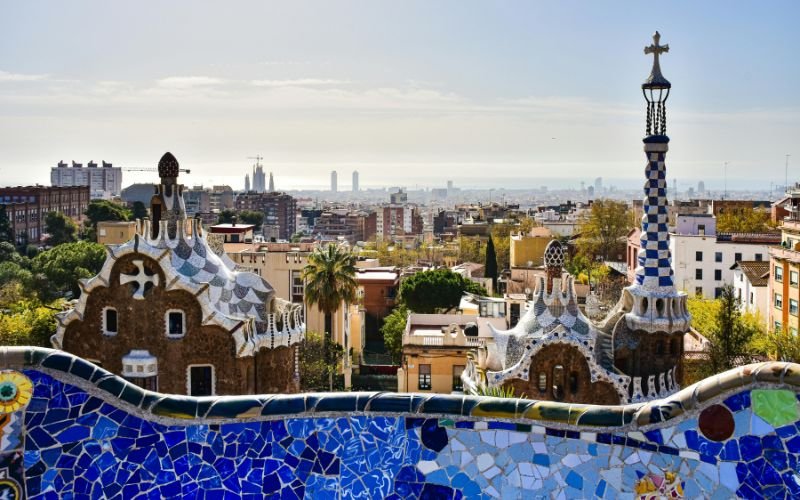
Of course, Gràcia is also home to one of Barcelona’s biggest icons: Park Güell. Designed by Antoni Gaudí and originally intended to be a private residential estate, it’s now one of the city’s most colourful and whimsical public spaces. Even if you don’t pay to enter the Monumental Zone like us, the surrounding park areas are free and offer gorgeous views over the city.
Best of all, Gracia is an easy 25-minute walk from Placa de Catalunya.
Markets
La Boqueria Market
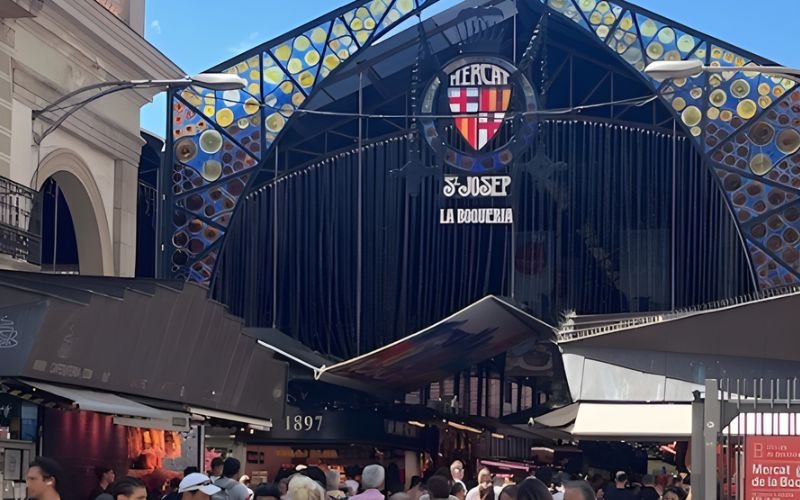
La Boqueria is one of those places you wander into ‘just to look around’ and suddenly you’re an hour deep. Located right off La Rambla, this iconic market has been around since the 13th century, making it one of the oldest and most famous food markets in Europe.
One of our favourite free things to do here is simply wander the aisles and take in the colours, smells, and sounds. You can watch chefs prepping ingredients, see locals doing their daily shopping, and get a real feel for Barcelona’s food culture. And yes, the fresh fruit juices are cheap enough that you might ‘accidentally’ buy one anyway.
We recommend going earlier in the morning as you’ll catch the market at its most authentic before the crowds roll in. But honestly, any time of day, La Boqueria is worth a stop—whether you’re hungry or just curious.
Mercat de Sant Antoni – Sant Antoni
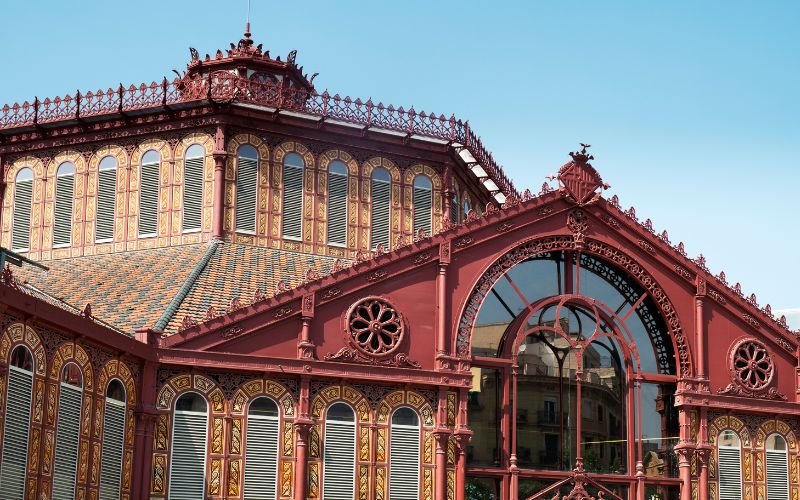
Mercat de Sant Antoni is one of those markets that makes you feel like you’ve stepped into the “real” Barcelona. It’s big, beautiful, and buzzing with local life—but without the overwhelming crowds you’ll find at La Boqueria.
Located only a 20-minute walk from Placa de Catalunya, the market sits inside a stunning 19th‑century iron structure which was completely renovated and reopened in 2018, so now it has that perfect mix of historic charm and modern shine.
Inside, you’ll find everything from fresh produce and seafood to cheeses, spices, and pastries. Locals actually do their weekly shopping here, which gives the whole place a friendly, everyday vibe.
One of the coolest things about Mercat de Sant Antoni is that it’s more than just a food market. There are three sections:
- Fresh food market (the main hall)
- Clothing and household goods market
- The famous Sunday book market, where you can browse second‑hand books, comics, magazines, and collectibles. It’s a treasure hunt every week.
What we loved most is how spacious it feels. The aisles are wide, the layout is easy to navigate, and you can actually stop to look at something without being bumped every two seconds.
Plazas & Squares
Plaça de Catalunya
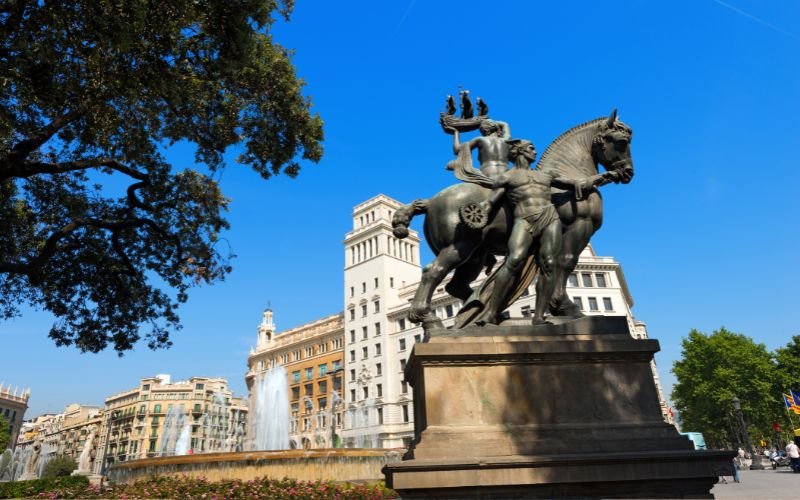
Plaça de Catalunya is one of those places you’ll pass through more than once without even trying—it’s basically the crossroads of Barcelona. Sitting right between the old city (the Gothic Quarter and El Raval) and the elegant Eixample district, this huge square is where everything seems to meet: people, buses, metro lines, pigeons… lots of pigeons!
It’s one of the largest squares in Spain, and it’s been a central gathering point since it officially opened in 1927.
What we loved about Plaça de Catalunya is how alive it feels. You’ll see kids chasing birds, street performers doing their thing, and shoppers heading toward Passeig de Gràcia or Portal de l’Àngel—two of the city’s busiest shopping streets. It’s also the starting point for La Rambla, so chances are you’ll end up here whether you plan to or not.
Placa Sant Jaume
Plaça Sant Jaume is one of those squares that doesn’t look overly dramatic at first glance. Today, the square is home to two of the most important buildings in Catalonia: Barcelona City Hall on one side and the Palau de la Generalitat on the other.
What we loved about Plaça Sant Jaume is how open and calm it feels compared to the narrow Gothic Quarter streets around it. You step out of a maze of medieval alleyways and suddenly you’re in this bright and spacious square.
Plaça de la Barceloneta
The square sits just a short stroll from the beach, so you’ll often catch that salty sea breeze drifting through. It’s a great place to pause for a moment, grab a bench, and watch daily life unfold. The buildings around it still have that classic Barceloneta look—narrow, colourful, and full of character.
Plaça d’Espanya – Montjuïc
Plaça d’Espanya is one of Barcelona’s grand showstoppers. It’s big, dramatic, and full of architectural flair. Built for the 1929 International Exposition, the square is framed by two tall Venetian‑style towers that lead your eye straight toward Montjuïc hill and the majestic MNAC museum perched at the top.
During the day, it’s a major transport hub with people coming and going in every direction. But come sunset, the whole area transforms. The light hits the buildings just right, the fountains start to glow, and the view up toward the Palau Nacional becomes genuinely breathtaking. We recommend visiting in the evening, when you can catch the free Magic Fountain show, which turns the whole square into a colourful, musical spectacle.
Plaça de la Sagrada Família
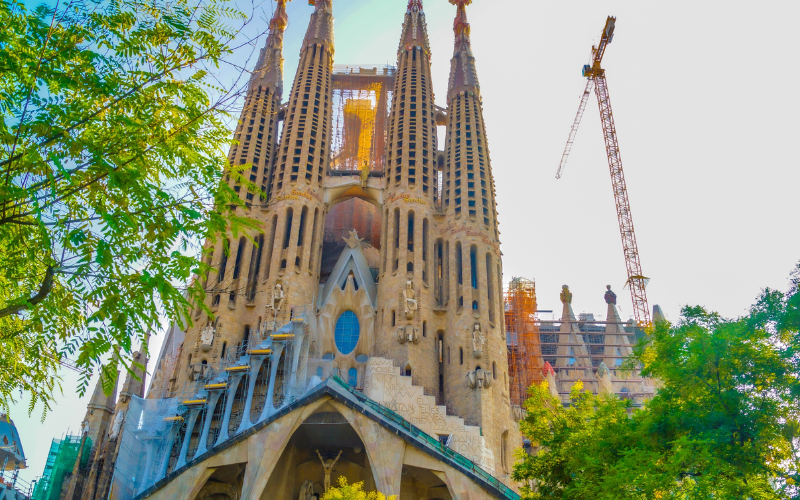
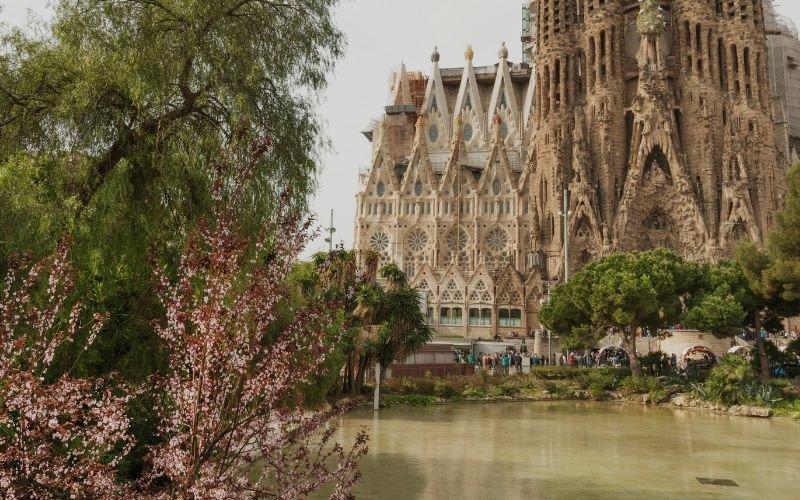
Plaça de la Sagrada Família is the square that gives you that postcard‑perfect view of Gaudí’s masterpiece. It sits right in front of the basilica, surrounded by trees, benches, and a small pond that reflects the towers on a calm day. It’s one of the best places to sit, relax, and take in the details of the Sagrada Família without getting swept up in the crowds at the entrance.
We grabbed lunch from the nearby supermarket (supermercato) and found a shady spot to admire the basilica from afar.
Parks & Green Space
Park de la Ciutadella
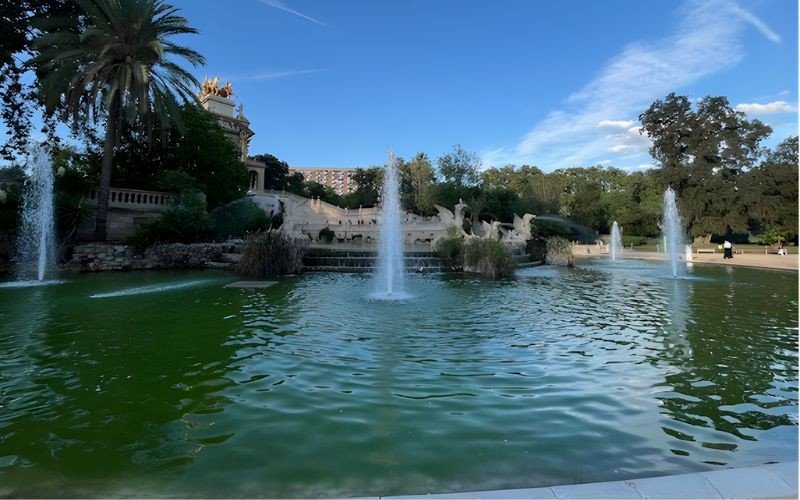
This lush green space is Barcelona’s answer to Central Park. Expect palm trees, a sparkling lake, and Gaudí’s early work on the Cascada Monumental fountain. We spend a whole afternoon exploring this impressive park.
It’s ideal for picnics, reading, people‑watching, or simply taking a break from sightseeing. If you only visit one park in Barcelona, make it this one. Parc de la Ciutadella is the city’s most famous green space, and it’s huge—about 17 hectares of lawns, lakes, palm trees, and shady paths. You’ll find the impressive Cascada Monumental, a fountain partly designed by a young Gaudí, plus a boating lake, sculptures, and plenty of picnic spots. It lies on the northeastern edge of the Old City, near the Arc de Triomf and the El Born district.
Montjuïc’s Gardens
Montjuïc isn’t a single park—it’s a whole hill covered in gardens, viewpoints, and walking paths. We enjoyed wandering through the Joan Maragall Gardens, exploring the cactus‑filled Jardins de Mossèn Costa i Llobera and just enjoying the panoramic views over the harbour. You could spend a whole day here and still not see everything.
We walked here from Placa de Catalunya in 45 minutes but its easily accessible by public transport if your feet need a break.
Bunkers del Carmel
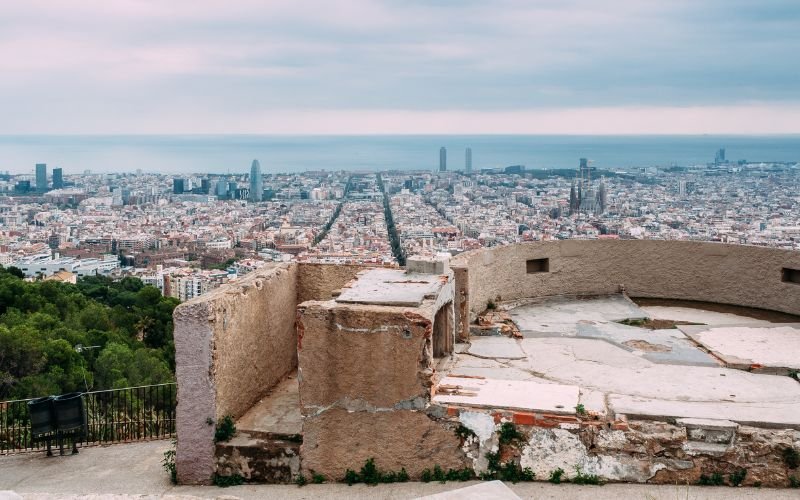
If you want the best panoramic view of Barcelona without paying for an observation deck, head to the Bunkers. It is busy and you will be sharing with locals and other tourists but it’s well worth it.
You can also explore the interior of the bunkers, and there’s a small but free museum where you can learn all about the Civil War.
Bunkers is located on top of the Turó de la Rovira hill in the Carmel neighborhood of Barcelona, within the Horta-Guinardó district.
Museums & Culture
Barcelona History Museum (MUHBA)
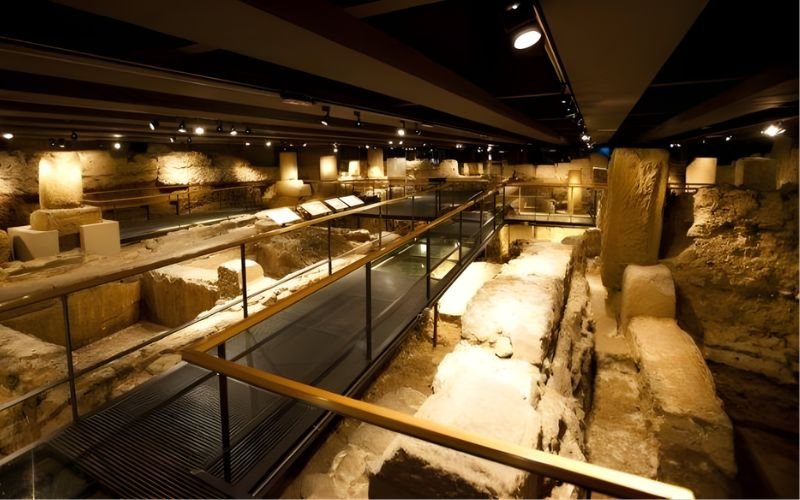
We spent almost 2 hours enjoying the museum but i have to admit most of our time was admiring the vast Roman Ruins which were incredible. The museum is situated in the 15th-century Casa Padellàs, facing the, plaza in the heaert of the Gothic Quarter.
Entry is free on Monday, Wednesday, Thursday, Friday and Saturday from 7pm-9pm and on Saturday and Sunday from 12:3pm-2:30pm but we recommend booking free tickets online in advance as these times are super busy.
Picasso Museum
Situated in the El Born neighbourhood, the museum features an extensive collection by Pablo Picasso but just be aware that it focuses mainly on Picasso’s early years, sketches, studies and his lessor-known works.
It’s free to visit on the first Sunday of the month, plus Thursday, Friday, and Saturday evenings from 7 pm to 9 pm.
MNAC (Museu Nacional d’Art de Catalunya)
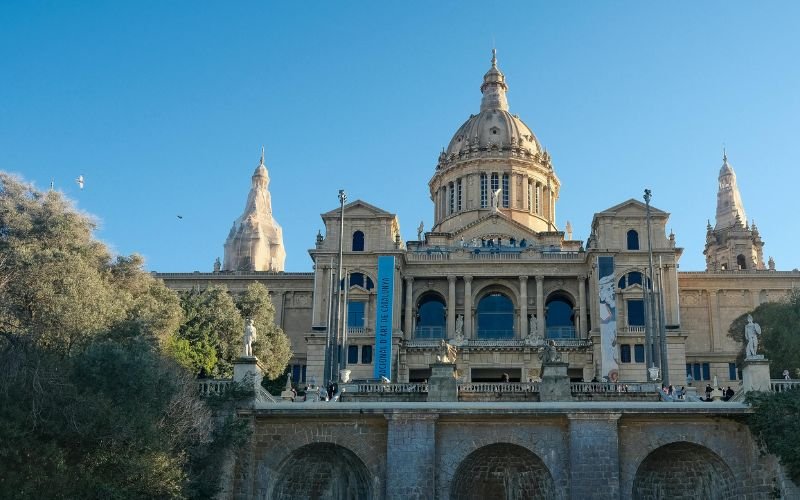
We set aside a few hours to explore the MNAC which is located on the atop Montjuic and it didnt disappoint. Before even stepping inside, the building itself felt like a destination. There really is something for everyone here and you get a real sense of how Catalan art evolved alongside the region’s shifting history.
You can explore the museum for free on Saturdays after 3 pm and the first Sunday of every month.
Barcelona Maritime Museum
Tucket behind the waterfront, the museum is housed in the impressive medieval Drassanes shipyards and is suitable for all ages. The star of the show is the full-scale replica of the ‘Royal Galley’, an enormous 16th century warship. We spent most of our time seeing the nautical instruments, maps, reading about stories on trade and everyday life at sea.
The museum is free on Sundays after 3 pm and situated at the bottom of Las Ramblas near the Columbus Monument.
Beach & Ports
Port Vell
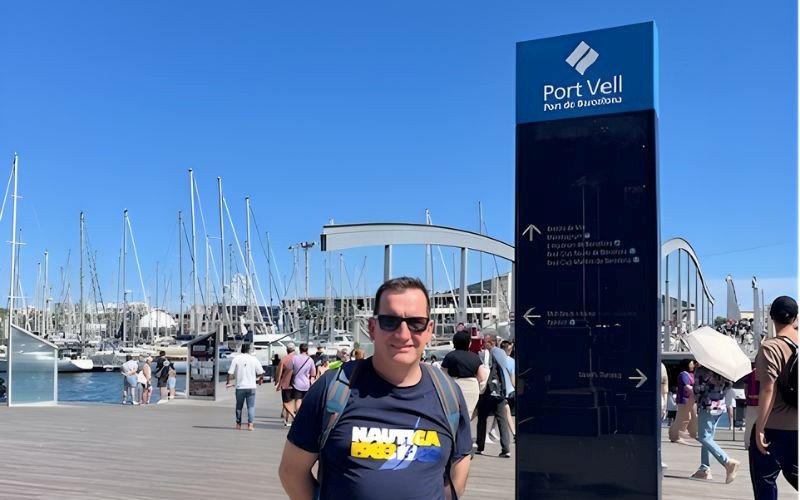
Once a working harbour which was completely reimagined for the city hosting the Olympics in 1992 and is now one of the easiest places in the city to enjoy the waterfront without spending a euro.
We enjoyed strolling along the waterfront promenade with views of the marina filled with yachts and many street performers.
Be sure to check out the Christopher Columbus Monument. You can pay to go up the tower but we just enjoyed the sculptures, historical plaques and lively plaza at the base of the monument for free.
If you love photography, visit the Port Vell sheds and historical buildings where you can wander around and admire the Port Authority building, the old harbour warehouses and the maritime sculptures and monuments. My favourite was the giant lobster sculpture – ‘La Gamba’!
Barceloneta Beach
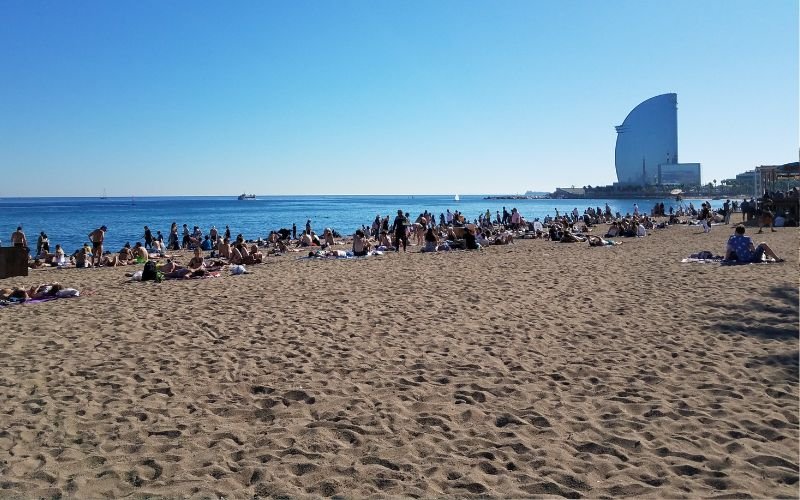
From Port Vell it’s only a short, scenic walk to the start of Barceloneta Beach, a lively stretch of golden sand making it the perfect place to soak up the Mediterranean sun. If you enjoy sports, you can join in a free game of volleyball or ping-pong with the locals. The foreshore area is dotted with great public art including ‘Homenatge a la Barceloneta’ (the leaning tower of cubes) and ‘Peix d’Or (the giant goldfish).
If you can time your visit for sunset, head to the W Hotel which is located at the end of the beach. We grabbed a seat on the rocks and were treated to an amazinf sunset as the sky turned pink.
Our Top Free Hidden Gems
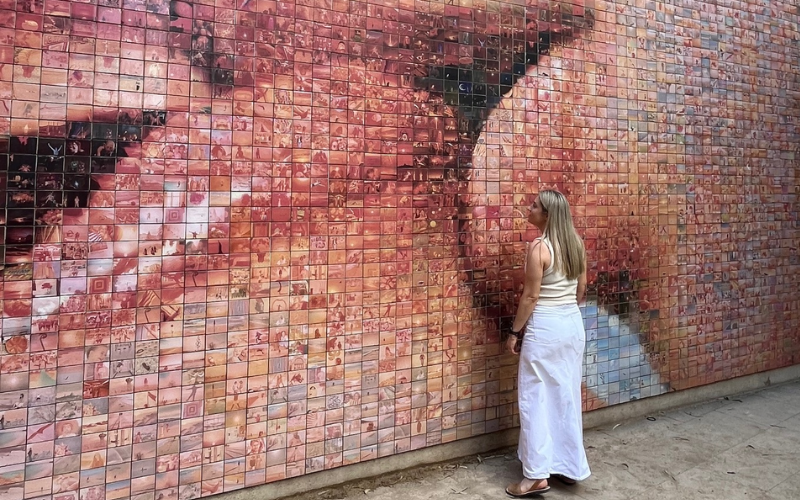
Kissing Wall
You’ll find the Kissing Wall in Plaça d’Isidre Nonell, a small, quiet square tucked just behind Barcelona Cathedral. It’s easy to miss if you’re not looking for it, which makes discovering it feel like a little secret.
Despite the name, it’s not just a giant mural of two people kissing. When you get up close, you’ll notice something cool, The entire image is made up of over 4,000 tiny ceramic tiles, each printed with a photograph submitted by locals. The theme was ‘moments of freedom’, and the mosaic brings all those little moments together to form one big, beautiful kiss.
Go early in the morning or later in the afternoon for the best light and fewer crowds. The square is small, so it feels more intimate when it’s quiet.
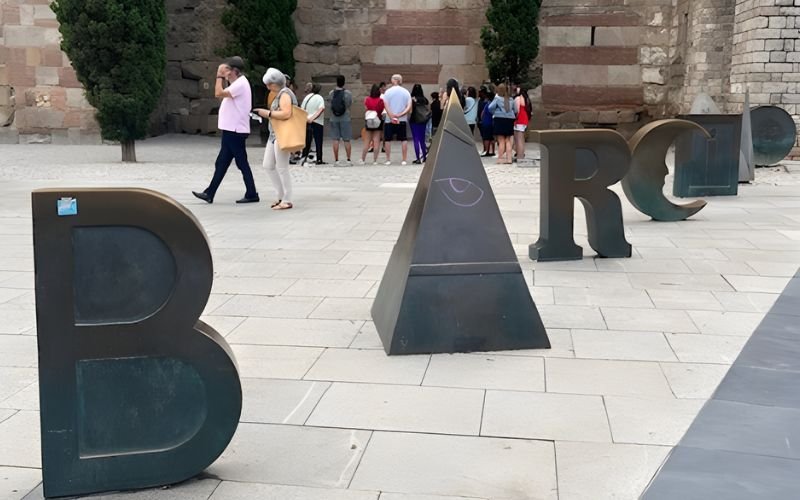
Barcio letters
If you’re hoping to snap a photo without a crowd in the background, head over early in the morning. “Barcino” was actually the Roman name for Barcelona dating all the way back to when the Romans founded the city more than 2,000 years ago.
The letters you see now are a modern sculpture, but they’re placed right where the ancient Roman city once stood, which gives the whole spot a fun little time‑travel vibe. You’ll find the BARCINO letters in Plaça Nova, just outside the main entrance of the Barcelona Cathedral.
And there you have it, our top free things to do in Barcelona. If you’re travelling through Spain, check out our posts on free things to do in Madrid, Laredo, Aviles, Monforte de Lemos and Combarro.