Berlin wears its history right on the surface, and nowhere does it feel more immediate than in the former Jewish Quarter—anchored around the Spandauer Vorstadt and the Scheunenviertel, just north of Alexanderplatz.
As we wandered through its narrow streets and quiet courtyards, it became clear that this neighbourhood is far more than a geographic area. It’s a living archive: centuries of Jewish life, creativity, persecution, destruction, and renewal layered into every doorway, plaque, and cobblestone.
This guide is a mix of what we saw and what we learned, shared so you can enjoy wandering the former Jewish Quarter too.
This post may contain affiliate links. If you make a purchase, we may earn a small commission at no extra cost to you. Our goal is to provide valuable and helpful content, and any commissions help us to mantain this site.
Contents
ToggleGet your Berlin Essentials!
- Find cheap flights to Berlin
- Find hotels or hostels in Berlin
- Find activites and tours for Berlin
- Compare hire car prices or train tickets
- Get an eSIM for Berlin. Use our code ‘TBTravellers to receive 5% OFF any eSIM!
A Brief Historical Overview: How Jewish Life Took Root in Berlin
Jewish presence in Berlin dates back to the Middle Ages, but the community truly began to flourish in the 17th century. In 1671, after being expelled from Vienna, several wealthy Jewish families were invited by the Elector of Brandenburg to settle in Berlin. Their arrival marked the beginning of a vibrant, influential community that would shape the city’s cultural and economic landscape.
By the 18th and 19th centuries, the area around Oranienburger Straße and the Spandauer Vorstadt had become a hub of Jewish life. Despite restrictions and social barriers, Jewish residents contributed significantly to Berlin’s intellectual, artistic, and commercial development.
The neighborhood was never a ghetto in the legal sense, but it became a natural centre for Jewish families, businesses, and institutions.
Location of the Jewish Quarter
Berlin’s former Jewish Quarter is located in the central district of Mitte, just north of Alexanderplatz and east of Friedrichstraße. It spans the areas of Spandauer Vorstadt and the Scheunenviertel, two historic neighborhoods that once formed the heart of Jewish life in the city. Anchored around streets like Oranienburger Straße, Rosenthaler Straße, and Große Hamburger Straße, the quarter is easy to reach on foot or by public transport.
Today, its courtyards, memorials, and restored buildings sit right in the middle of one of Berlin’s liveliest districts, making it a place where history and modern city life intersect at every turn.
Key Site to Explore in the Former Jewish Quarter
1. The New Synagogue (Neue Synagoge)
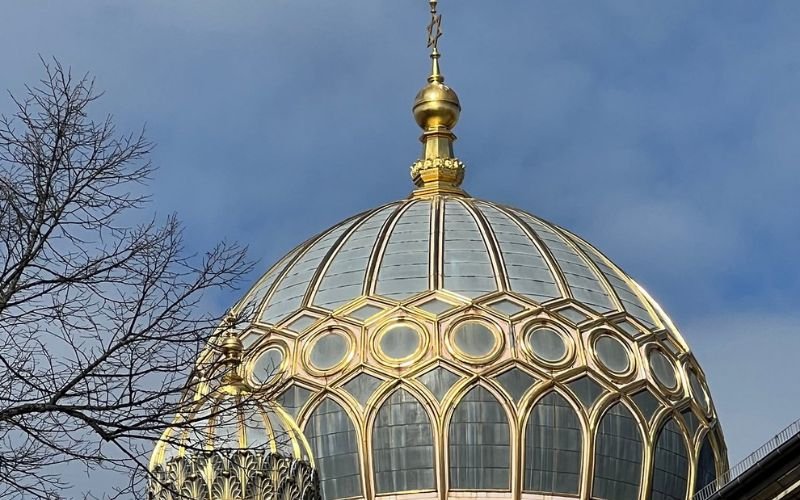
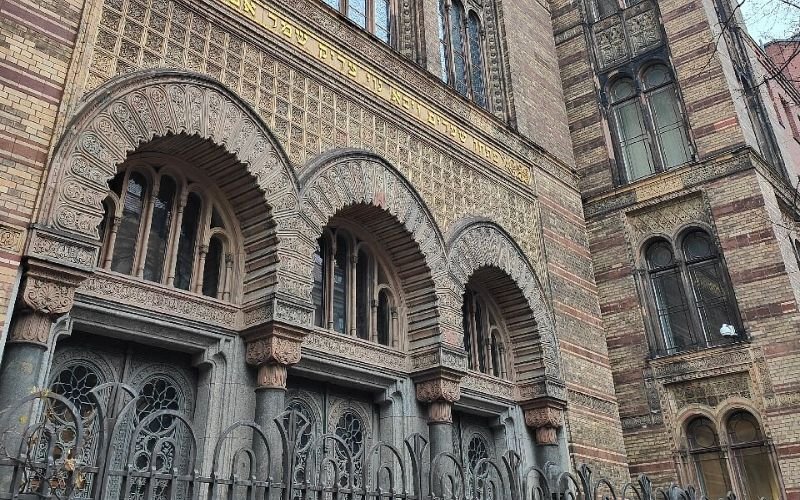
The New Synagogue is the standout landmark of Berlin’s former Jewish quarter. Completed in 1866 in a Moorish Revival style inspired by the Alhambra, it was Germany’s largest and one of its most modern synagogues, featuring iron construction, gas lighting, and central heating—symbols of a confident, thriving Jewish community.
Its restored façade suggests it survived intact, but behind it you can still see the outline of the main sanctuary, burned during the Kristallnacht pogrom and later demolished by the Soviets. It’s remarkable that anything remains at all.
What You’ll Experience Today
We explored the museum housed in the restored front section of the building, which now serves as the Centrum Judaicum—a cultural centre and archive of Berlin’s Jewish history. Inside, the exhibitions trace Jewish life in the city, display artifacts recovered from the synagogue’s ruins, and recount the story of its destruction and partial reconstruction. There’s also a seasonal opportunity to climb up to the dome for panoramic views of Berlin.
Photography isn’t permitted inside, so that’s something to keep in mind before you go. Entry to the Neue Synagoge costs €7 for adults, €4.50 for concessions, and €20 for families.
2. Hackesche Höfe
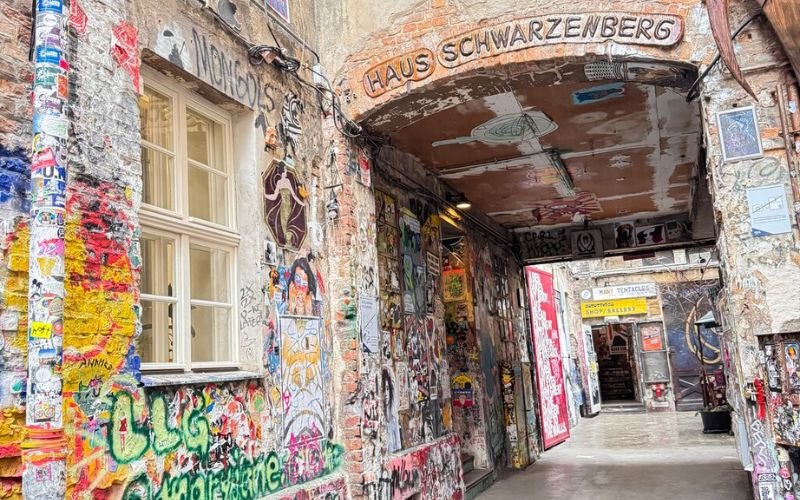
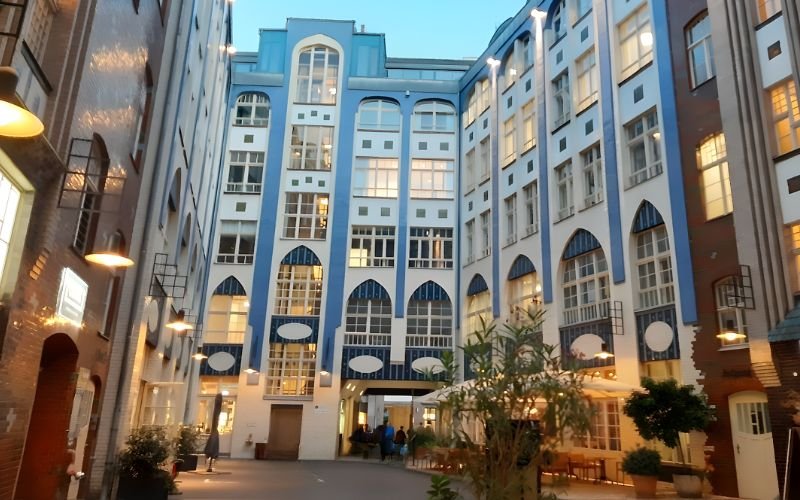
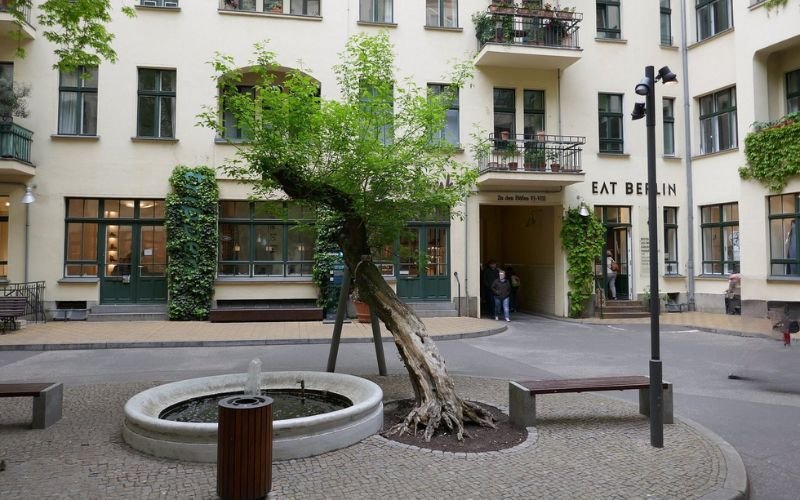
The Hackesche Höfe is a sprawling network of eight interconnected courtyards built in 1906. Designed in the Jugendstil (Art Nouveau) style, the complex originally housed workshops, small factories, and apartments—many of them owned or operated by Jewish families.
Before WWII, the courtyards buzzed with Jewish-owned textile workshops, theaters and cabarets and social clubs and community spaces.
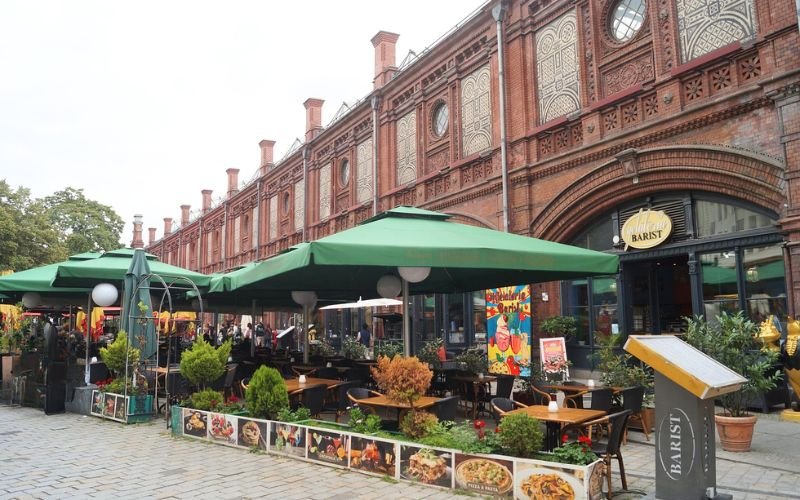
Today, the courtyards have been beautifully restored and are filled with independent boutiques, art galleries, cafés and restaurants and small cinemas and theaters.
What we loved about wandering through the courtyards is how, even amid the modern atmosphere, plaques and preserved corners quietly honor the Jewish families and businesses that once shaped the neighborhood.
3. Otto Weidt’s Workshop for the Blind
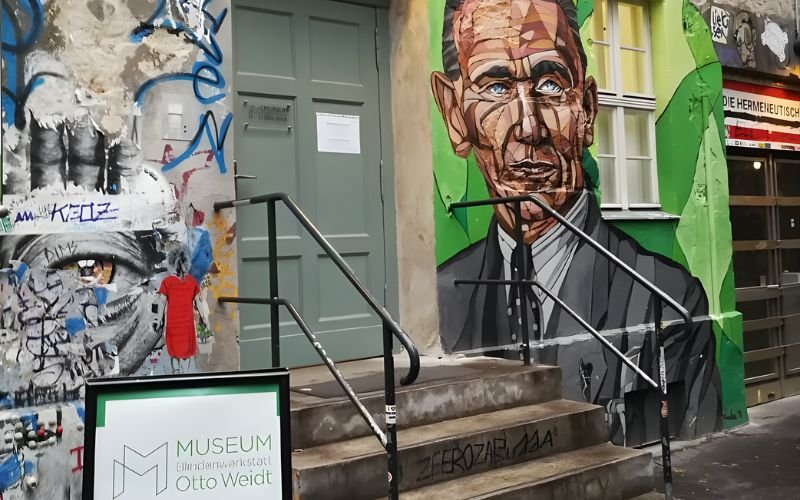
Tucked away in one of the Hackesche Höfe courtyards is one of Berlin’s most intimate and powerful museums. Otto Weidt, a brush and broom manufacturer, employed blind and deaf Jewish workers during the Nazi era. As deportations intensified, he used his workshop as a sanctuary.
Stories of Courage and Resistance
Weidt bribed officials, forged documents, and hid workers in a small back room—still preserved today. Several of those he protected survived the war.
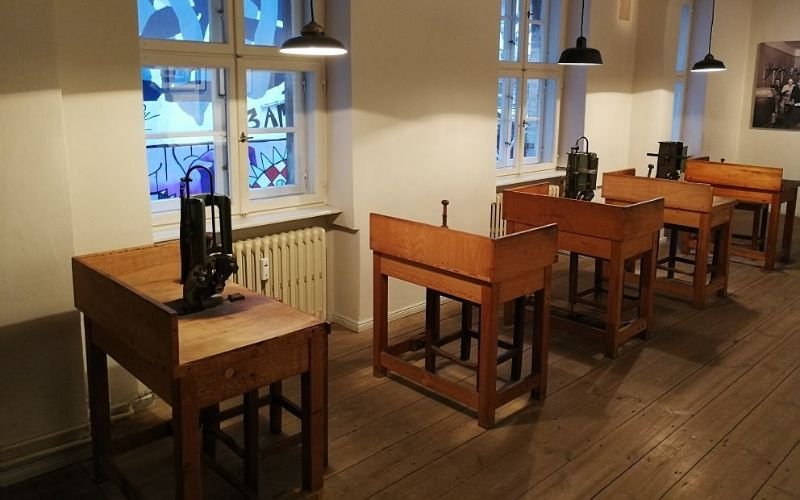
We think the museum is absolutely worth a visit. It’s free and small, but it features personal testimonies, original workshop tools, letters, photographs, and the hauntingly preserved hiding room.
4. Anne Frank Zentrum
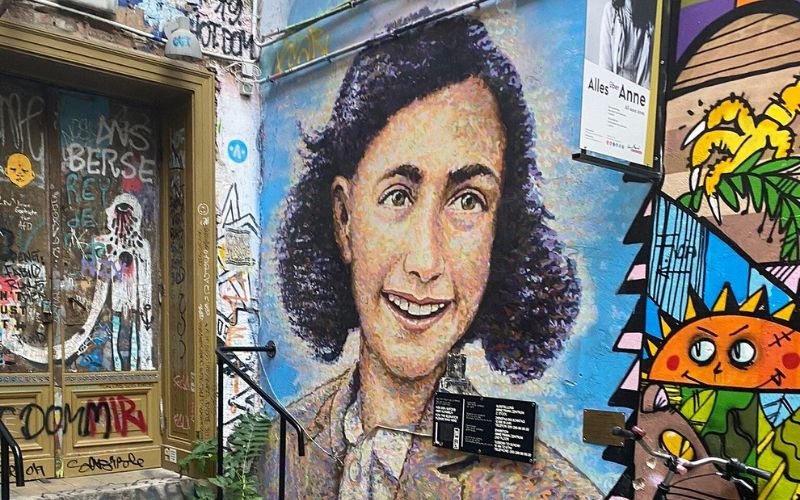
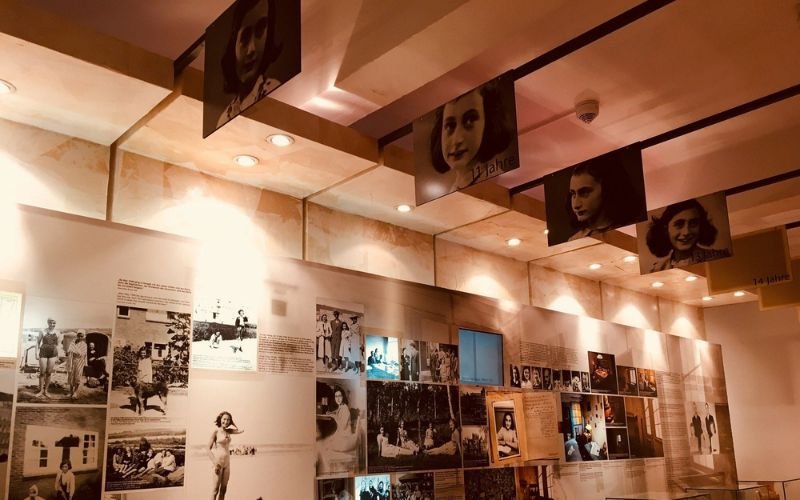
Located in the same courtyard as Otto Weidt’s workshop, the Anne Frank Zentrum is the German partner of the Anne Frank House in Amsterdam. When we stepped inside, we found an intimate, thoughtful exhibition that goes beyond the famous diary. It looks at Anne’s early life, her family’s German roots, and the wider themes of identity, discrimination, and resilience.
The space is small but powerful. Modern stories from young people confronting prejudice today add another layer, making the visit feel both historical and very current.
Admission is €8 for adults and €4 for students, pensioners, and anyone under 18, with additional discounts available for Berlin Welcome Card or Museum Pass holders.
5. Stolpersteine (Stumbling Stones)
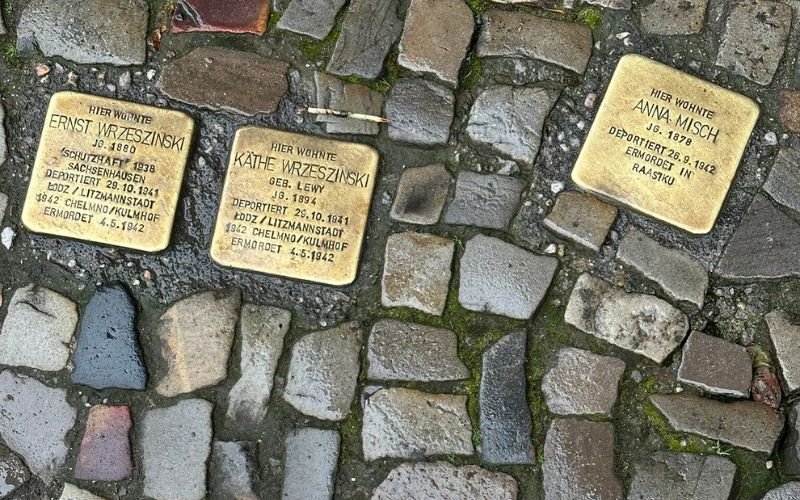
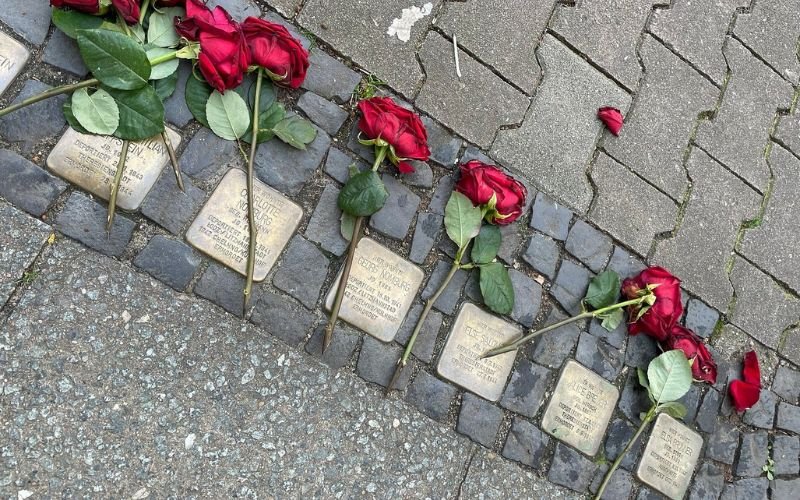
The Stolpersteine project, created by artist Gunter Demnig, is the world’s largest decentralised memorial. Each brass plaque is placed outside the last freely chosen residence of a victim of Nazi persecution.
In the former Jewish quarter, you’ll find hundreds of these stones. Each one begins with the words “Hier wohnte…” (“Here lived…”), followed by:
The person’s name
Date of birth
Deportation details
Fate (often “murdered in Auschwitz,” “shot in Riga,” or “died in Theresienstadt”)
They transform the sidewalks into a tapestry of remembrance.
6. The Old Jewish Cemetery on Große Hamburger Straße
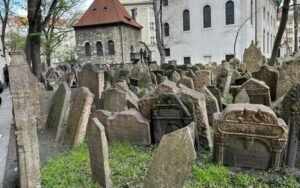
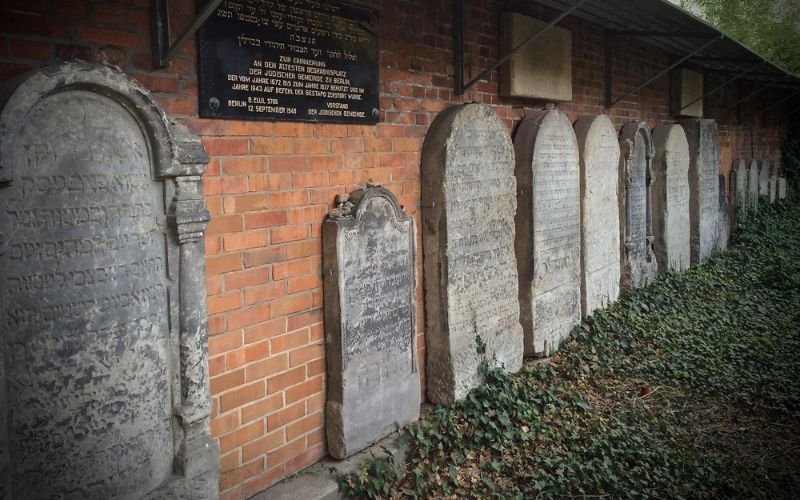
Established in 1672, this was Berlin’s oldest Jewish cemetery. It was the burial place of Moses Mendelssohn, the philosopher who helped usher in the Jewish Enlightenment (Haskalah).
A Site of Loss and Renewal
The cemetery was desecrated by the Nazis in 1943. Gravestones were smashed or removed, and the grounds were used as a staging area for deportations.
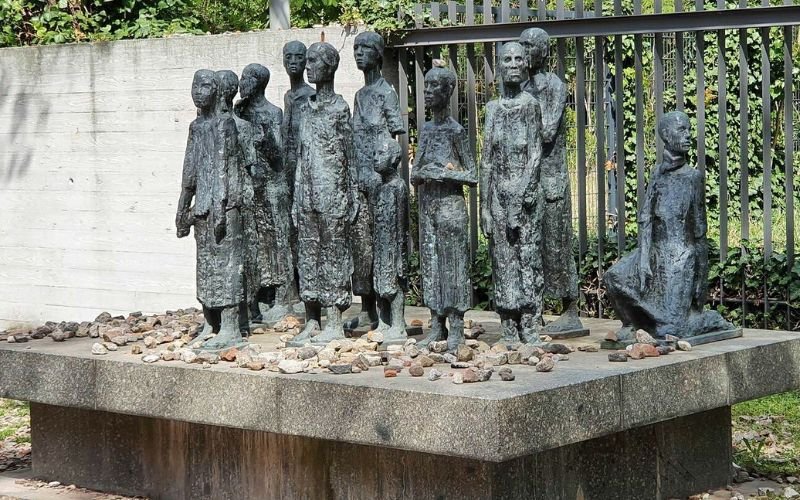
Today, the site is a serene memorial garden. A sculpture by Will Lammert—depicting gaunt, grieving figures—stands as a tribute to the Jewish victims of the Holocaust. The quiet atmosphere invites reflection amid the bustle of the city.
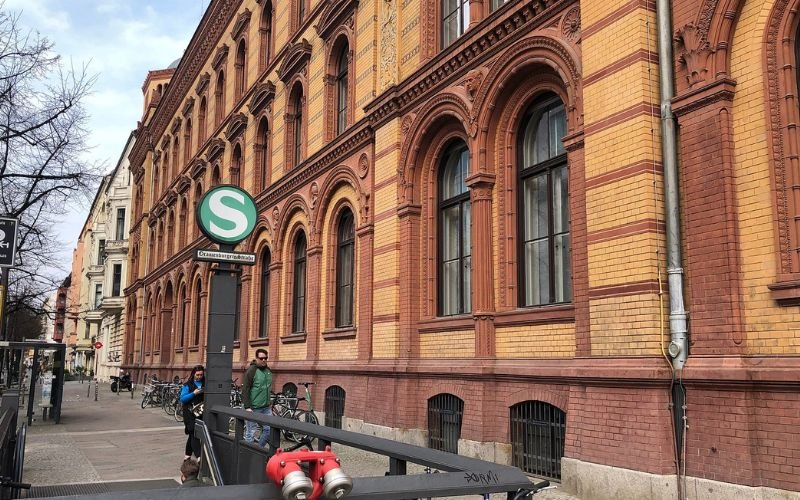
7. The Jewish Girls’ School (Jüdische Mädchenschule)
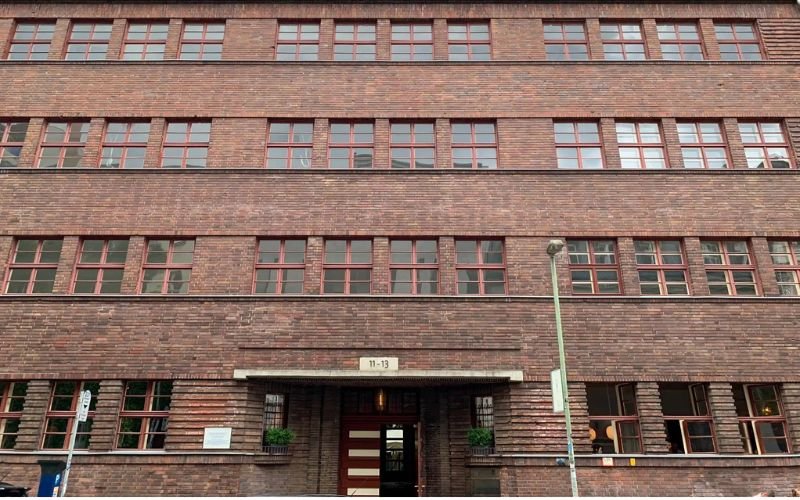
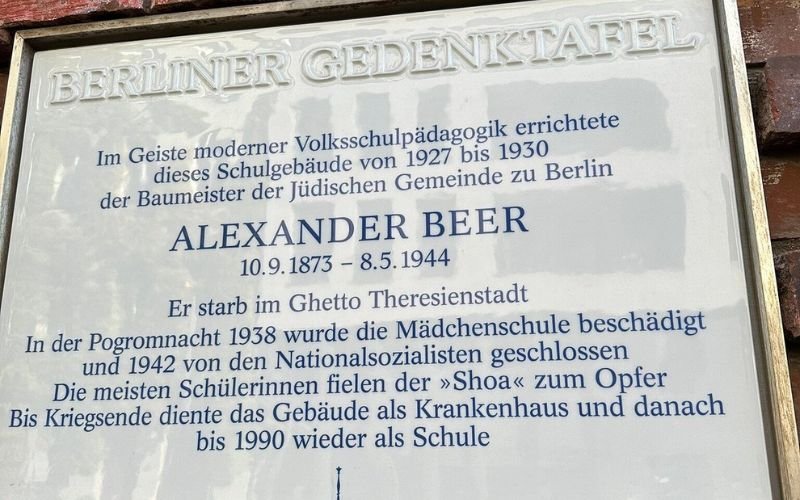
Built in 1930, this modernist school served Berlin’s Jewish community until 1942, when the Nazis closed it and deported many of its students and teachers.
After the war, the building served various purposes before falling into disrepair. In recent years, it has been restored and transformed into a cultural hub.
Inside, you’ll find:
Contemporary art galleries
Trendy restaurants
Preserved hallways with original tiles
Plaques honouring the students who once studied here
Suggested Walking Route Through the Quarter
We’ve put together a walking route that takes you through the former Jewish Quarter and covers all the highlights listed above. You’ll also find a Google Map below to help you navigate with ease.
1. Start at Hackescher Markt
This lively square is a perfect starting point.
2. Walk through the Hackesche Höfe
Enter through the main gate on Rosenthaler Straße. Wander through the courtyards at your own pace—each one has its own character. Stop at:
Courtyard I for its Art Nouveau façade
Courtyard VII for the Otto Weidt Museum
Courtyard II for small galleries and shops
3. Continue to the Anne Frank Zentrum
Located in the same courtyard complex, Allow at least 45 minutes to explore the exhibition.
4. Head toward Oranienburger Straße
As you walk, keep your eyes on the pavement. You’ll encounter Stolpersteine—small but powerful reminders of the people who once lived here.
5. Visit the New Synagogue
Spend time exploring the Centrum Judaicum. If the dome is open, consider climbing up for a view over the rooftops of the former Jewish quarter.
6. Walk to Große Hamburger Straße
This short street is dense with history. Here you’ll find:
The Old Jewish Cemetery memorial
The Jewish Girls’ School
A memorial to deported Jews
7. End near Monbijou Park
Cross over to Monbijou Park, it’s a lovely spot to sit and enjoy the river Spree.
Total Time
Expect to spend 2–3 hours on this route, longer if you linger in museums or stop for food.
The Jewish Quarter offers a powerful blend of memory, resilience, and contemporary culture. As we wandered through its lanes and courtyards, we found that the past and present sit side by side in a way that’s uniquely Berlin. We hope your visit is as meaningful as it is memorable.