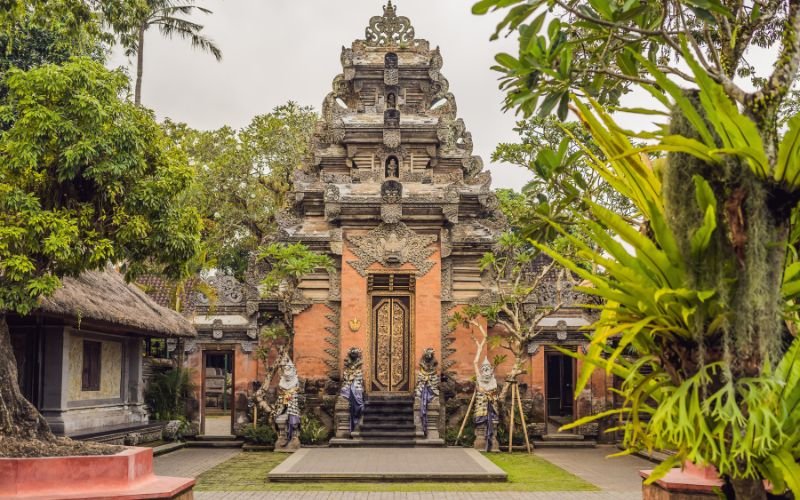
Ubud Palace is one of those places that instantly reminds you why Bali is so special. Set right in the heart of Ubud, this historic royal compound blends traditional Balinese architecture, cultural heritage, and everyday local life—all in a spot you can explore for free.
This guide walks you through everything you need to know before you visit, from what to expect to the best times to go and nearby attractions worth adding to your itinerary.
This post may contain affiliate links. If you make a purchase, we may earn a small commission at no extra cost to you. Our goal is to provide valuable and helpful content, and any commissions help us to mantain this site.
Contents
ToggleGet your Bali Essentials!
- Find cheap flights to Bali
- Find hotels or hostels for Bali
- Find activites and tours for Bali
- Get an eSIM for Bali. Use our code ‘TBTravellers’ to receive 5% OFF any eSIM!
History of Ubud Palace
Ubud Palace, or Puri Saren Agung, was built in the early 1800s by Tjokorda Putu Kandel, the ruling king of Ubud at the time. It became the royal family’s main residence and the cultural center of the region, helping shape Ubud into the artistic hub it’s known as today.
Although parts of the palace were rebuilt after the devestating 1917 earthquake, its traditional Balinese architecture—carved stone gates, gold‑trimmed doors and open pavilions—remains beautifully preserved.
Today, Ubud Palace is still home to the royal family, while the front courtyards are open to visitors. It continues its long tradition of supporting the arts, hosting nightly traditional ‘Legong’ dance performances that keep Bali’s cultural heritage alive.
Why Ubud Palace is Worth a Visit
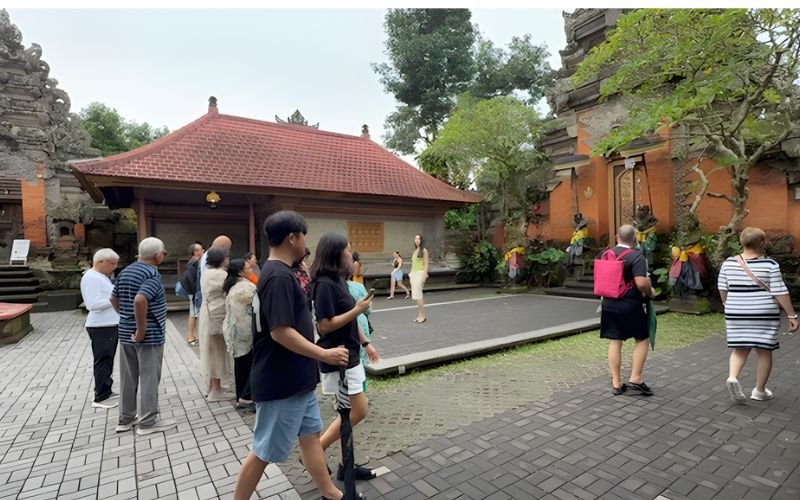
Ubud Palace isn’t a museum or a grand, roped‑off monument. It’s a living cultural space—part historical landmark, part community hub, part royal residence. That mix gives it a grounded, authentic feel. You’re not just looking at Bali’s history; you’re standing in the middle of it.
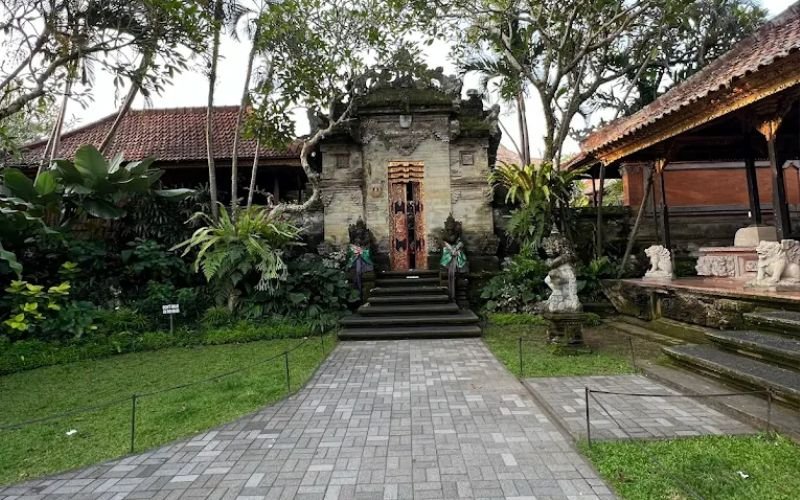
The palace grounds are compact but beautifully maintained, with ornate stone carvings, traditional Balinese architecture, and quiet courtyards that feel like a world away from the traffic outside.
And the best part? It’s free to enter
Where is Ubud Palace
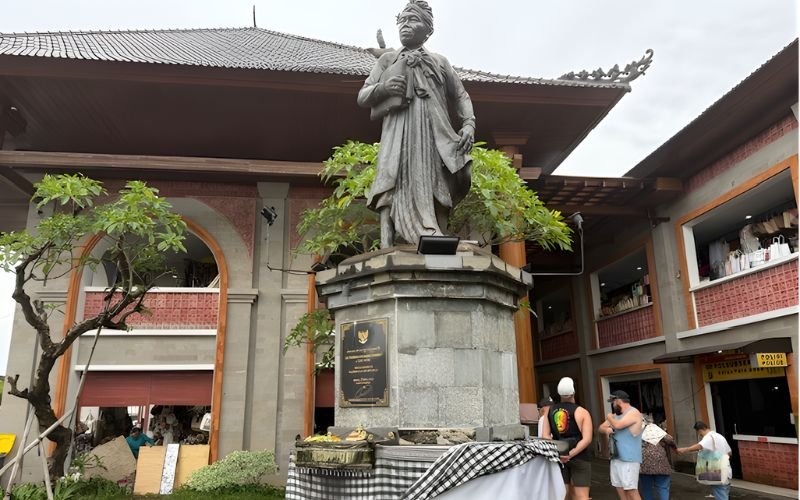
Ubud Palace sits right in the heart of Ubud, at the busy intersection of Jalan Raya Ubud and Jalan Monkey Forest. You’ll find it directly across from the Ubud Art Market, making it one of the easiest landmarks to spot in town. Because it’s so central, you can walk to the palace from most guesthouses, cafés, and shops in the area. Its prime location also makes it a perfect starting point for exploring nearby temples, markets, and other budget‑friendly attractions.
What to Expect When You Visit
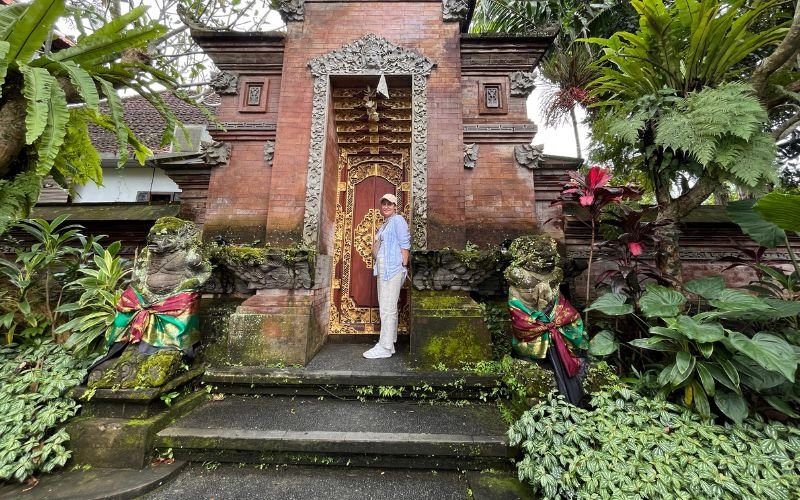
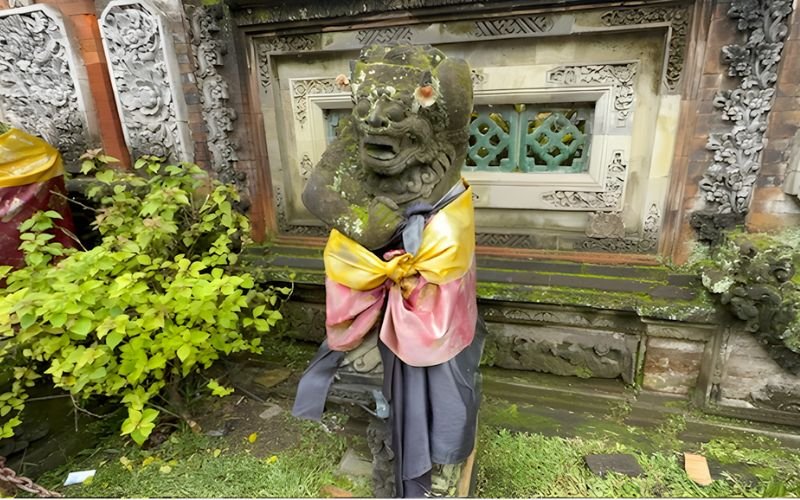
Ubud Palace is more compact than what we had imagined, but it’s rich in atmosphere and detail. As soon as you step inside, you’re surrounded by intricate stone carvings, gold‑painted wooden doors, and traditional Balinese pavilions arranged around quiet courtyards. Frangipani trees frame the pathways, adding that unmistakable Bali scent to the air.
Only the front sections of the palace are open to the public, as the inner areas are still home to the Ubud royal family. Even so, the accessible courtyards offer plenty to explore. You can wander between shrines, admire the craftsmanship up close, and take beautifully lit photos—especially in the early morning or late afternoon.
The palace isn’t a place where you’ll spend hours, but it’s a spot where slowing down pays off. Look closely and you’ll notice the layers of artistry that make Balinese architecture so special. It’s a peaceful, photogenic stop right in the heart of Ubud.
Ubud Palace Opening Hours
Ubud Palace is open daily from 7:00 AM to 5:00 PM, giving you plenty of time to wander through the public courtyards and admire the traditional Balinese architecture. Because the palace is an active royal residence, hours can occasionally change for ceremonies or private events, so it’s always smart to visit earlier in the day if you’re on a tight schedule.
While the palace grounds close in the late afternoon, the traditional Balinese dance shows begin in the evening, usually around 7:30 PM. Tickets are sold at the entrance, and seating is first‑come, first‑served, so arriving early is a good idea if you plan to attend.
Best Time To Visit the Ubud Palace
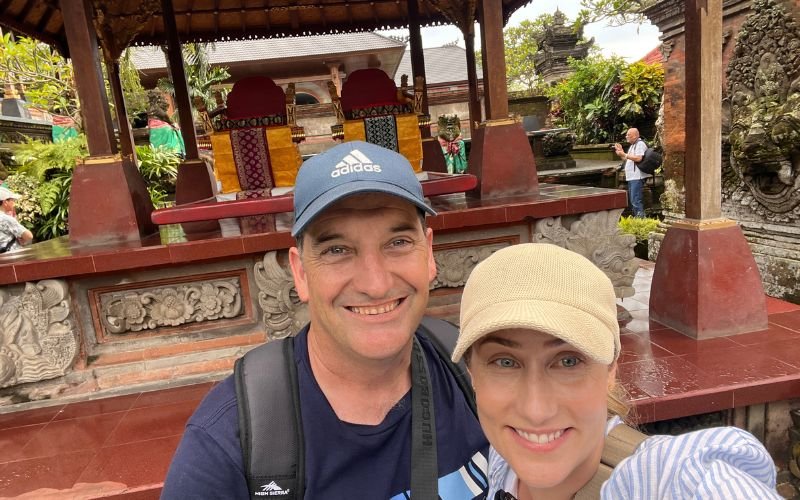
In our opinion, the best time to visit Ubud Palace is early in the morning, ideally between 8:00–10:00 AM. The light is soft, the courtyards are quieter, and you’ll avoid the tour groups that start arriving later in the day. If you prefer a livelier atmosphere, late afternoon is also a great time—just expect more people.
Evenings are busiest because the palace hosts the traditional ‘legong’ dance performances, which usually start around sunset. If you’re planning to attend, arrive at least 30–45 minutes early to get a good seat.
Weather‑wise, Ubud is warm year‑round, but the dry season (April–October) offers clearer skies and more comfortable exploring conditions, however when we visited in March we experienced a nice dry but cloudy day.
Nearby Attractions to Visit
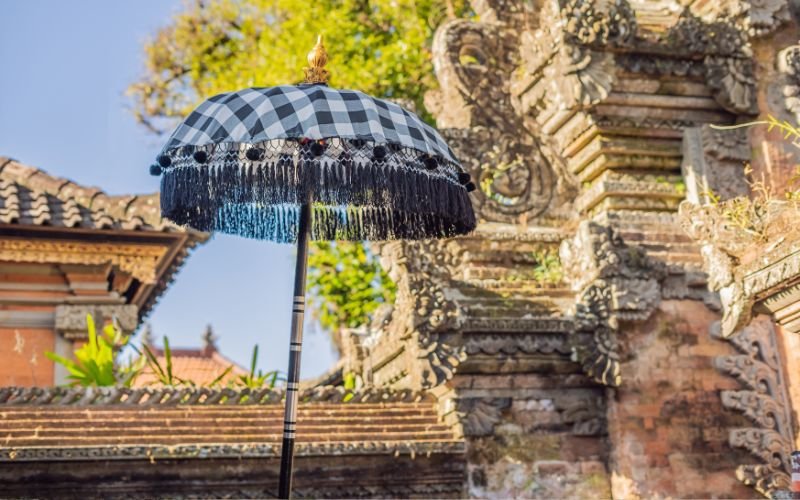
One of the best things about visiting Ubud Palace is how close it is to several other must‑see spots. You can easily explore these on foot, making it perfect for budget travellers.
Ubud Art Market (1 minute walk)
Right across the street, the lively market overflows with handmade crafts, woven bags, sarongs, wooden carvings, and colorful souvenirs.
It’s the kind of place where you can wander without any plan, touching fabrics, admiring the craftsmanship, and chatting with the locals. And yes, it’s the perfect spot to practice your bargaining skills, we found ourselves laughing through friendly negotiations and walking away with a few treasures!
Saraswati Temple (5 minutes walk)
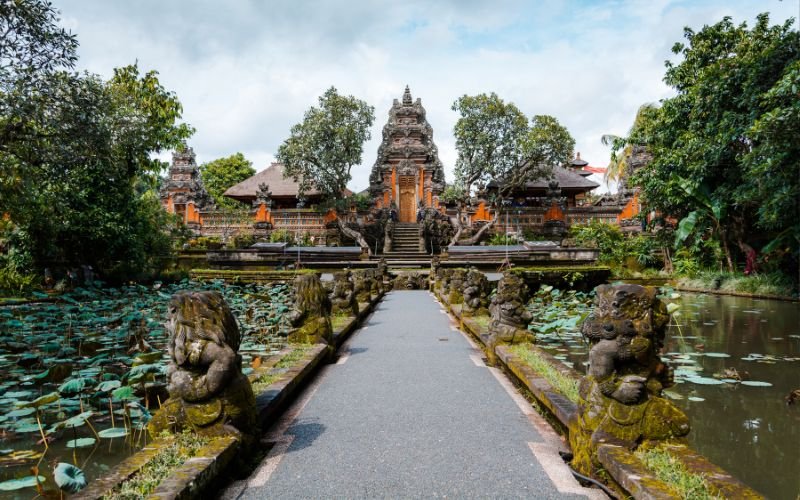
A beautiful water temple known for its lotus‑filled pond and ornate carvings, Saraswati Temple feels like a quiet escape just steps from the busy streets. When we walked in, the lotus flowers were opening across the water, creating a picture‑perfect scene. Entry is free, and the temple is especially photogenic in the morning when the light is soft and the crowds haven’t arrived yet.
Campuhan Ridge Walk (15 minute walk)
A scenic walking trail offering sweeping views of Ubud’s hills and rice fields. It’s peaceful, free and best enjoyed early in the day. Check out our post on Exploring Campuhan Ridge Walk: Ubud’s Most Beautiful (and Free) Hike.
Ubud Monkey Forest (20 minute walk or short scooter ride)
A lush sanctuary home to hundreds of Balinese long‑tailed macaques. It’s one of Ubud’s most famous attractions—just keep an eye on your belongings and be aware there is an entrance fee.
Pura Dalem Ubud (10 minute walk)
A striking temple known for its dramatic stone carvings and evening dance performances. It’s quieter than the palace but equally atmospheric.
As we stepped out of Ubud Palace, it felt like we were leaving a living piece of Balinese history behind. It’s a simple stop, but one that captures the heart of Ubud without costing a thing. If you’re exploring Ubud on a budget, this is one place you’ll be glad you didn’t miss.