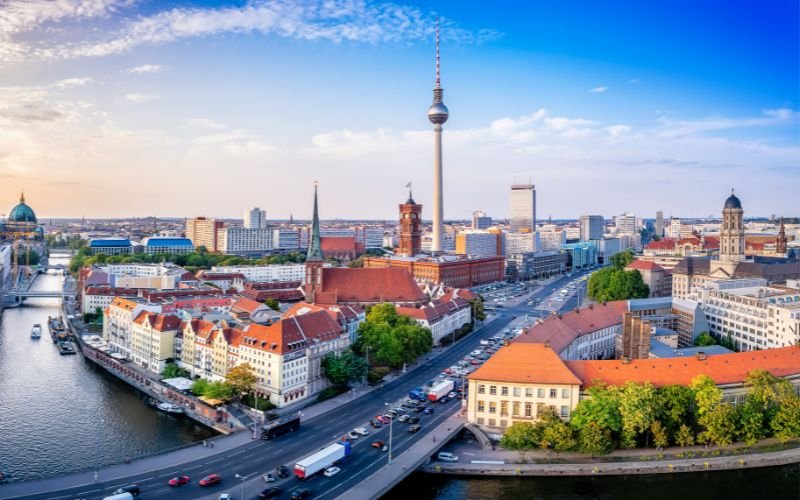
Berlin is a city where striking architecture, lively public squares, and sweeping urban views are part of everyday life — and the best part is, many of these experiences are completely free. From grand boulevards and modern design icons to historic plazas buzzing with local energy, the city invites you to explore its character without spending a thing.
If you want to dive deeper into Berlin’s history while keeping your budget at zero, our blog post Free Things to Do in Berlin: Best Historical Sites & Memorials covers powerful landmarks and memorials that add even more depth to your visit.
This guide highlights the most impressive spots to soak in Berlin’s architecture and cityscapes on any budget, and the blog post rounds out your itinerary with meaningful historical stops.
This post may contain affiliate links. If you make a purchase, we may earn a small commission at no extra cost to you. Our goal is to provide valuable and helpful content, and any commissions help us to mantain this site.
Contents
ToggleGet your Berlin Essentials!
- Find cheap flights to Berlin
- Find hotels or hostels in Berlin
- Find activites and tours for Berlin
- Compare hire car prices or train tickets
- Get an eSIM for Berlin. Use our code ‘TBTravellers to receive 5% OFF any eSIM!
Alexanderplatz
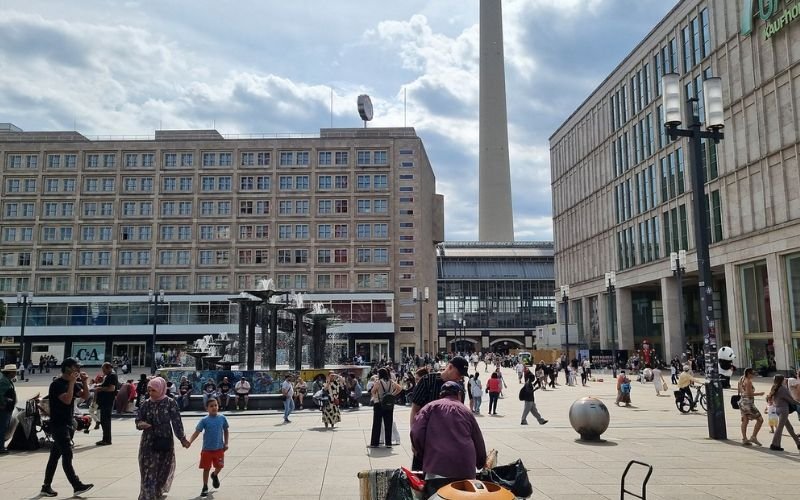
Alexanderplatz is one of the busiest spots in Berlin, a huge open square packed with trams, shops, and constant movement. It’s a major transport hub, so buses, trains, and the U‑Bahn all cross through here, which is why it stays active almost all day.
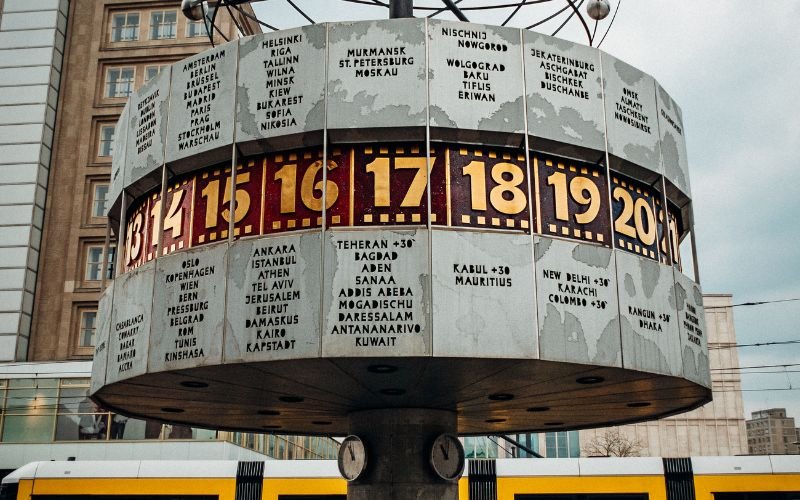
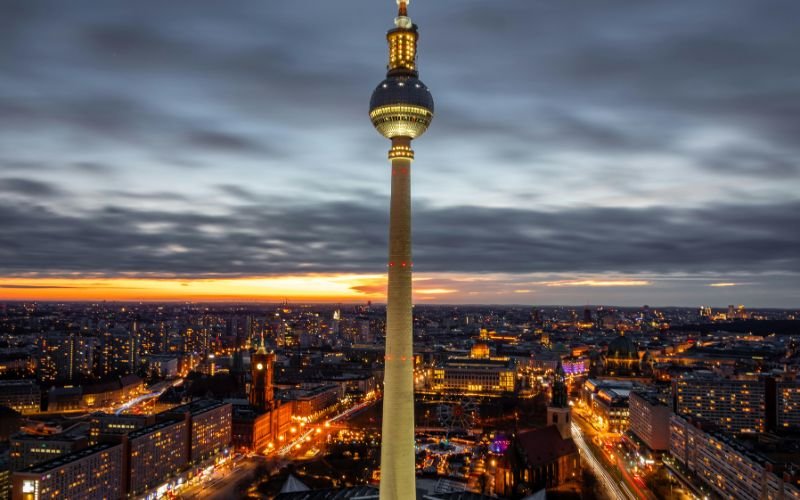
The TV Tower dominates the area — you can see it from almost anywhere in the city — and the World Clock is another well‑known feature, showing the time in cities around the globe. Around the square you’ll find plenty of cafés, restaurants, and shopping centres, along with lots of space to sit and watch the flow of people.
Most of the buildings here were rebuilt after World War II, since the area was heavily damaged, so the square has a much more modern feel compared to other parts of Berlin. It’s named after Tsar Alexander I, who visited the city in the early 1800s. If you want to experience the fast‑paced, contemporary side of Berlin, Alexanderplatz is an easy place to start.
Location
Alexanderplatz
Nearest Public Transport
S‑Bahn (City Rail) — right at the square
S3, S5, S7, S9 Station: S Alexanderplatz
U‑Bahn (Subway) — all inside the same station complex
U2 – Alexanderplatz
U5 – Alexanderplatz
U8 – Alexanderplatz
Trams — stop directly on the square
M4, M5, M6 Stops: Alexanderplatz / Dircksenstraße, Alexanderplatz / Gontardstraße
Gendarmenmarkt
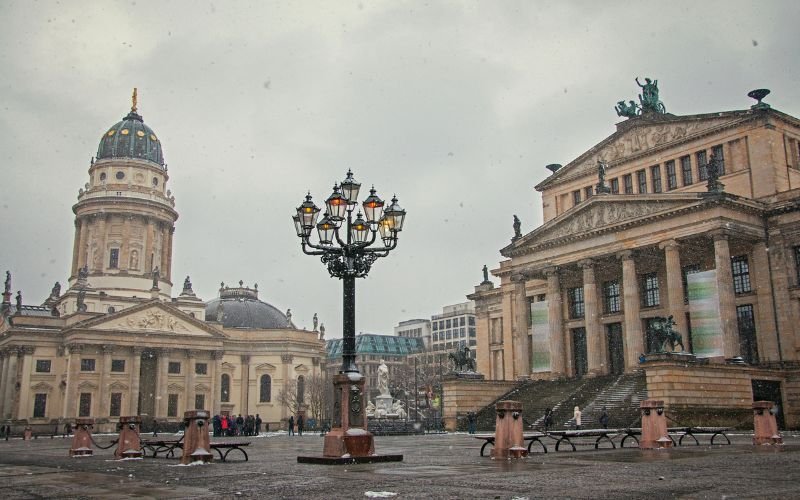
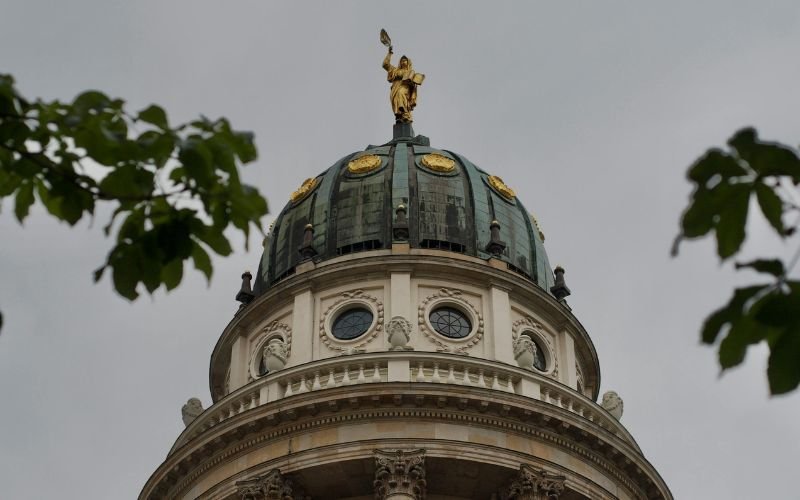
Gendarmenmarkt began as a market square in the late 1600s, built in the then‑new district of Friedrichstadt. Its name comes from the “Gens d’armes” cavalry regiment that once kept their stables here. Today, the square is best known for its three standout buildings: the German Cathedral, the French Cathedral, and the Konzerthaus. Together they form one of Berlin’s most striking architectural ensembles.
Often described as one of the city’s most attractive squares, Gendarmenmarkt has a calm, elegant feel and is a great place for photos or a relaxed wander.
Location
Gendarmenmarkt, surrounded by the German Cathedral, French Cathedral, and the Konzerthaus.
Nearest Public Transport
U‑Bahn (Subway) — Closest
U Stadtmitte (U2, U6) — 4–5 min walk The most convenient station for reaching the square.
U‑Bahn (Alternative)
U Hausvogteiplatz (U2) — 5–6 min walk
U Französische Straße (U6) — 6–7 min walk
S‑Bahn (City Rail)
S Friedrichstraße (S1, S2, S3, S5, S7, S9) — 10–12 min walk Major interchange with many connections.
Buses
Bus M48, 200 (Stop: Stadtmitte / Mohrenstraße) — 4–6 min walk
Bus 147 (Stop: Markgrafenstraße / Französische Straße) — 3–4 min walk
Potsdamer Platz
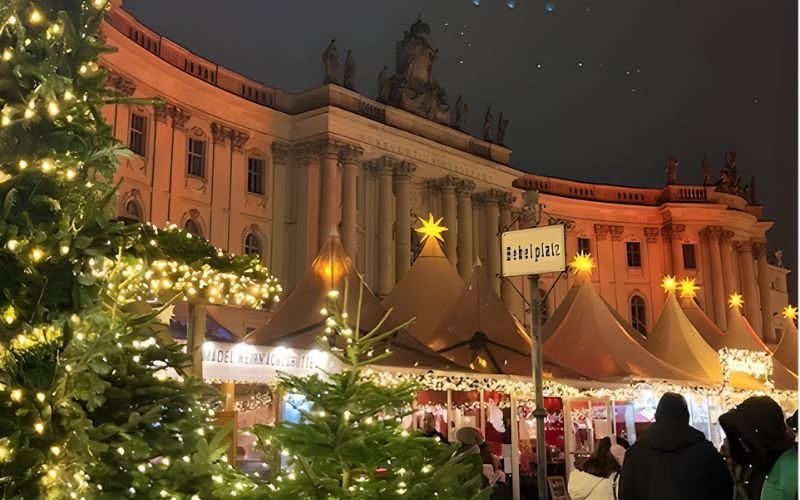
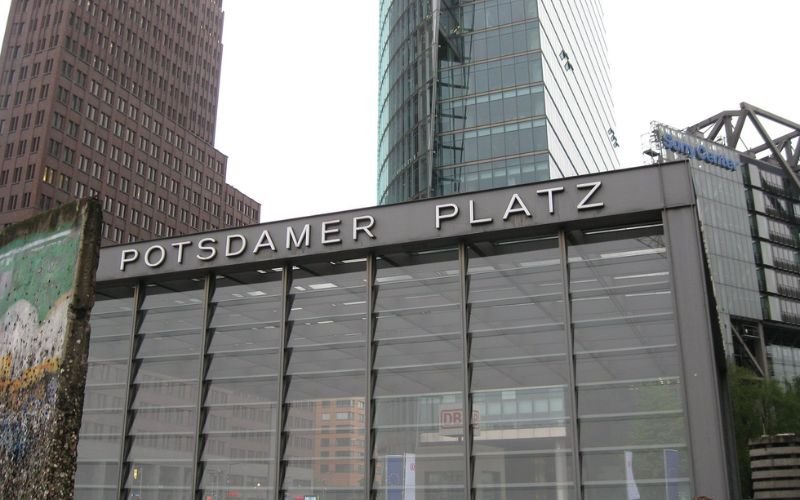
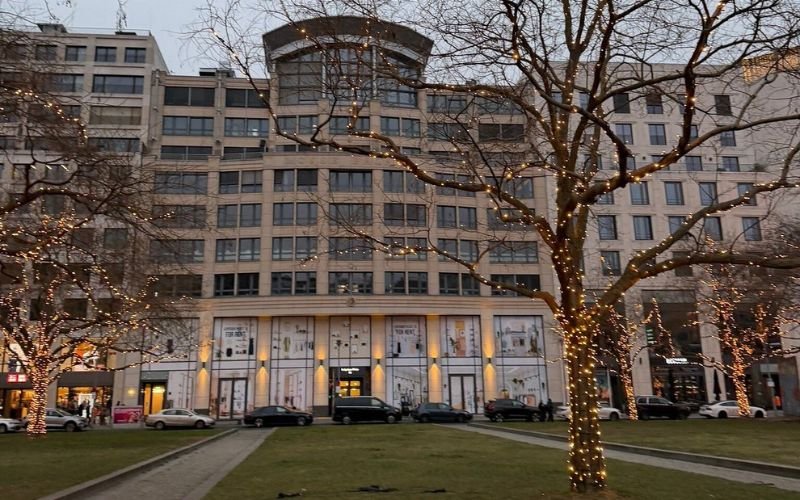
The square is surrounded by glass towers, sharp modern architecture, and large shopping centres like the Mall of Berlin. There are several hotels, a theatre, a big cinema complex that’s used during the Berlin Film Festival, and plenty of restaurants and cafés. One of the city’s Christmas markets is also held here in winter.
Potsdamer Platz is a major transport hub and a large open area, so it stays busy throughout the day. Most of what you see today was rebuilt after reunification, since the area was once part of the “death strip” along the Berlin Wall.
Whether you’re into architecture, modern city life, or just want somewhere central to explore, it’s an easy place to spend a few hours.
Location
Potsdamer Platz, at the border of the Mitte and Tiergarten
Nearest Public Transport
S‑Bahn (City Rail) — Closest
S Potsdamer Platz (S1, S2, S25, S26) Located directly beneath the square — the fastest and most convenient option.
U‑Bahn (Subway)
U Potsdamer Platz (U2) Same station complex as the S‑Bahn, accessed from the square.
Buses
Potsdamer Platz / Varian-Fry-Straße — multiple lines including M41, M48, M85
Leipziger Platz — 2–3 min walk
Philharmonie — 5–7 min walk (good for Kulturforum visits)
Oberbaum Bridge (Oberbaumbrücke)
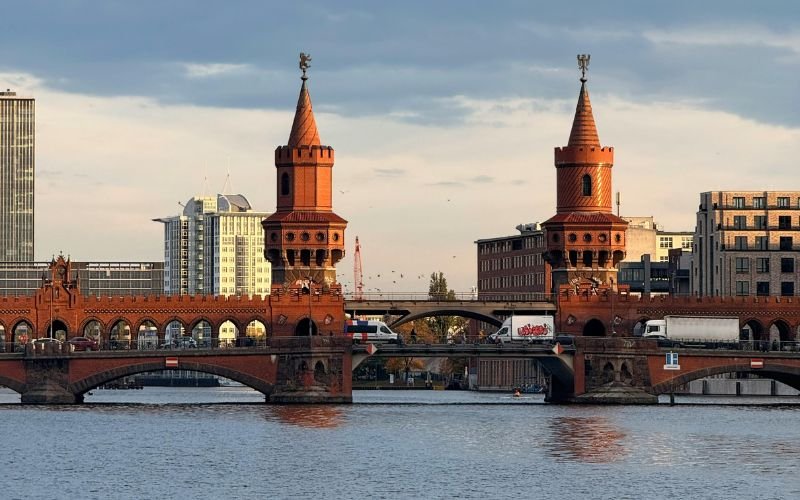
The Oberbaum Bridge is a distinctive double‑level bridge linking Friedrichshain and Kreuzberg. Its brick towers and Gothic‑inspired design make it one of Berlin’s most recognisable landmarks, and the views over the Spree River are great from both sides.
The bridge carries cars, pedestrians, and the U‑Bahn. The trains run on the upper level, directly above the walkway, so you’ll hear them passing overhead as you cross. It’s a popular spot for photos and a good place to see the contrast between the two neighbourhoods it connects.
Location
Oberbaumbrücke, connecting the districts of Friedrichshain and Kreuzberg.
Nearest Public Transport
U‑Bahn (Subway) — Closest
U Schlesisches Tor (U1, U3) — 2–3 min walk Located on the Kreuzberg side of the bridge.
U Warschauer Straße (U1, U3) — 5–6 min walk Located on the Friedrichshain side.
S‑Bahn (City Rail)
S Warschauer Straße (S3, S5, S7, S9) — 6–7 min walk Major interchange with both S‑Bahn and U‑Bahn.
Buses
Bus 165, 265 (Stop: Schlesisches Tor) — 2–3 min walk
Bus 347 (Stop: Oberbaumbrücke) — right next to the bridge
Berlin Cathedral (Exterior)
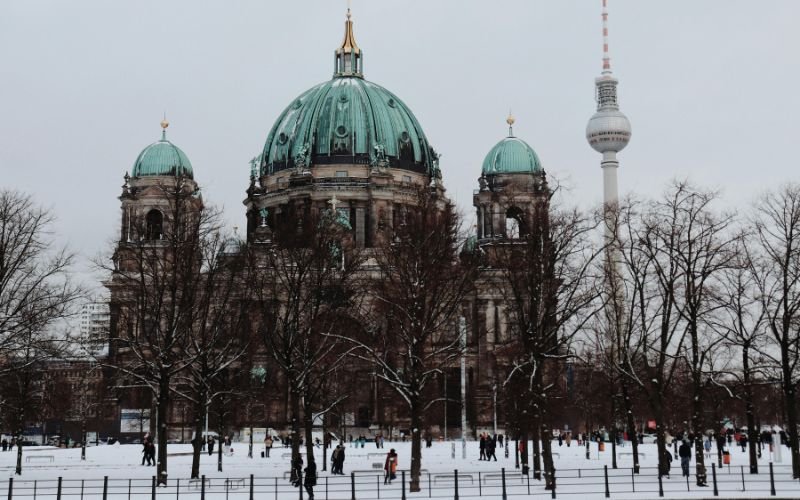
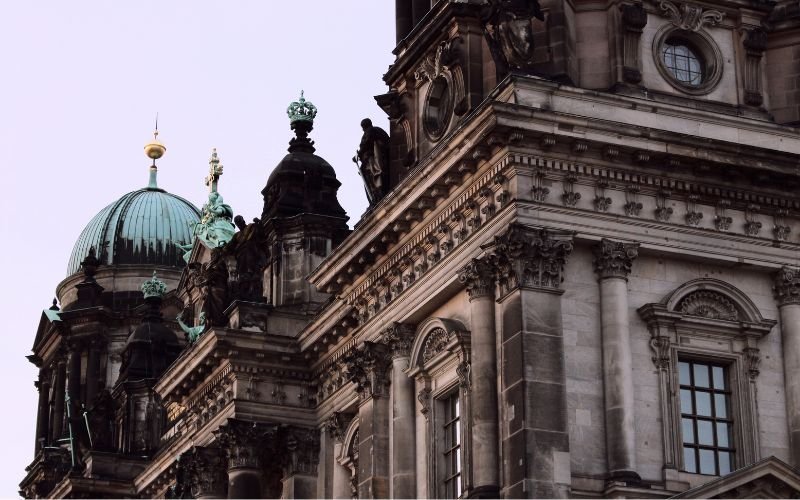
While you need a ticket to go inside the dome, the outside of the Berlin Cathedral is already impressive on its own. The best full view of the main façade is from Lustgarten Park, where the open lawn lets you take in the entire front of the building. If you walk around to the back, the Spree riverside path gives you great angles of the cathedral’s side and its distinctive green dome. It’s one of the quieter spots in the area and a nice place to see the building from a different perspective.
Location
Am Lustgarten, directly across from the Altes Museum and close to Unter den Linden.
Nearest Public Transport
U‑Bahn (Subway)
U Museumsinsel (U5) — 4–5 min walk The closest U‑Bahn station.
S‑Bahn (City Rail)
S Hackescher Markt (S3, S5, S7, S9) — 6–8 min walk The most convenient S‑Bahn stop for the cathedral.
Trams
Spandauer Straße / Marienkirche — 5 min walk Served by M4, M5, M6.
Nikolaiviertel
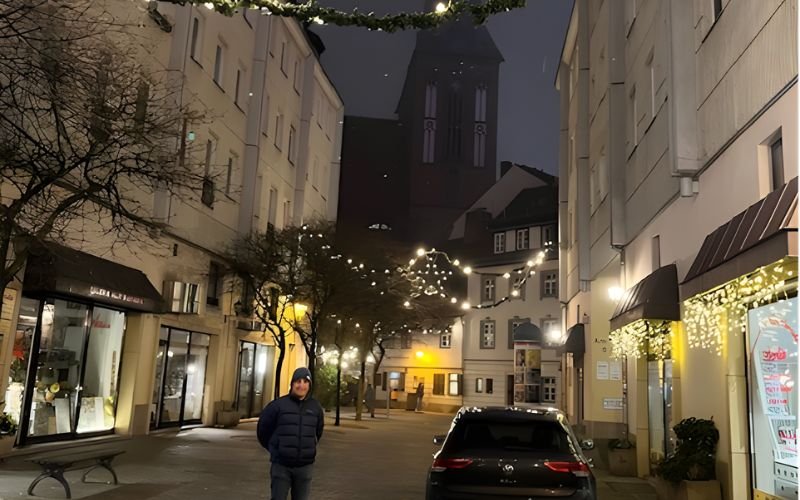
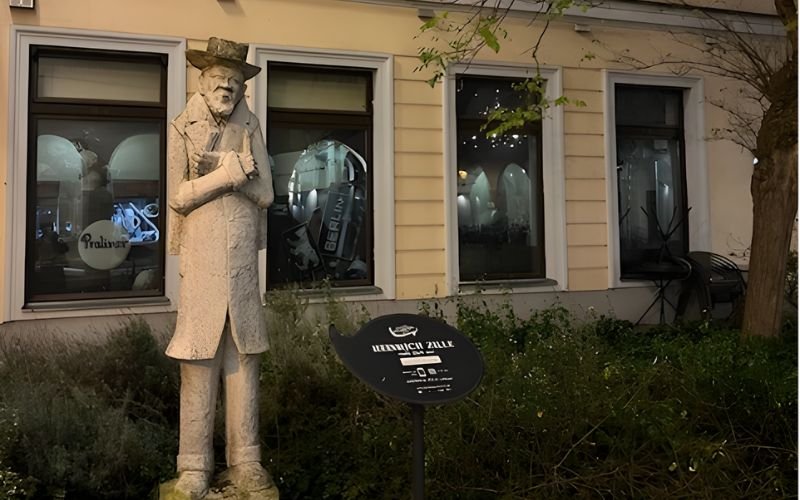
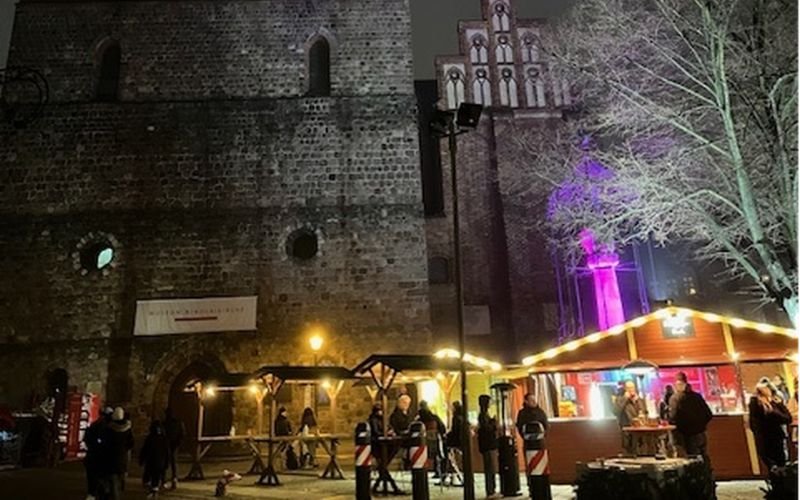
The Nikolaiviertel is one of the oldest parts of Berlin, even though most of what you see today was rebuilt after World War II. The area originally grew around the Nikolaikirche in medieval times, and the modern reconstruction was designed to reflect the style of the old streets and houses.
It’s a compact neighbourhood just behind City Hall, with narrow lanes, traditional‑style buildings, and a quieter atmosphere than the rest of central Berlin. There are plenty of cafés, restaurants, and places to sit outside, which makes it a pleasant spot to wander.
Even though it’s a reconstruction, it’s one of the few areas where you can get a sense of what pre‑war Berlin might have looked like.
Location
Rathausstraße 21, just south of Alexanderplatz.
Nearest Public Transport
U‑Bahn (Subway)
U Rotes Rathaus (U5) — 5–6 min walk This is the closest U‑Bahn station.
S‑Bahn (City Rail)
S Alexanderplatz (S3, S5, S7, S9) — 7–10 min walk Major interchange with many connections across Berlin.
Trams
Spandauer Straße / Marienkirche — 5–6 min walk Served by M4, M5, M6.
Rotes Rathaus (Red Town Hall)
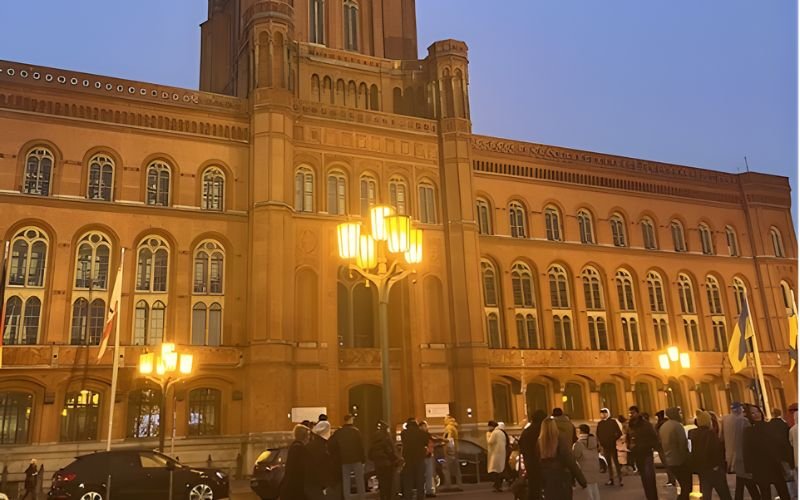
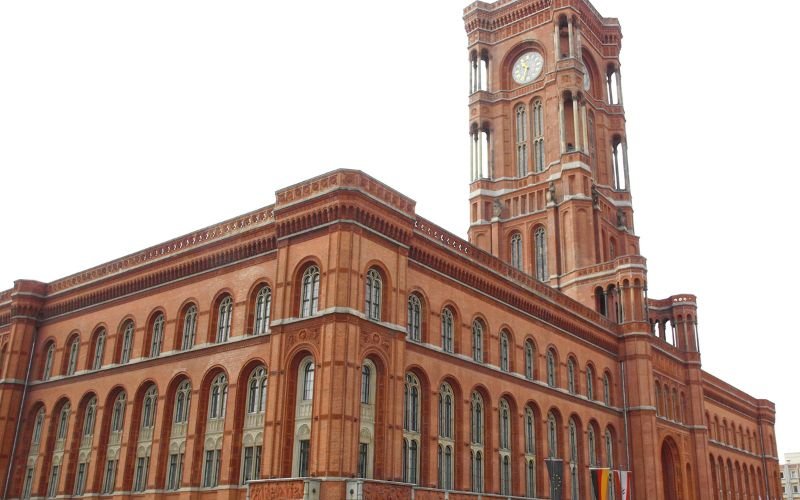
The Rotes Rathaus, or Red Town Hall, is Berlin’s city hall and is easy to spot thanks to its red‑brick exterior and tall central tower. It was originally built between 1861 and 1869 in a mix of Renaissance and Gothic‑inspired styles, designed by architect Hermann Friedrich Waesemann. The tower rises 74 meters and was partly modeled on the towers of the Laon Cathedral in France.
The building was heavily damaged during World War II and later rebuilt between 1951 and 1958, with some changes made to the interior. During the GDR era, it served as the seat of East Berlin’s government, which gave the name “Red Town Hall” a second meaning beyond the brick color.
Today, it stands near Alexanderplatz and remains one of the most recognisable public buildings in the city.
Location
Rathausstraße 15, right in the central district of Mitte, next to Alexanderplatz.
Nearest Public Transport
U‑Bahn (Subway)
U Rotes Rathaus (U5) — right at the building This is the closest and most convenient stop.
S‑Bahn (City Rail)
S Alexanderplatz (S3, S5, S7, S9) — ~5–7 min walk Major interchange with many connections.
Trams
Alexanderplatz / Spandauer Straße — ~3–5 min walk Served by lines M4, M5, M6.
Kaiser Wilhelm Memorial Church (Exterior)
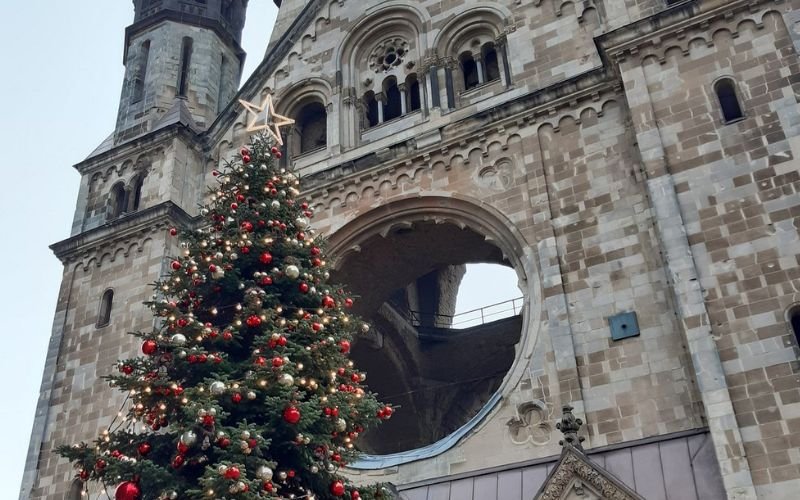
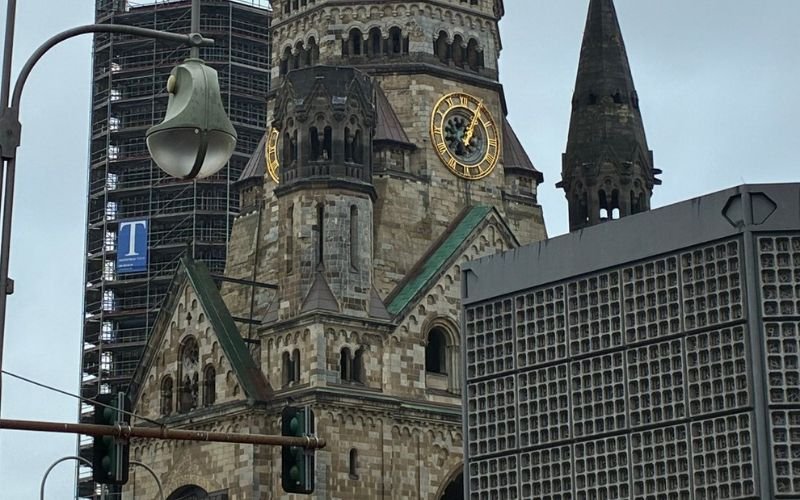
Across from the Bikini Centre and close to the Berlin Zoo, you’ll find the remains of the Kaiser Wilhelm Memorial Church. The original building was badly damaged during World War II, and instead of being fully rebuilt, the surviving structure was stabilized and turned into a memorial and small museum. A modern bell tower and chapel were later added beside the ruins, creating a striking contrast between the old and the new. The area also hosts a Christmas market during the holiday season.
Location
Breitscheidplatz, right in the heart of the Charlottenburg district.
Nearest Public Transport
U‑Bahn (Subway)
U Kurfürstendamm (U1, U9) — ~2–3 min walk
U Zoologischer Garten (U2, U9) — ~4 min walk
U Uhlandstraße (U1) — ~6 min walk
S‑Bahn (City Rail)
S Zoologischer Garten (S3, S5, S7, S9) — ~4 min walk This is the main interchange for the area.
Exploring Berlin doesn’t have to cost much — many of its most impressive buildings, squares, and historic sites are completely free to enjoy. From modern landmarks to reconstructed medieval streets, the city offers plenty to see without stretching your budget.
If you want to add even more depth to your trip, our blog post Free Things to Do in Berlin: Best Historical Sites and Memorials highlights powerful places that bring Berlin’s past into focus, all without spending a cent.
Hopefully this guide helps you plan your visit and experience some of Berlin’s best spots while keeping costs low.