Barcelona is one of Europe’s most walkable and well‑connected cities, which is great news for travellers trying to stretch their euros. With an efficient metro, extensive bus network, and affordable transport passes, getting around doesn’t have to cost much at all. And if you’re looking to pair budget‑friendly transport with equally budget‑friendly activities, our blog post Free Things to Do in Barcelona is the perfect companion—packed with ideas that make exploring the city even more rewarding.
Here’s your complete guide to navigating Barcelona on a budget—without sacrificing convenience or comfort.
This post may contain affiliate links. If you make a purchase, we may earn a small commission at no extra cost to you. Our goal is to provide valuable and helpful content, and any commissions help us to mantain this site.
Contents
ToggleGet your Barcelona Essentials!
- Find cheap flights to Barcelona
- Find hotels or hostels in Barcelona
- Find activites and tours for Barcelona
- Compare hire car prices and train tickets
- Get an eSIM for Barcelona. Use our code ‘TBTravellers to receive 5% OFF any eSIM!
The Metro: Fast, Cheap and Tourist Friendly
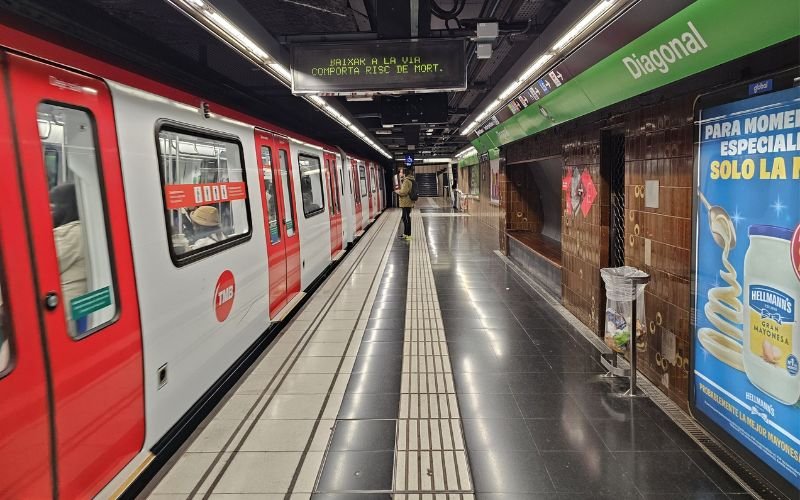
Barcelona’s metro is the backbone of the city’s public transport system. With 12 lines, hundreds of stations, and connections to nearly every major attraction, it’s the go‑to choice for both locals and visitors and we found it super easy to navigate.
Why the Metro Works So Well for Budget Travellers
Speed: Trains run every 2–5 minutes during the day and operate from 5AM – midnight Monday-Thursday, until 2AM on Friday and 24 hours on Saturday.
Coverage: From Gaudí landmarks to the beach, the metro gets you close to almost everything. To find your line when your at the station, just look for the colour coded lines then follow the platforms towards your destination.
Predictability: No traffic, no delays, no surprises.
Accessibility: Elevators and escalators are common, and signage is clear in Catalan, Spanish, and English. Be sure to validate your ticket at the turnstile (remember to keep it) and then you press the button on the outside of the train to open the carriage.
When to Use the Metro
Long distances (e.g., Sagrada Família → Montjuïc)
Hot summer days when walking becomes exhausting. We were there in the peak of summer and were so grateful for the airconditioned trains.
Rainy days
Airport connections (with Hola BCN!)
Insider Tips
Avoid rush hour (8–10 AM and 5–7 PM) if you dislike crowds.
Some stations, like Passeig de Gràcia, are huge — allow extra time for transfers.
Keep your ticket handy; inspectors do random checks.
- We never had any issues and always found the metro safe, but we were warned that pickpocketing is a regular occurrence so be sure to keep an eye on your belongings at all times.
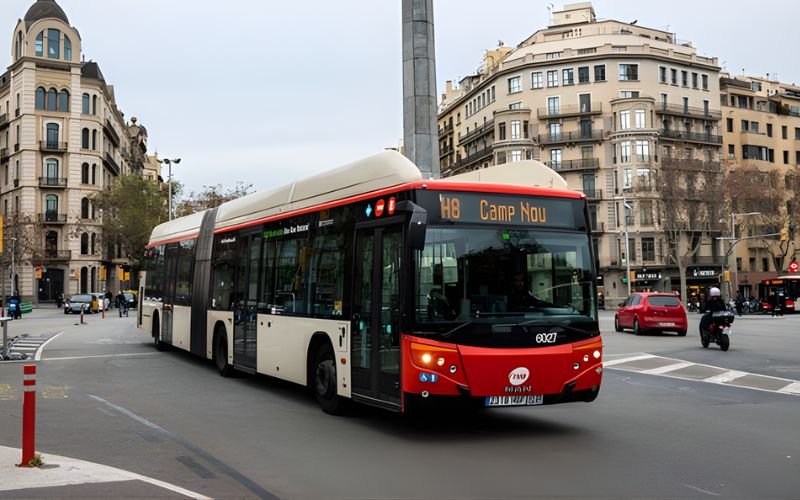
Buses: Scenic, Affordable and Perfect for Shorter Trips
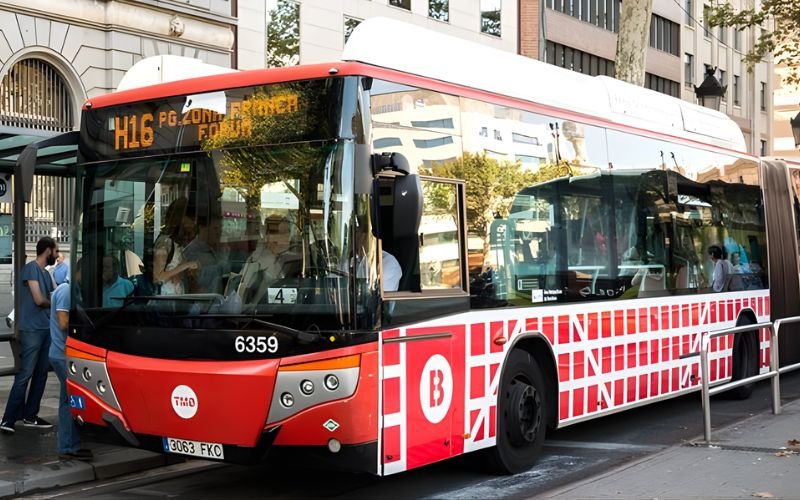
Barcelona’s bus network is massive — over 100 lines — and often more scenic than the metro. In some ways we prefer to take the bus as you pass through neighbourhoods, see local life, and enjoy views you’d miss underground.
Why Buses Are Worth Using
Same price as the metro when using tickets like the T-casual or T-usual (we’ll explain that later on in the post) as they belong to the same fare system. A single ticket for either is around €2.55–€2.90, allowing you to travel across both modes within Zone 1 for the same price. It is still much cheaper to use a pass than single ticket however.
Great for short hops between neighbourhoods and they run every 5-10 minutes.
Ideal for reaching areas with fewer metro stops, like Tibidabo or parts of Gràcia
Night buses (NitBus) run after the metro closes.The NitBus runs from10PM-6AM.
Best Bus Routes for Travellers
V15: Runs down Passeig de Gràcia — great for Gaudí sightseeing like Casa Mila and Casa Batllo
59: A beautiful coastal route along Barceloneta Beach and the Olympic Port area
24: Takes you close to Park Güell (with less walking uphill from the metro). Look for the bus stop name ‘Carretera del Carmel – Parc Güell’.
Things to Know
Buses can be slower during peak traffic. Be sure to press the stop button when your stop is displayed on the screen or announced.
You must enter through the front door and validate your ticket. We have seen inspectors checking tickets and issuing fines.
Google Maps and the TMB app are extremely accurate for bus timings.
Trams: Clean, Comfortable and Suprisingly Underrated
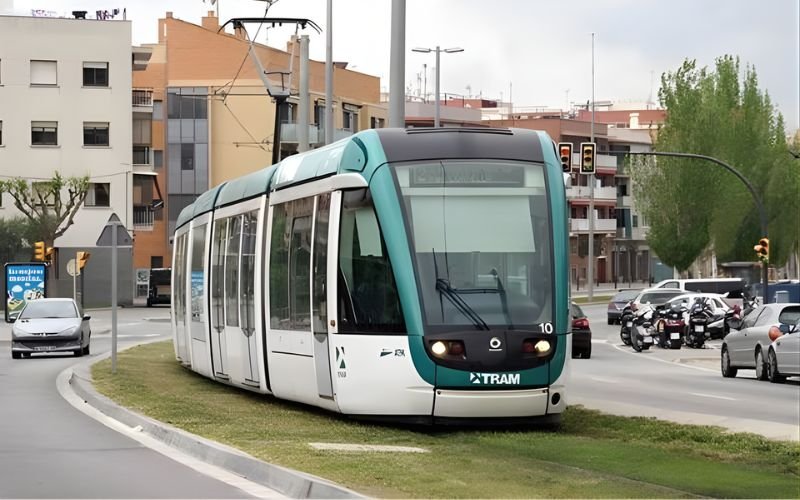
Barcelona’s trams don’t get as much attention as the metro or buses, but they’re a gem for budget travellers staying outside the city center.
Why Trams Are Great
Smooth, quiet, and modern. Be sure to validate your ticket at the green machines on the platform before getting on the tram.
Dedicated tracks mean fewer delays and trams run every 5 – 10 minutes in peak times
Perfect for reaching suburban areas, shopping centers, and business districts and you can use the same tickets as the metro such as the T-casual, T-usual or the Hola Barcelona Travel Card.
Where Trams Are Most Useful
Diagonal Avenue (a major artery through the city)
Glòries and Forum areas
Suburban neighborhoods with fewer metro connections
If you’re staying near Diagonal Mar, Poblenou, or Les Corts, trams can be a lifesaver. Just keep in mind that the trams rarely pass any top attractions.
Bicycle: Freedom for Sightseeing
Biking around Barcelona is one of the most flexible and budget‑friendly ways to move through the city, especially if you like a bit of freedom with your sightseeing.
Why Bikes Are Great
Barcelona is mostly flat, with an ever‑growing network of dedicated bike lanes that make riding feel safe and intuitive
You can stop anywhere—beaches, cafés, viewpoints—without worrying about timetables
Bike hire is cheap, quick, and available across all major neighbourhoods
No special tickets needed, just pick up a bike and go
Where to Hire & What It Costs
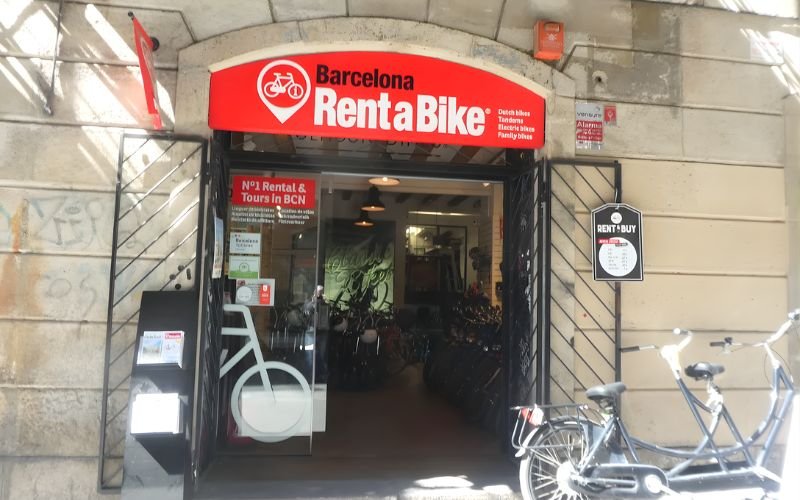
Barcelona Rent a Bike – City bikes €8 for 2 hours or €12 for a full day
Donkey Republic (app‑based) – Unlock‑and‑ride bikes from roughly €12–€18 per day, depending on demand
Budget shops in Poblenou & Gothic Quarter – Basic bikes often €6–€10 per day
Most shops include locks, maps, helmets, and many offer e‑bikes if you want an easier ride up Montjuïc.
Where Bikes Are Most Useful
Along the beachfront from Barceloneta to Poblenou
Through Eixample’s grid of wide, bike‑friendly streets
Parc de la Ciutadella and the Arc de Triomf area
The long, straight stretch of Avinguda Diagonal
If you’re staying near the coast, in Eixample, or anywhere with good bike‑lane coverage, cycling can be a total game‑changer. Just keep in mind that the Gothic Quarter’s narrow lanes can get crowded, so walking your bike there is often the smarter move.
Walking: The Most Rewarding (and Free) Way to Explore Barcelona
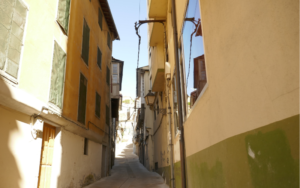
Barcelona is a walker’s paradise. The city is compact, flat in most areas, and full of pedestrian‑friendly streets. We discovered so many hidden plazas, local bakeries and street musicians when we just wandered without a plan.
Why Walking Is Essential
Saves money
Lets you explore at your own pace
Helps you discover local gems
Perfect for photography lovers
Our Favourite Walking Routes
1. Gothic Quarter → El Born → Barceloneta
A journey through medieval streets, artisan shops, and finally the sea.
2. Passeig de Gràcia → Eixample Grid
See Casa Batlló, La Pedrera, and the elegant architecture of the Eixample.
3. Montjuïc Hill Trails
Panoramic views, gardens, and museums — all accessible on foot.
4. Poblenou → Bogatell Beach
A quieter, more local alternative to Barceloneta.
Walking Tips
Wear comfortable shoes — cobblestones can be tough.
Stay hydrated; Barcelona has many public fountains so bring a refillable bottle
Watch out for pickpockets in crowded tourist zones. We always use cross-body bags for extra safety and never experienced any issues

The Best Budget Transport Passes in Barcelona
Choosing the right pass can dramatically reduce your transport costs. Here’s a deeper look at the most useful options.
1. T‑Casual (10‑Trip Ticket)
The most popular option for short‑term visitors.
Why It’s Great
€11–12 for 10 rides
Can be shared among multiple people
Valid on metro, buses, trams, and local trains
Perfect for travellers who walk a lot but need occasional transport
When It Saves You Money
If you’re in Barcelona for 2–4 days and plan to walk most of the time, this is the best value.
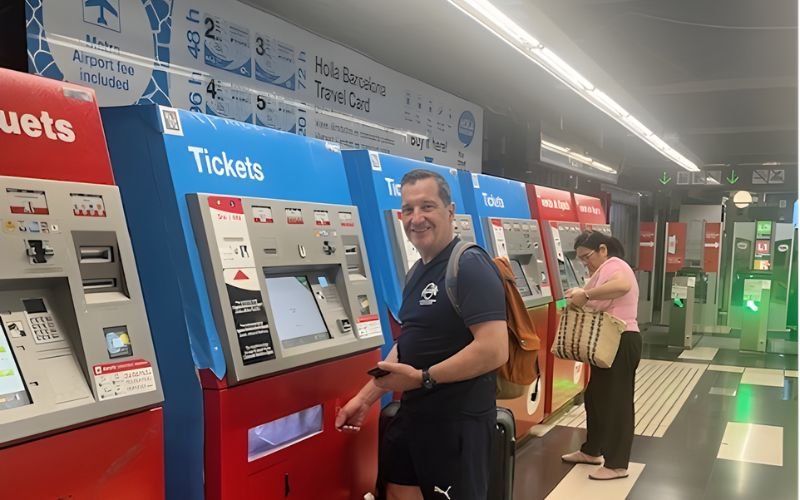
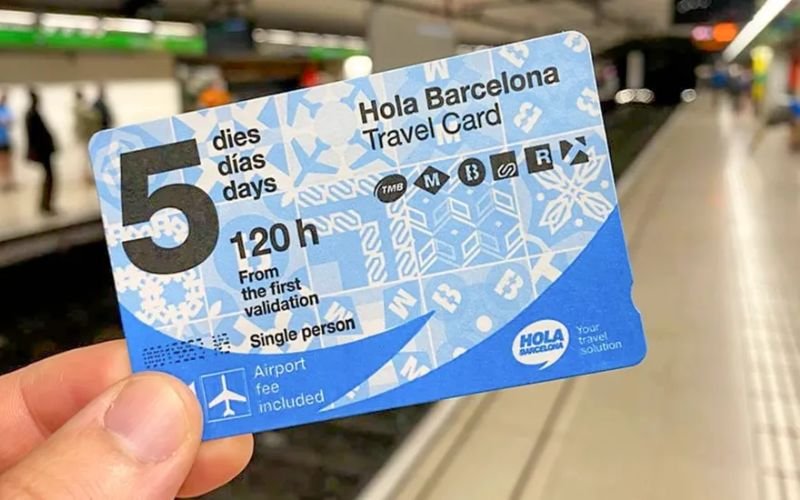
2. Hola BCN! Unlimited Travel Card
A favorite among first‑time visitors.
What You Get
Unlimited rides for 2, 3, 4, or 5 days
Airport metro included
No need to count trips or worry about zones
Best For
Busy sightseeing itineraries
Families
Travellers staying far from the city center
Approximate Cost (2026)
- 2 Days (48h): ~€17.50 – €18.00
- 3 Days (72h): ~€26.00 – €27.00
- 4 Days (96h): ~€33.00 – €34.00
- 5 Days (120h): ~€40.00 – €41.00
3. T‑Usual (30‑Day Unlimited Pass)
A long‑stay essential.
Why It’s a Bargain
Around €22 for unlimited travel for 30 days
Pays for itself in about 8–10 rides
Ideal for digital nomads or slow travellers
4. Single Tickets
The least cost‑effective option.
When They Make Sense
You only need one or two rides
You’re walking almost everywhere
You’re arriving late at night and just need a quick metro trip
Smart Transport Strategy for Budget Travellers
If You’re Visiting for 3–4 Days
Buy a T‑Casual
Walk as much as possible
Use the metro for long distances
Use buses for scenic routes or beach access
If You’re Visiting for 5+ Days
Choose Hola BCN! if you’ll be sightseeing heavily
Choose T‑Usual if you’re staying longer and want unlimited flexibility
Exploring Barcelona doesn’t have to drain your wallet. Try a few of these cheap and easy options on your next visit and you’ll discover that getting around can be part of the adventure itself. If you want even more inspiration, our guide Free Things to Do in Barcelona dives into the best no‑cost experiences across the city—from iconic viewpoints to hidden local gems—so you can soak up the magic without spending a cent.