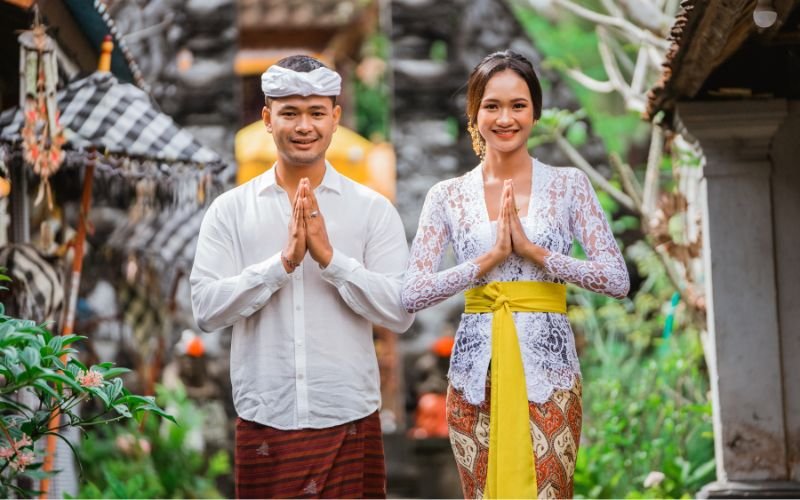
Bali has a way of getting under your skin—in the best possible way. It’s not just the beaches or the rice paddies. What makes Balinese life feel so alive is its culture: a living, breathing tapestry of rituals, offerings, ceremonies and community values that shape everyday life.
If you’re planning a trip, understanding and honoring these traditions isn’t just polite—it’s part of what makes traveling here so meaningful. Balinese people are famously warm and welcoming and showing respect for their customs deepens the connection you’ll feel with the island.
Here’s your guide to navigating Balinese culture with curiosity, humility and genuine appreciation.
This post may contain affiliate links. If you make a purchase, we may earn a small commission at no extra cost to you. Our goal is to provide valuable and helpful content, and any commissions help us to mantain this site.
Contents
ToggleGet your Bali Essentials!
- Find cheap flights to Bali
- Find hotels or hostels for Bali
- Find activites and tours for Bali
- Get an eSIM for Bali. Use our code ‘TBTravellers to receive 5% OFF any eSIM!
Dress Modestly at Temples and Sacred Sites
Temples (known as pura) are everywhere in Bali, and many are open to visitors. But they’re not tourist attractions – they are living, breathing spaces where locals pray, mourn and celebrate.
What to do:
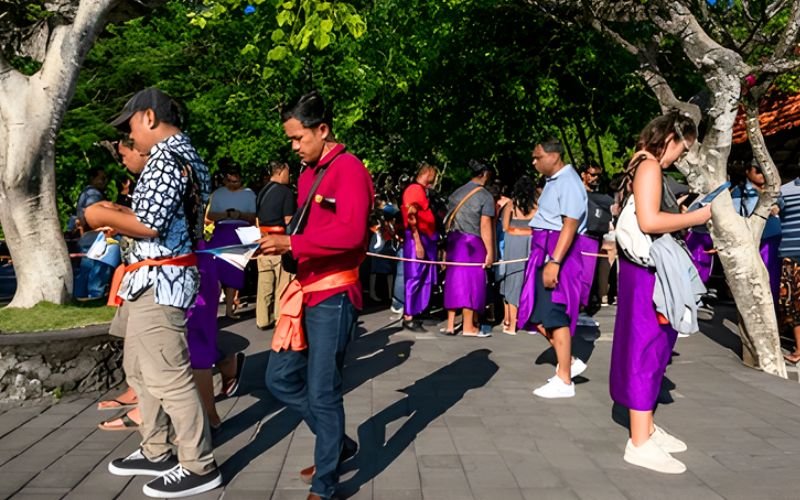
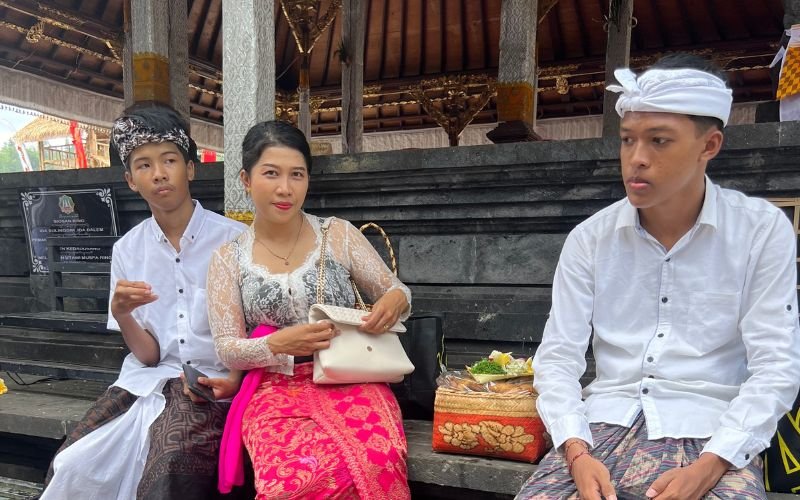
Wear a sarong and sash (usually provided at temple entrances such as Uluwatu Temple)
Cover your shoulders
Avoid revealing clothing like crop tops or short shorts
Walk, don’t run, and keep your voice low
Why it matters: Balinese Hinduism is deeply symbolic, and clothing is part of maintaining spiritual purity. Dressing respectfully shows you understand the space you’re entering. Even if you’re not planning a temple visit, keep a sarong in your bag. You’ll be surprised how often you stumble upon a ceremony or shrine worth visiting respectfully.
Understanding Canang Sari: Offerings
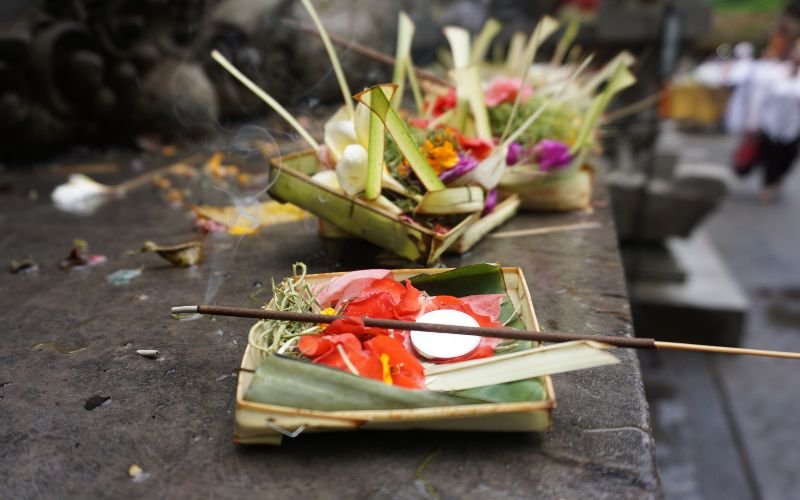
Those little woven baskets you see everywhere? They’re not decorations — they’re canang sari, daily offerings made to express gratitude and maintain harmony between humans, nature and the spiritual world. They are made from woven palm leaves and filled with colourful flowers, snacks and rice.
You will see them on the ground/side walks, shrines and temples, entrances and doorways and on counters and shelves in businesses.
What we learnt:
They’re placed on the ground intentionally — to honor lower spirits
Stepping on one isn’t just clumsy; it’s disrespectful
The beauty of the offering isn’t in perfection but in intention
Be Mindful During Ceremonies
One of the most magical things about Bali is that ceremonies aren’t rare events — they’re part of the island’s daily rhythm. Weddings, cremations, temple anniversaries, full‑moon rituals, blessings, processions… they unfold everywhere, from village streets to mountaintop temples. You might turn a corner and suddenly find yourself surrounded by women carrying offerings on their heads, men playing gamelan instruments, or children dressed in traditional attire.
As a visitor, being mindful during these moments is one of the most meaningful ways you can show respect.
If you encounter a ceremony:
Observe quietly from a respectful distance – give people space to pray, move and participate without feeling watched or crowded. Standing slightly behind the group is usually a safe and respectful choice.
Don’t block pathways or entrances – ceremonies often involve processions and blocking the route — even accidentally — can disrupt the flow of the ritual. If you see people approaching with offerings or instruments, step aside and let them pass.
Ask before taking photos – some ceremonies are open to photography, while others are not. A simple smile and gesture toward your camera is usually enough to ask permission. If someone shakes their head or looks unsure, respect that.
Follow any instructions from locals or temple guides – sometimes you’ll be asked to stand in a certain area, wait until a procession passes or avoid entering a particular space. These requests aren’t meant to exclude you — they’re meant to protect the sanctity of the ritual.
Remember:
You’re witnessing something sacred, not a performance. These ceremonies are deeply personal expressions of faith and community. Balinese people are incredibly generous with their culture, and if you show genuine interest and humility, they often invite you to observe more closely — sometimes even offering you a flower, a seat, or a small blessing.
Respecting Nyepi: Honouring Bali’s Sacred Day of Silence
If your trip to Bali coincides with Nyepi, you’re in for one of the most profound cultural experiences the island has to offer. Nyepi — the Balinese Day of Silence — marks the start of the Saka New Year, and it’s unlike any New Year celebration you’ll find anywhere else in the world.
Instead of fireworks, parties or countdowns, Bali welcomes the new year with stillness. For 24 hours, the entire island comes to a complete stop. No traffic, no lights, no noise and no work. Even the airport closes. It’s a collective pause — a moment for reflection, purification and spiritual reset.
What Nyepi Means to the Balinese
Nyepi is rooted in the belief that silence and darkness help cleanse the island of negative energies. Traditionally, it’s a time for:
Self‑reflection
Meditation
Fasting or quiet meals
Spiritual purification
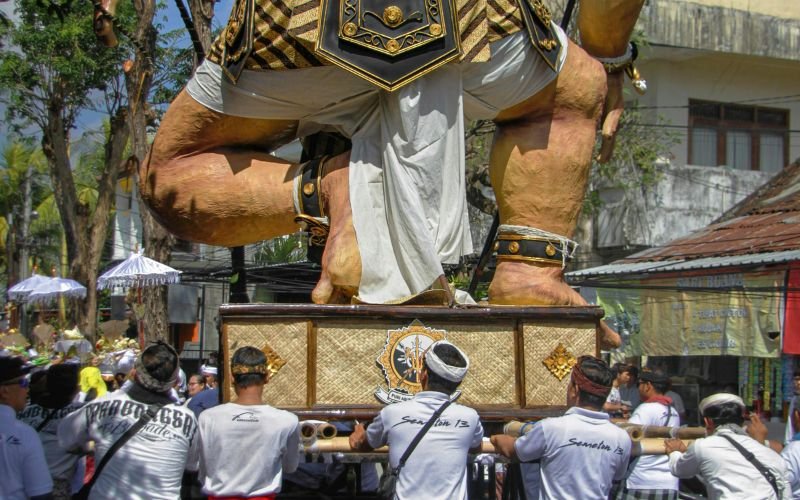
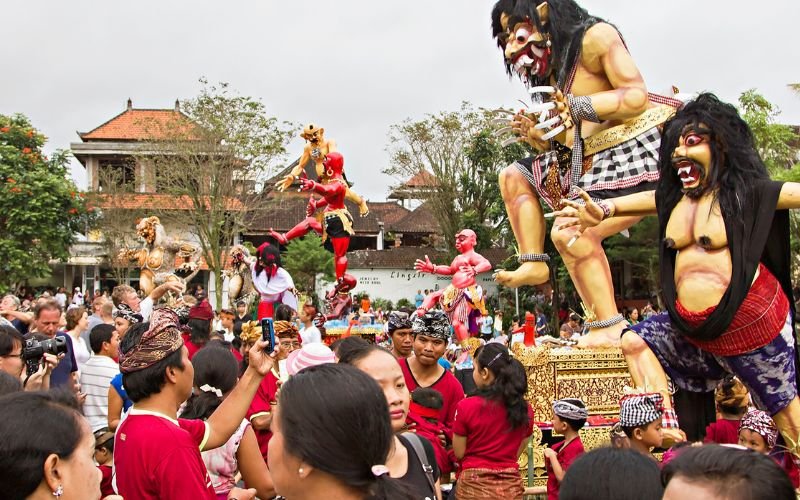
The day before Nyepi, villages hold the lively Ogoh‑Ogoh parade, where giant demon effigies are carried through the streets to symbolize the cleansing of evil spirits. After the parade, the island falls into complete silence.
What’s Expected of You During Nyepi
Even as a visitor, you’re expected to honor the rules of the day. These aren’t suggestions — they’re cultural obligations that apply to everyone on the island.
Here’s how to respect Nyepi:
Stay indoors for the full 24 hours – you cannot leave your hotel or villa. Streets are patrolled by pecalang (traditional security guards) to ensure the silence is upheld.
Keep noise to a minimum – loud music, parties, or even heavy footsteps can disturb the peaceful atmosphere. Think of it as a day to slow down and embrace quiet.
Limit or avoid artificial light – lights should be dimmed or kept inside. Many hotels draw curtains or provide candles to help maintain the island‑wide darkness.
Avoid using electronics excessively – while not strictly enforced inside private spaces, using the day to disconnect aligns with the spirit of Nyepi.
Respect hotel guidelines – most accommodations provide special Nyepi schedules, meals, and quiet activities. Follow their instructions — they’re designed to help you honor the tradition.
Why It Matters
Nyepi isn’t just a cultural event — it’s a sacred ritual that holds deep spiritual significance. For the Balinese, it’s a time to reset the mind, cleanse the soul, and restore harmony with the universe. By respecting Nyepi, you’re not only honoring local customs but also participating in a rare moment of collective stillness.
Try Hita Karana: The Philosophy That Shapes Everything
Tri Hita Karana translates to “the three causes of harmony”, and it’s all about maintaining balance between:
Humans and the Divine (parahyangan)
Humans and Nature (palemahan)
Humans and Each Other (pawongan)
Once you understand this, everything else in Bali begins to make sense. The offerings on the ground, the ceremonies that pause traffic, the gentle way people speak to one another — it all stems from this desire to live in harmony.
How you can embody it as a visitor:
Treat people with patience and kindness – Bali moves at its own pace — slower, softer, more intentional. Whether you’re waiting for your food, navigating a busy market or asking for directions, approaching interactions with warmth and patience aligns you with the island’s rhythm.
Don’t litter or damage natural spaces – Nature isn’t just scenery in Bali — it’s sacred. Mountains, rivers, trees, and even stones can hold spiritual significance. Leaving no trace isn’t just eco‑friendly; it’s culturally respectful.
Support local artisans instead of mass‑produced souvenirs – When you buy a hand‑woven basket, a carved mask, or a piece of silver jewelry made in a family workshop, you’re supporting traditions that have been passed down for generations.
Slow down – rushing is the opposite of harmony. Bali invites you to breathe, to be present, to let go of urgency.
Nature Is Sacred – Treat It That Way
Think of Bali’s nature as a temple without walls.
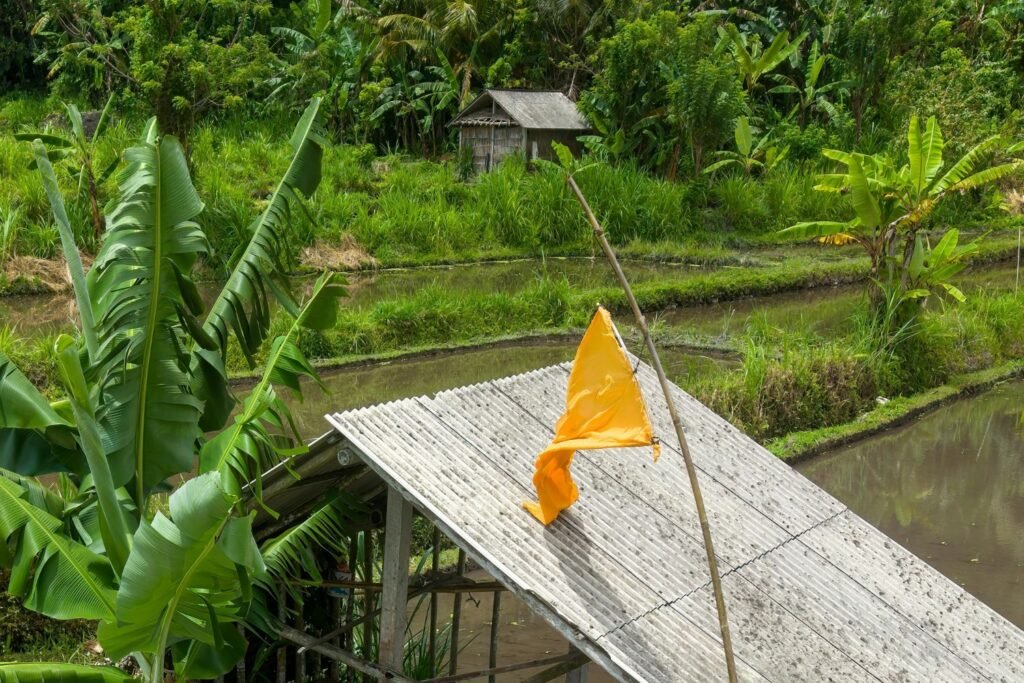
When you walk through a rice terrace, you’re not just admiring a view — you’re stepping into a living system that farmers have tended for generations using spiritual principles. When you swim in a waterfall, you’re entering a place where locals might come to pray or cleanse. When you watch the sunset, you’re witnessing a moment many Balinese people honor with gratitude. For the Balinese, nature isn’t just scenery. It’s alive, conscious, and deeply intertwined with the divine.
What respect looks like in practice:
No nude or topless sunbathing. Beyond being illegal, it’s considered deeply disrespectful. Beaches may feel relaxed, but they’re still part of the island’s spiritual landscape.
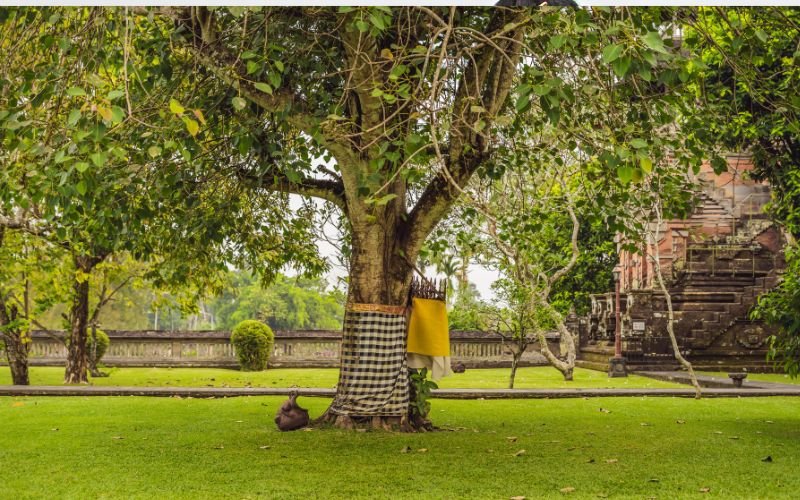
Don’t climb on temple walls or sacred trees. Many trees — especially banyan trees are believed to house spirits. You’ll often see them wrapped in black‑and‑white checkered cloth (poleng), a sign of their sacredness. Treat them with the same respect you would a shrine.
Leave coral, shells, and stones where they are. It’s tempting to pocket a pretty shell or a piece of volcanic rock, but these natural elements are part of a delicate ecosystem. Removing them disrupts both nature and the spiritual balance locals work hard to maintain.
Keep noise levels low in natural spaces. Whether you’re hiking through a forest, visiting a waterfall, or watching the sunrise on a quiet beach, remember that these places are often used for meditation and offerings. Loud music or shouting breaks the serenity that locals hold sacred.
Body Language: The Unspoken Rule of Respect
Balinese etiquette is gentle, understated, and rooted in a deep sense of humility. People don’t often say things directly — instead, respect is communicated through small gestures, soft tones, and an awareness of how your presence affects the space around you. Understanding these subtle cues helps you move through Bali with grace and cultural sensitivity.
A few things to keep in mind:
Use your right hand when giving or receiving – in Balinese culture, the right hand is considered clean and respectful. Whether you’re handing over money, accepting food, or receiving a sarong at a temple, using your right hand (or both hands together) shows good manners.
Avoid touching anyone’s head — even a child’s – the head is believed to be the most sacred part of the body, the seat of the soul. Touching it, even affectionately, can be uncomfortable or offensive. If you accidentally do so, a gentle apology is appreciated.
Don’t point with your finger; gesture with your whole hand – pointing can come across as aggressive or rude. Instead, extend your hand with your palm facing upward — a softer, more respectful way to indicate direction or draw attention to something.
A soft smile is the default greeting – in Bali, smiles are a universal language. They’re used to greet, to thank, to apologize, and to ease tension. Even if you don’t speak Bahasa Indonesia, a warm smile communicates openness and respect instantly.
Why these gestures matter
These small acts may seem simple, but they carry weight. They show that you’re not just visiting Bali — you’re engaging with it. You’re acknowledging the values that shape daily life and choosing to move through the island with awareness rather than assumption.
Support Local Traditions Through Your Choices
One of the most meaningful ways to honor Balinese culture is through the choices you make as a traveller. Tourism is a major part of the island’s economy, but not all tourism benefits the people who keep Bali’s traditions alive. When you choose to support local artisans, guides and community‑run businesses, you’re not just spending money — you’re helping preserve the cultural heartbeat of the island.
Balinese traditions have survived for centuries because they’re practiced, taught and passed down through families and villages. Your conscious choices can help ensure they continue to thrive.
Meaningful ways to support Bali:
Buy from local markets and artisans. Skip the mass‑produced souvenirs and look for handmade crafts — wood carvings, silver jewelry, woven baskets, traditional textiles. When you buy directly from artisans, you’re supporting families who have honed their craft for generations. Many of these skills are sacred, tied to rituals and community identity.
Take workshops in traditional crafts. Whether it’s batik painting, offering‑making, Balinese cooking or gamelan music, workshops give you a hands‑on connection to the culture. You’re not just learning a skill — you’re learning the stories, symbolism, and meaning behind it.
Hire local guides for temple visits or hikes. A Balinese guide can explain the significance of rituals, architecture, and natural sites in a way no signboard or blog post ever could. Their insights add depth to your experience, and your payment directly supports local livelihoods.
Choose accommodations that support community initiatives. Many guesthouses, eco‑lodges, and homestays are family‑run and reinvest in their villages — whether through temple upkeep, environmental projects, or cultural programs. Staying in these places helps ensure tourism benefits the people who call Bali home.
Respecting Balinese traditions isn’t about following a checklist — it’s about traveling with awareness. Bali gives so much to its visitors: beauty, spirituality, warmth, and inspiration. Offering respect in return is the simplest way to honor the island and its people.
When you approach Bali with humility and an open heart, you’ll find that the island doesn’t just welcome you — it embraces you.