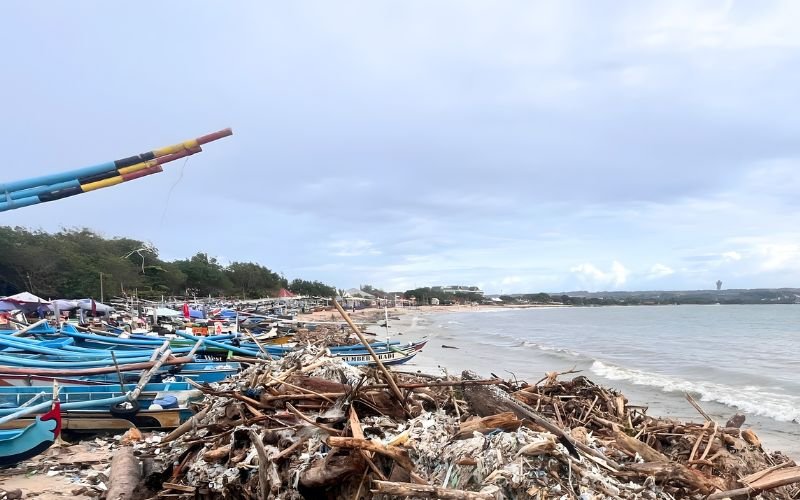
If you’re anything like us, you can’t resist a good local market—especially one where the ocean breeze mixes with the smell of just‑caught seafood. Jimbaran’s Kedonganan Fish Market is chaotic, colourful, and surprisingly affordable, making it one of our favourite stops for travellers who want a real slice of Bali without blowing their budget. Here’s what it’s actually like to wander through the stalls, haggle for your dinner in Jimbaran and soak up the everyday rhythm of this coastal community.
This post may contain affiliate links. If you make a purchase, we may earn a small commission at no extra cost to you. Our goal is to provide valuable and helpful content, and any commissions help us to mantain this site.
Contents
ToggleGet your Bali Essentials!
- Find cheap flights to Bali
- Find hotels or hostels for Bali
- Find activites and tours for Bali
- Get an eSIM for Bali. Use our code ‘TBTravellers to receive 5% OFF any eSIM!
History of Jimbaran Fish Markets
Long before Jimbaran became known for beachfront seafood dinners and luxury resorts, it was a small, sleepy fishing village. For generations, local families relied almost entirely on the ocean — fishing at dawn, drying their catch in the sun and selling it directly to neighbours or small traders.
As tourism grew in the 1980s and 1990s, demand for fresh seafood skyrocketed. The local government formalised the area into a proper fish market — Kedonganan Fish Market, with dedicated stalls, ice storage and a structured trading system. It became the go‑to wholesale market for restaurants, hotels, and warungs across Kuta, Seminyak, and Nusa Dua.
What to Expect
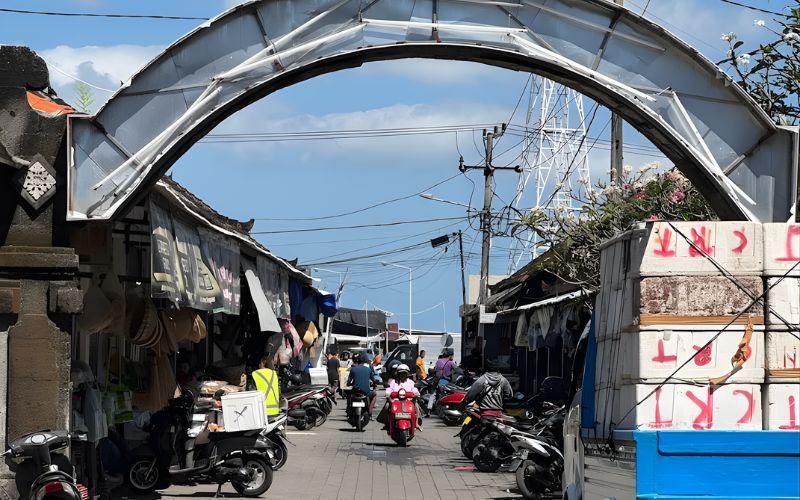
Don’t expect a spotless, supermarket‑style setup with neatly packaged fillets and printed price tags — this is a true ‘wet market,’ lively, messy and very much a working part of daily Jimbaran life.
Walking into Kedonganan Fish Market is a full‑sensory experience — the kind that instantly tells you you’re in the heart of a working coastal community. Expect a lively mix of fishermen unloading their morning catch, locals bargaining over dinner ingredients and curious travellers weaving through the organised chaos.
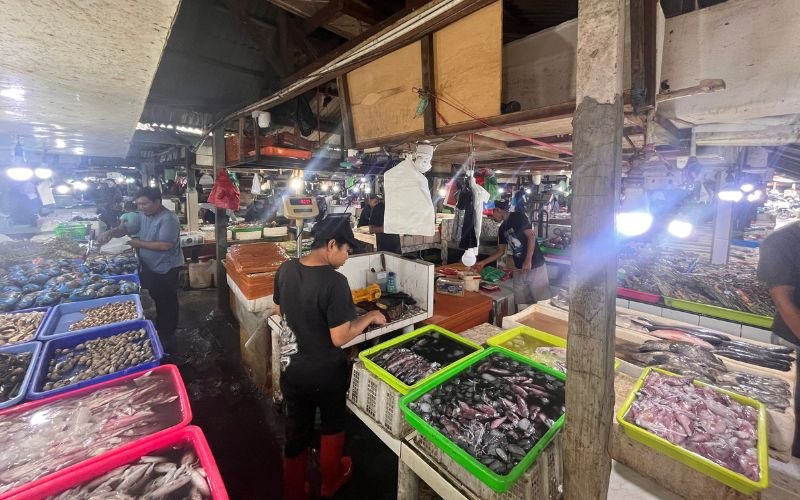
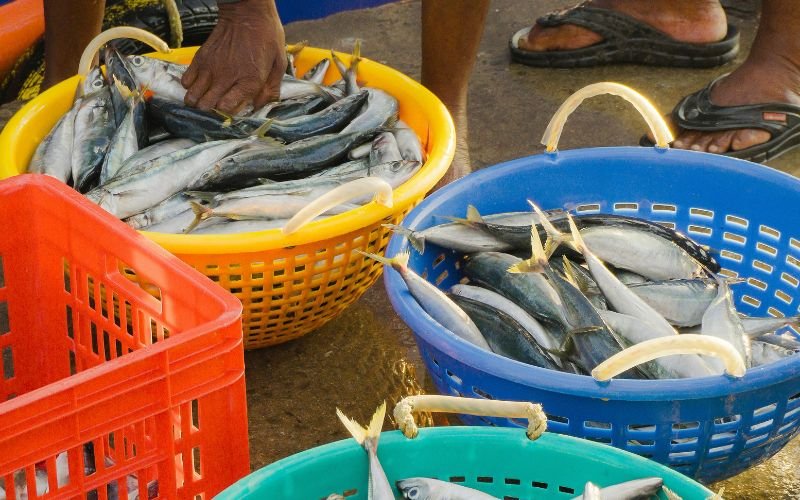
You’ll see rows of stalls piled high with everything from giant snapper and bright‑blue parrotfish to prawns, squid, clams and the occasional creature you might not recognise. Sellers call out prices, ice crunches underfoot and the salty air mixes with the unmistakable smell of the sea. It’s busy, a little messy, and completely authentic.
Where is Jimbaran Fish Market
Jimbaran Fish Market sits on Jimbaran Bay, just south of the airport along the narrow stretch of road that leads toward South Kuta and the Bukit Peninsula. It’s tucked one street back from Kedonganan Beach, at the northern end of Jimbaran Beach, close to the small ferry pier. Look for the cluster of seafood stalls near the small ferry pier, only a minute’s walk from the shoreline
Address: Jl. Pantai Kedonganan No.1100, Kedonganan, Kec. Kuta, Kabupaten Badung, Bali 80361
Getting to Jimbaran Fish Market
Reaching Jimbaran Bay is straightforward, no matter where you’re staying in South Bali. The area sits between Kuta and the Bukit Peninsula, so it’s well connected and easy to slot into any travel itinerary.
Most travellers get there by Grab, Gojek, local taxi or by hiring your own scooter.
Rides from Kuta, Seminyak, or Canggu are quick and reasonably priced, especially outside peak traffic hours.
Average driving times to Jimbaran Fish Market:
Kuta: 20-25 mins
Seminyak: 25-30 mins
Legian: 25-30 mins
Canggu: 45 mins-1hr
Uluwatu: 30-45 mins
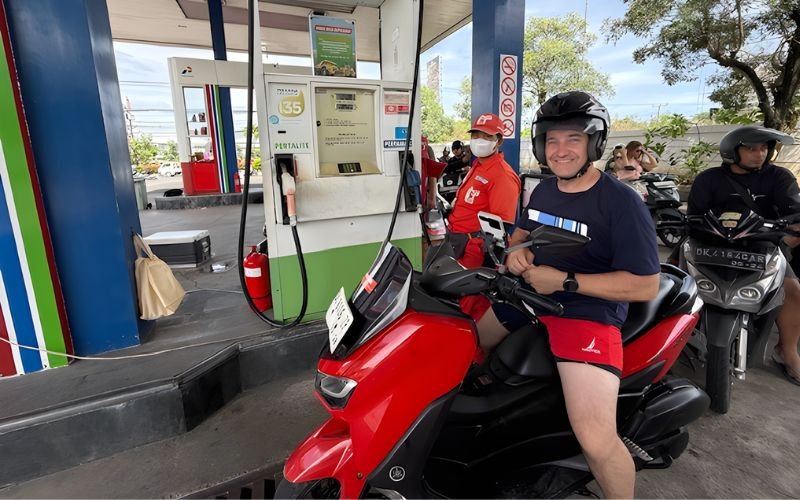
If you’re renting a scooter, the ride is easy enough, though the roads around the market can get busy with delivery trucks and fishing boats coming in and out. Parking is available and only IDR2,000 but can be a bit chaotic, especially in the mornings when the market is at its liveliest!
Once you arrive, everything is within walking distance — the fish market, the beachfront grill restaurants and the long stretch of golden sand that Jimbaran is famous for.
Jimbaran Fish Market Opening Hours
The market officially runs from 6am–6pm on weekdays and stays open a little later on weekends, until around 9pm.
We’ve visited both early in the morning and late afternoon, and in our experience the most exciting time to go is after 4pm. This is when the energy really picks up — crowds roll in, vendors are shouting prices, and locals are bargaining hard over kilos of fish, prawns, and squid. It’s the perfect window to soak up the atmosphere.
If you prefer a calmer experience, aim for late morning to early afternoon (around 11am–1pm). The market is quieter, prices tend to be more flexible, and you won’t find yourself squeezed between stalls as you wander through.
Purchasing Seafood at Jimbaran Fish Market
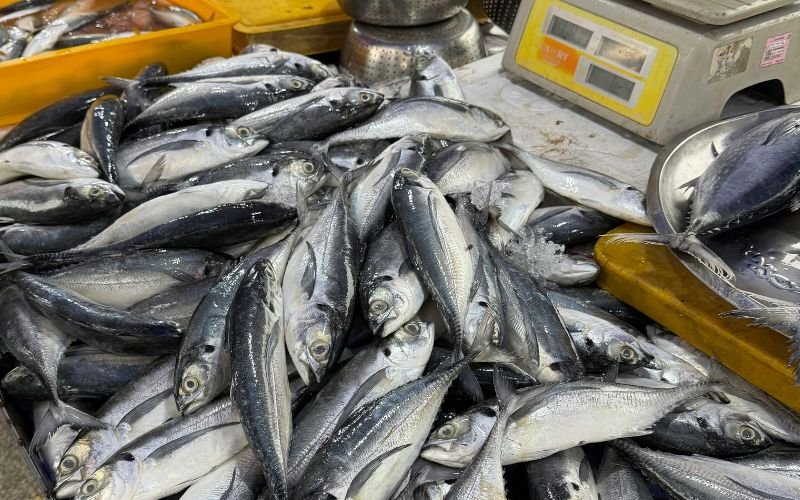
Purchasing seafood at Jimbaran Fish Market is part adventure, part bargain hunt and part cultural experience. As you wander through the rows of stalls, you’ll see piles of freshly caught seafood displayed on ice.
Most stalls sell by weight, and bargaining is expected — so don’t be shy! Vendors are used to tourists and will usually start with a higher price, but a friendly smile and a bit of back‑and‑forth will get you much closer to the local rate. If you’re unsure how much to buy, sellers are happy to help you estimate portions, especially if you plan to take your seafood to a nearby grill restaurant to be cooked.
You can expect to see:
Mahi Mahi: a firm, white-fleshed fish with a mild, sweet taste, popular in Jimbaran
Prawns: ranging from small and extra large and super tasty
Salmon: which you can buy whole or half
Squid: one of our favourites grilled with garlic butter
Barramundi: which has a mild, sweet and clean taste
Crab: delicious in ‘Jimbaran style’ which involves grilling over coconut husks
Lobster: you will need to haggle hard as lobster isn’t the cheapest in Bali
Octopus, scallops, sardines, clams and more

Prices of Seafood at Jimbaran Fish Market
Seafood at Jimbaran Fish Market is much cheaper than what you’ll find in Bali’s restaurants, but prices can vary depending on the season, the day’s catch, and—of course—your bargaining skills!
As a rough guide, you’ll find that common fish like snapper, tuna, and mahi‑mahi are the most affordable, while prawns, squid and shellfish sit in the mid‑range. Premium items like lobster or large crabs can be more expensive, especially if they’re in high demand or limited supply that day.
The best way to get a fair price is to walk around first and compare a few stalls. Prices can differ quite a bit between vendors and you’ll quickly get a feel for the going rate. Don’t be shy about asking to see the fish up close or checking the weight on the scale—locals do it all the time.
As a rough guide, here are the prices as of 2026.
| Seafood Type | Typical Price (per kg) | |
|---|---|---|
| Red Snapper | IDR 60,000–90,000 | One of the most common and affordable fish |
| White Snapper | IDR 70,000–100,000 | Slightly pricier than red snapper |
| Tuna | IDR 60,000–120,000 | Price varies by cut and size |
| Mahi‑mahi | IDR 60,000–90,000 | Often good value for grilling |
| Grouper | IDR 90,000–150,000 | Considered higher‑quality fish |
| Parrotfish | IDR 60,000–100,000 | Brightly coloured, popular with tourists |
| Prawns (medium) | IDR 120,000–180,000 | Prices rise with size |
| Tiger Prawns (large) | IDR 200,000–350,000 | Premium item |
| Squid | IDR 70,000–120,000 | Very common and usually good value |
| Cuttlefish | IDR 80,000–130,000 | Slightly pricier than squid |
| Clams/Mussels | IDR 30,000–60,000 | Among the cheapest options |
| Crab | IDR 120,000–250,000 | Depends heavily on size |
| Lobster | IDR 350,000–700,000+ | The most expensive item in the market |
Having your Seafood Cooked at Jimbaran
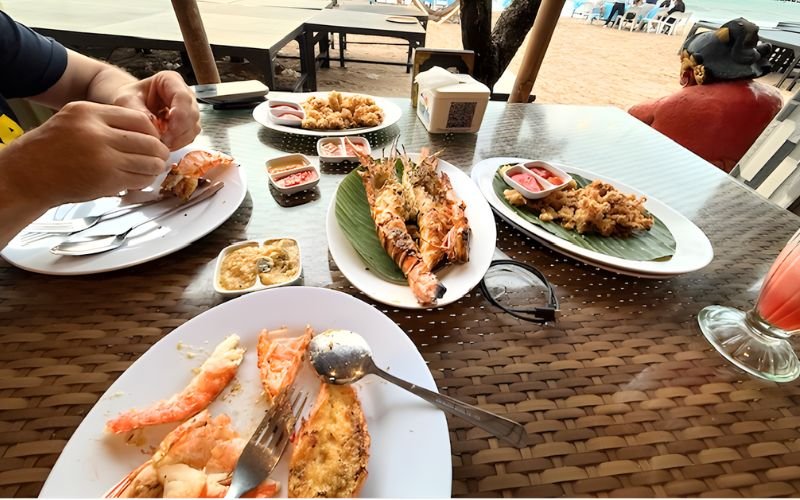
One of the biggest perks of buying seafood at Jimbaran Fish Market is that you don’t have to take it home and cook it yourself — you can walk it straight over to one of the many grill restaurants lining the beach and have it prepared for you on the spot. It’s the perfect blend of local culture and holiday indulgence.
Once you’ve chosen your seafood at the market, vendors will bag it up for you, often with ice to keep it fresh. From there, it’s just a short stroll to the cluster of warungs and seafood cafés that specialise in grilling whatever you bring them. Most restaurants offer a simple, fixed cooking fee per kilo, which usually includes rice, sambal, vegetables, and dipping sauces.
Where to have it cooked?
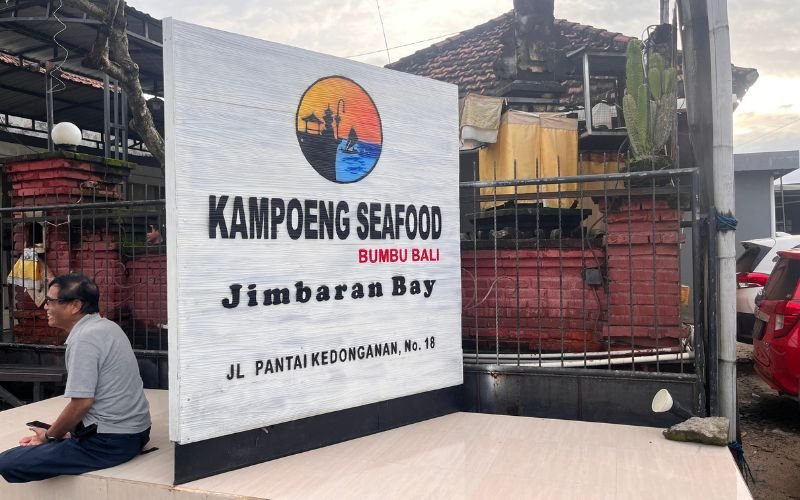
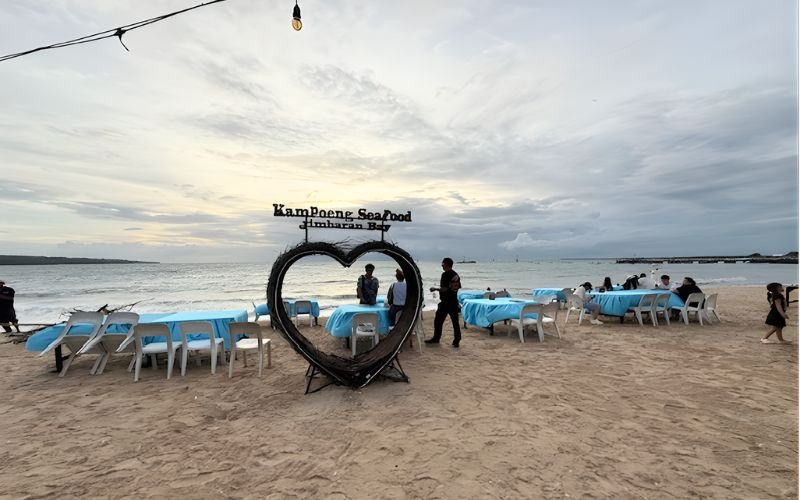
We always take our seafood to have cooked at ‘KamPoeng Seafood’ which on Jalan Pantai. They are super friendly and only charge IDR20,000 per/kg – super cheap!
The cooking process is wonderfully straightforward. You hand over your bag of seafood, choose how you’d like it prepared — grilled with Balinese spices, steamed with garlic, fried crispy or served with a sweet‑spicy glaze.
Tips for Visiting Jimbaran Fish Market
Go at the right time
Late afternoon (around 4–6pm) is the sweet spot — lively, colourful and full of energy. Late morning (11am–1pm) is calmer if you prefer space to wander.
Wear shoes you don’t mind getting wet
It’s a wet market for a reason. Floors are slippery, icy and sometimes fishy. Thongs work, but grippy sandals are better.
Bring small cash
Most vendors don’t take cards. Small notes (10k–50k IDR) make bargaining smoother.
Bring your own bag if you can
Vendors will give you plastic bags, but they’re thin and leak easily. A reusable bag or small cooler bag is a lifesaver.
Walk the whole market before buying
Prices vary a lot between stalls. Do a full lap first, you’ll quickly spot the best deals and freshest catch.
Bargain politely
It’s expected. Smile, keep it friendly and don’t be afraid to counter their first price.
Check for freshness
Look for:
Clear eyes
Firm flesh
Bright gills
A clean ocean smell, if something looks dull or mushy, skip it.
Plan to get it cooked nearby
The grill restaurants next door will cook your seafood for a small fee. Tell the vendor you’re taking it to be cooked and they’ll pack it with ice.
Bring hand sanitiser
You’ll be touching bags, ice, and possibly fish. A quick clean before eating is a good idea.
Visiting Jimbaran Fish Market is one of those Bali experiences that sticks with you — a mix of colour, chaos, and genuine local charm. Whether you’re there to buy seafood, soak up the atmosphere or enjoy a beachside feast, it’s a slice of everyday island life that feels refreshingly real.
Come with an open mind, a bit of curiosity, and maybe a pair of shoes you don’t mind getting wet, and you’ll walk away with one of your favourite Bali memories.