Exploring Cambridge on a budget doesn’t mean missing out on its charm. In fact, some of the city’s best experiences didn’t cost us a a penny. From strolling the Cam to hidden historic corners, Cambridge is packed with free gems that make it perfect for travellers who love adventure without the price tag. Whether you’re here for a day or settling in for a longer stay, these no‑cost activities will help you soak up the city’s beauty, culture, and quirky character.
Contents
ToggleUniversities & Colleges
King’s College
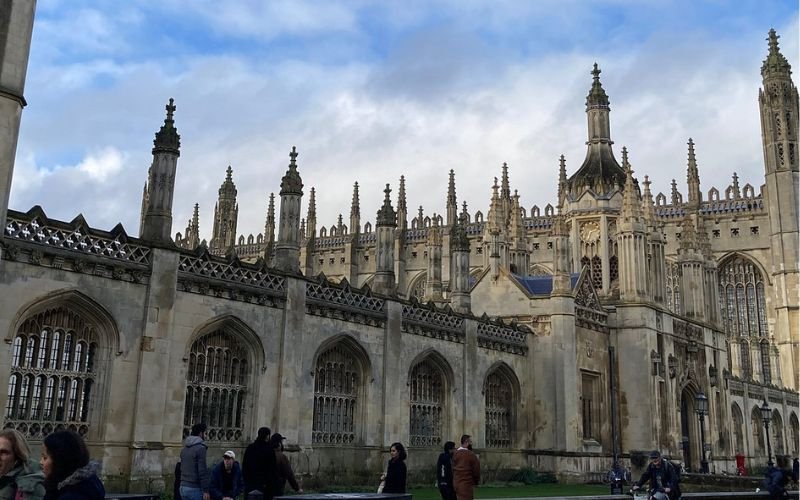
Widely considered the most iconic and famous college at Cambridge, visiting King’s College is one of those experiences that feels grand even if you never step beyond the gates. The college’s iconic façade—its soaring chapel, honey‑coloured stone and sweeping lawns can all be admired for free from the Backs or from King’s Parade.
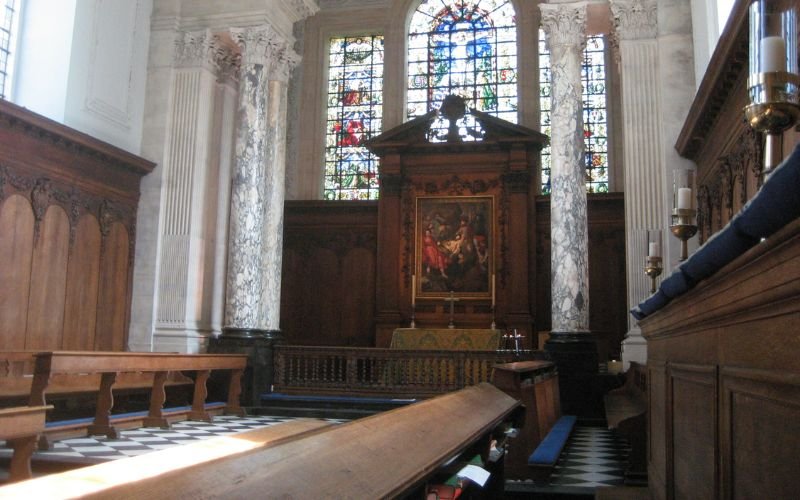
We visited the inside for free by attending Evensong. Held in the magnificent King’s College Chapel, the service is free and open to the public. The choir’s voices rising into the fan‑vaulted ceiling is one of Cambridge’s most unforgettable experiences and one of our most memorable experiences.
Evensong is held on Monday-Saturday at 5:30pm or Sunday at 10:30am and 3:30pm. Doors will open 15 minutes beforehand so get there a little early to line up. You can find King’s College on King’s Parade in the city centre and it’s best to double check Evensong times here before you come.
Pembroke College
Pembroke College is one of the best free colleges to visit in Cambridge, and it comes with an impressive pedigree. Founded in 1347, it’s the third‑oldest college in the university and one of the largest, home to more than 700 students. Its long history is reflected beautifully in its architecture — Pembroke has buildings from almost every century since its foundation, creating a stunning patchwork of styles as you wander through the grounds.
One of the college’s most notable alumni is William Pitt the Younger, who became Prime Minister at just 24 years old. Pembroke is one of only six Cambridge colleges to have educated a British Prime Minister, adding an extra layer of historical interest to your visit.
The grounds and chapel are free to explore daily from 10am to 5pm, though it’s always worth checking opening hours here in case a private event limits access . You’ll find Pembroke College conveniently located on Trumpington Street.
Selwyn College
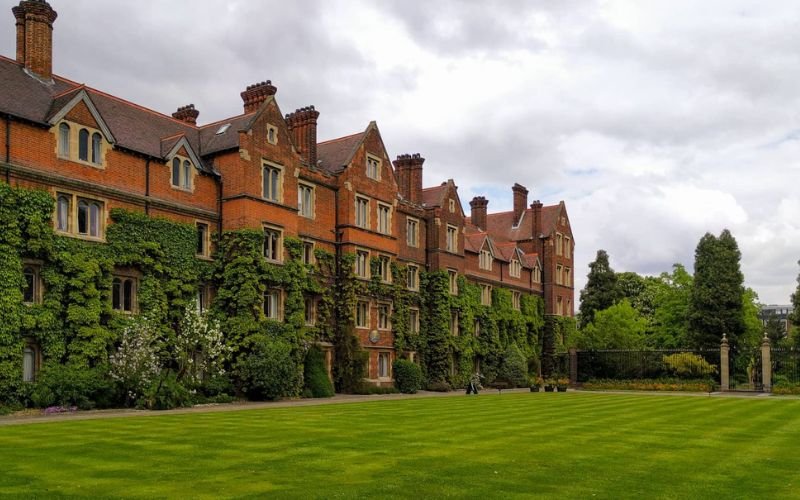
Selwyn College is one of Cambridge’s hidden gems — peaceful, welcoming and beautifully framed by red‑brick buildings that glow in the afternoon sun. Founded in 1882, it’s one of the younger colleges, but what it lacks in medieval age it more than makes up for in charm and atmosphere.
As soon as we stepped through the main gate, we were greeted by a picture‑perfect first court: neat lawns, elegant Victorian architecture and a sense of calm that feels worlds away from the busy streets just outside.
One of the highlights is the Selwyn College Chapel, a stunning space with soaring ceilings and beautiful stained glass. It’s often described as one of the finest college chapels in Cambridge, and stepping inside feels like entering a quiet sanctuary.
The college backs onto the Sidgwick Site, home to many of the university’s arts and humanities faculties, so the area has a lively student feel.
Selwyn College sits on Grange Road, just west of the city centre and is an easy 10–12 minute walk from the heart of Cambridge. It is usually open on Monday-Friday from 9am-4pm however does close to visitors during exam periods which is late April to mid-June. We recommend checking opening hours on the official site here.
Downing College
Downing College is one of Cambridge’s most elegant and spacious colleges — a calm, green oasis tucked just a few minutes’ walk from the busy city centre. Founded in 1800, it’s often described as Cambridge’s first “modern” college, and its wide lawns, classical architecture and open layout give it a wonderfully airy, welcoming feel.
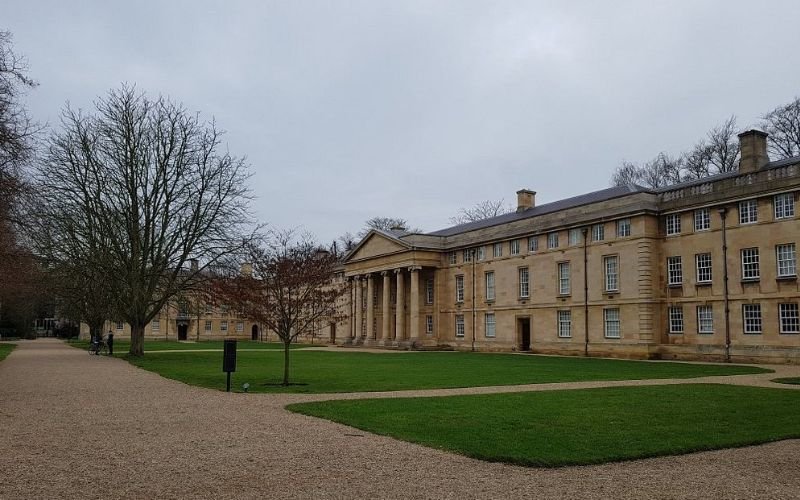
As soon as we stepped through the main entrance on Regent Street, we were greeted by sweeping courts framed by creamy stone buildings and perfectly kept lawns. Unlike many older colleges with narrow passages and medieval corners, Downing felt bright and expansive, almost like a peaceful park wrapped in academic history.
One of the highlights for us, was seeing the beautiful neo‑classical architecture, which gives the college a distinctive look compared to the Gothic spires found elsewhere in Cambridge.
Downing is also home to the Heong Gallery, a contemporary art space that’s free to visit and often features thought‑provoking exhibitions — a great bonus if you’re already exploring the college.
Tip: Because of its open layout, Downing is especially photogenic in the late afternoon when the light softens across the lawns.
The college is located on Regent Street and the grounds are open daily from 6am-8pm with scheduled ‘open days’ throughout the year, You can check all the details here.
Museums
Fitzwilliam Museum
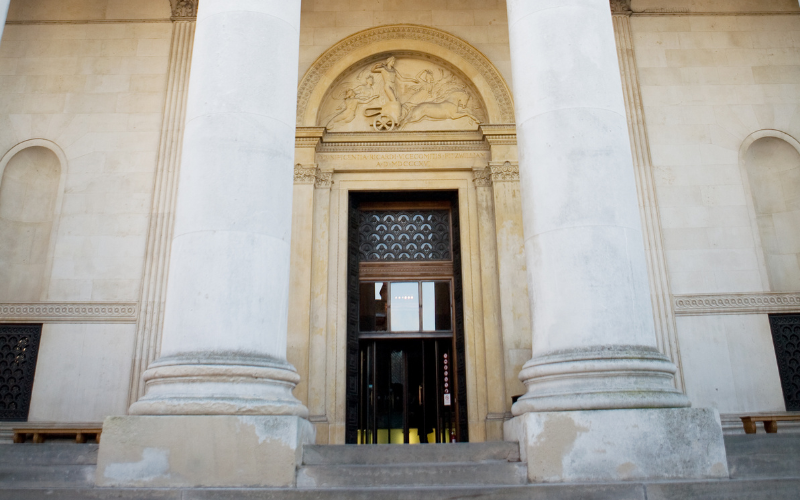
Stepping into the Fitzwilliam Museum feels a bit like wandering into a treasure chest—except this one is completely free to open. Often called “the Fitz” by locals, the museum is Cambridge’s cultural crown jewel, housed in a grand neoclassical building that looks impressive before you’ve even crossed the threshold.
Inside, we found an eclectic mix of art and artefacts spanning thousands of years. Think Egyptian mummies, Roman coins, Renaissance masterpieces and Impressionist paintings all under one roof. The galleries are beautifully curated, making it easy to drift from room to room without feeling overwhelmed.
You can find the museum located on Trumpington Street, in central Cambridge directly opposite Fitzwilliam Street and is open from Tuesday – Saturday from 10am-5pm.
Museum of Zoology
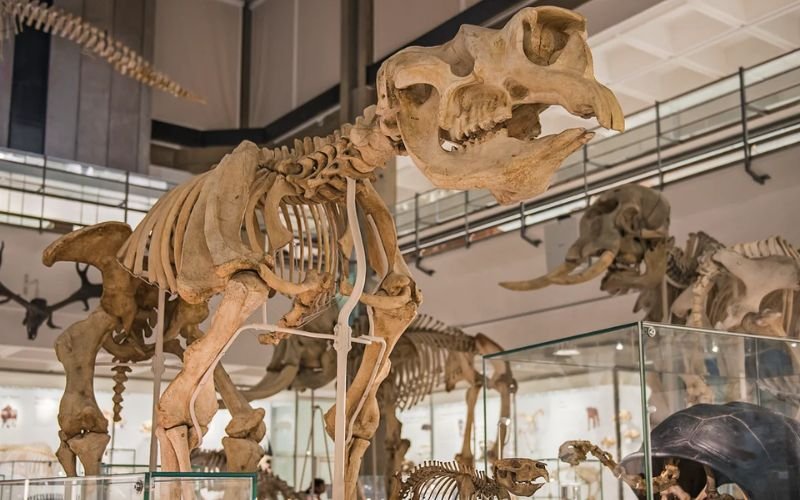
The Museum of Zoology is one of those places that surprises you the moment you step inside. Tucked within the University of Cambridge’s historic buildings, it’s completely free and feels like a behind‑the‑scenes peek into the natural world. The first thing you’ll notice is the giant whale skeleton suspended above the entrance—a dramatic welcome that sets the tone for what’s inside.
The museum’s collection spans millions of years of life on Earth, from delicate butterflies to towering prehistoric creatures. You can get up close to dinosaur fossils, examine intricate insect displays, and marvel at the sheer size of the mammal gallery, which includes everything from big cats to primates.
What we loved was how accessible the museum feels. The exhibits are thoughtfully laid out, with clear explanations that make the science easy to digest even if you’re not a zoology expert.
Tip: Don’t miss the glass‑fronted stores on the upper level—rows of specimens that make you feel like you’ve stumbled into a Victorian explorer’s archive. And if you’re visiting on a sunny day, the courtyard outside is a lovely spot to take a breather before diving back into the city.
The museum is open from Tuesday – Saturday from 10am-4:30pm and Sunday from 12pm-4:30pm and can be found on the New Museums Site, right in the heart of Cambridge City Centre. You need to enter the site through the Pembroke Arch on Downing Street. Entrance to the Museum is via the Whale Hall.
The Polar Museum
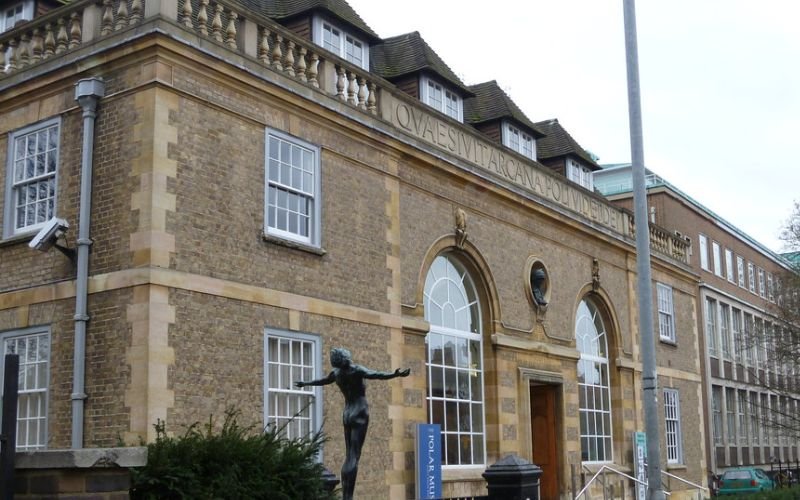
The Polar Museum in our opinion, is one of Cambridge’s most underrated free gems. It is a compact but captivating space dedicated to the dramatic world of polar exploration.
The museum tells the stories of legendary explorers like Captain Scott, Shackleton and the teams who braved unimaginable conditions in the Arctic and Antarctic. Through diaries, photographs, maps and personal belongings, you get a real sense of the grit, courage and sometimes heartbreak behind these expeditions.
One of our highlights was seeing the collection of beautifully preserved equipment: fur‑lined clothing, sledges, scientific instruments and hand‑drawn charts that reveal how explorers navigated long before GPS existed. The displays are thoughtfully arranged, making it easy to follow the journeys and understand the scientific discoveries that came from them.
Tip: The museum is close to several other free attractions, so it’s easy to pair with a walk through the city or a visit to the Fitzwilliam Museum. It’s also a great rainy‑day option—cosy, fascinating, and completely free.
You will find the Polar Museum tucked away on Lensfield Road as part of the Scott Polar Research Institute with opening hours from Tuesday-Saturday from 10am-4pm.
Historical Landmarks
Mathematical Bridge
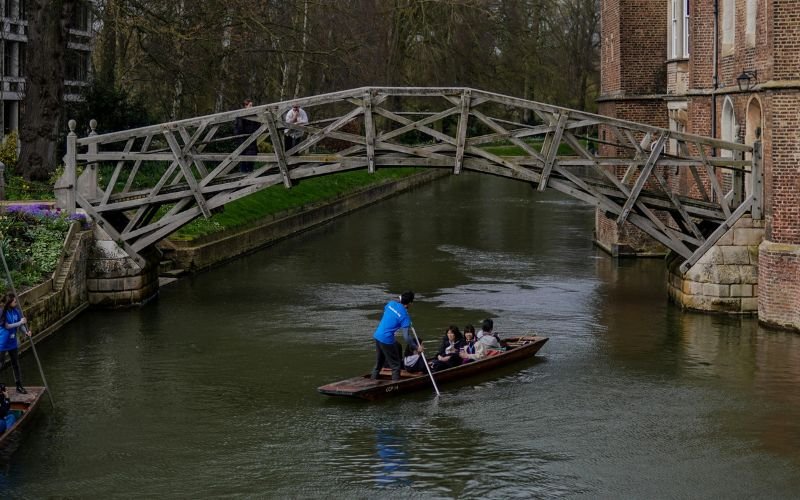
The Mathematical Bridge is one of Cambridge’s most recognisable landmarks and seeing it in person is a lovely (and completely free) moment on any walk through the city. Officially part of Queens’ College, the bridge stretches gracefully over the River Cam, its elegant wooden arcs forming a design that looks almost impossibly precise.
What makes the bridge so fascinating is the story behind it. Despite its curved appearance, the entire structure is made from straight pieces of wood, arranged in a clever geometric pattern that distributes weight perfectly. It’s a brilliant example of engineering disguised as simplicity. You’ll often hear the myth that it was originally built without bolts or screws and that students once dismantled it and couldn’t put it back together—fun, but not true. The real history is just as interesting, though: the bridge has been rebuilt several times since its original construction in 1749, each time staying faithful to the original design.
You can’t walk across the bridge unless you’re a member of the college, but the best views are actually from the public footpaths along Silver Street or from the riverside paths where punts glide underneath.
Tip: If you’re nearby, linger for a few minutes to watch the punts drift under the bridge. It’s a classic Cambridge scene and adds to the charm of the spot.
The bridge is located at Queens’ College on Silver Street and the best views are from the water (punting) or the adjacent Silver Street bridge.
Castle Mound
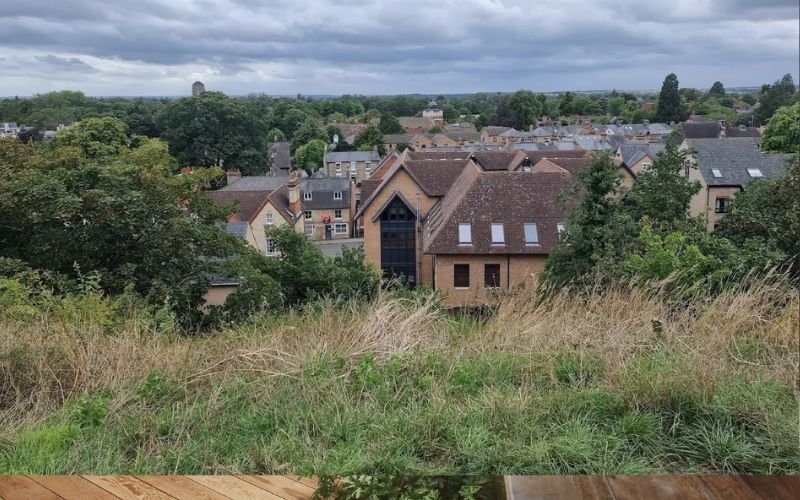
A short walk from the centre, Castle Mound is all that remains of the Norman Cambridge Castle. We climbed to the top and were rewarded with one of the best panoramic views of the city. It’s especially lovely at sunset, when the rooftops glow and the skyline feels almost storybook‑like.
The mound is located on Castle Street, directly behind Shire Hall. It is a short walk from the city center, just north of Magdalene Bridge.
Corpus Clock
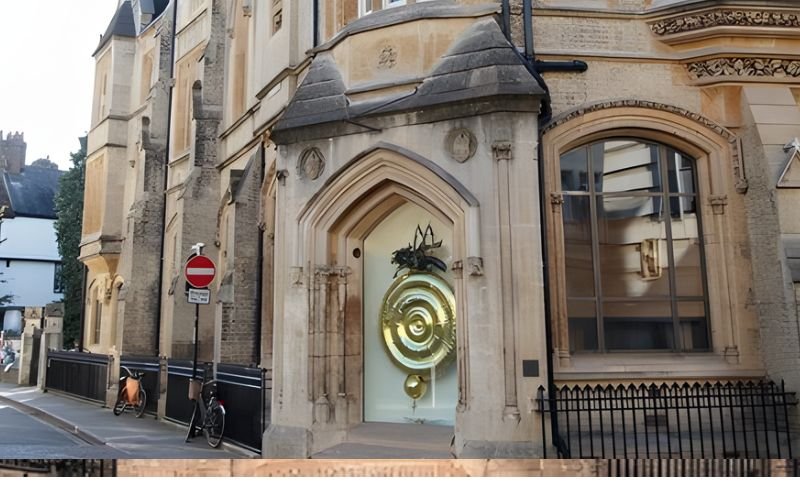
The Corpus Clock is one of Cambridge’s most intriguing modern landmarks—a strange, hypnotic and slightly unsettling piece of public art that you can admire for free right on the corner of Corpus Christi College. Even if you’re just passing by, it has a way of stopping you in your tracks.
Set into a gleaming gold disc, the clock has no hands or numbers. Instead, time is shown by a series of blue LED lights that ripple around the edge. But the real star of the show is the Chronophage—a giant, grasshopper‑like creature perched on top. Its name means “time‑eater,” and that’s exactly what it does: it marches relentlessly forward, its jaws snapping shut as if devouring each passing minute.
The clock itself is deliberately designed to be imperfect, speeding up and slowing down to reflect the unpredictable nature of time—though it resets to accuracy every hour.
Tip: The glass case is highly reflective, so if you want a good photo, stand slightly to the side or visit earlier or later in the day when the sun is softer.
The clock is located on the corner of Bene’t St and Trumpington St, outside the Taylor Library, overlooking King’s Parade.
Senate House (Exterior)
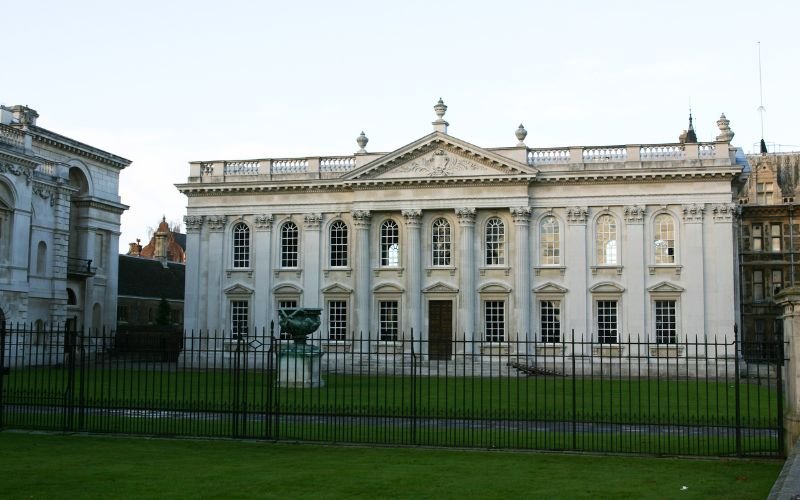
Right next to Great St Mary’s, the Senate House is where Cambridge students have graduated for centuries. You can’t go inside, but the exterior alone is worth a look — elegant white stone, sweeping columns and a sense of academic tradition that feels quintessentially Cambridge.
Senate House is located in the city center, directly between King’s College and Gonville and Caius College, opposite Great St Mary’s Church.
Newton’s Apple Tree
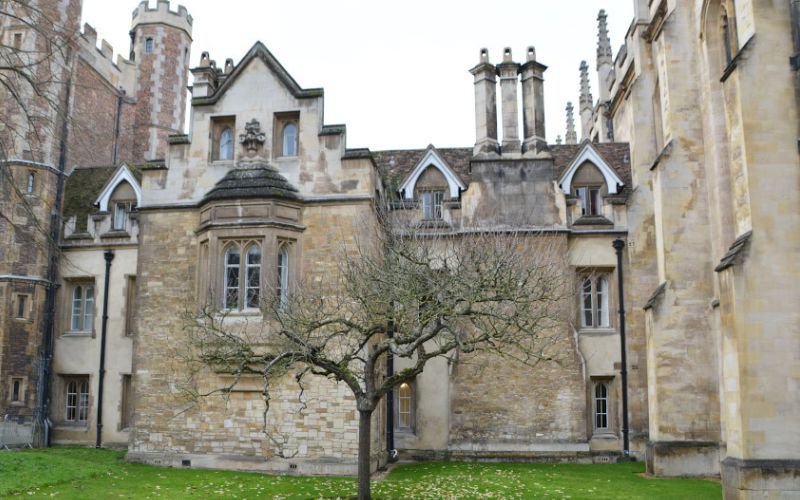
You can’t enter Trinity College for free, but you can see the famous descendant of Newton’s apple tree from the main gate. It’s a fun little historical nod and a great stop if you’re already exploring the area.
You can find it located ditectly outside the main entrance (Great Gate) of Trinity College, near the Porter’s Lodge on Trinity Street. The tree itself is positoned below the rooms where Isaac Newton lived while studying at the college.
Cambridge University Press Bookshop
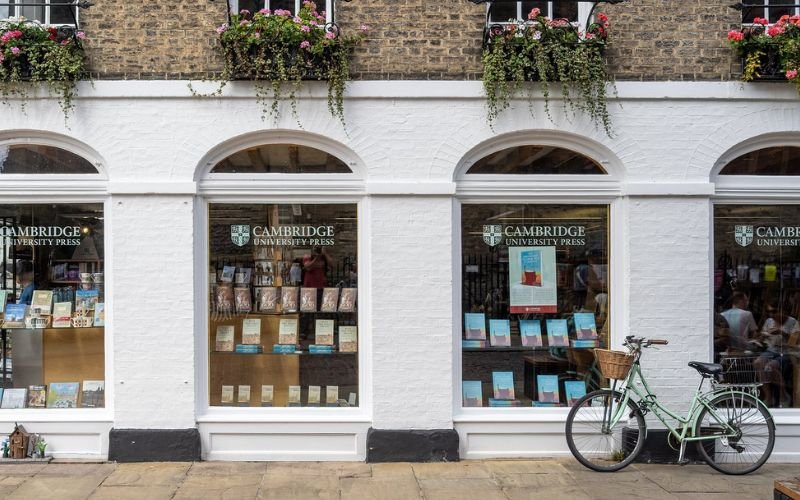
The Cambridge University Bookshop is one of those places that instantly pulls you in — a cosy, inviting haven for book lovers right in the heart of the city. Run by Cambridge University Press, it’s the oldest bookshop site in the city and stepping inside feels a little like wandering into the academic soul of Cambridge.
The shelves are lined with everything from classic literature and contemporary fiction to beautifully produced academic titles. You’ll find works by Cambridge scholars, elegant hardbacks and plenty of thought‑provoking reads you won’t spot in a typical high‑street shop. There’s also a lovely selection of gifts, stationery, and Cambridge‑themed treasures that make perfect souvenirs without feeling touristy.
Even if you’re travelling on a budget like us, visiting doesn’t mean you have to buy anything. Simply exploring the shelves, admiring the historic building and soaking up the scholarly vibe is a pleasure in itself — and completely free.
Tip: If you’re already nearby, pair your visit with a wander through the Market Square or a stroll towards King’s Parade.
You can find the bookshop located in the heart of the city centre on Trinity Street and is open on Monday-Saturday from 10am-5:30 and Sunday from 11am-5pm.
Gardens, Parks & Trails
Grantchester Meadows
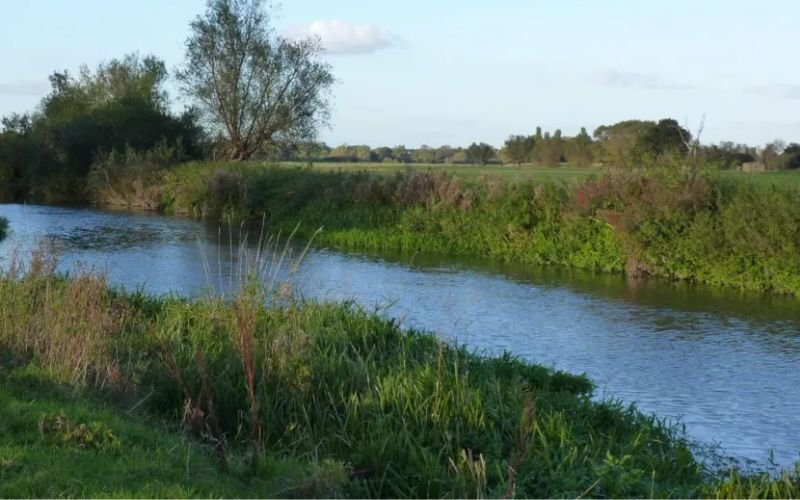
A wander through Grantchester Meadows is one of those Cambridge experiences that feels effortlessly magical and it doesn’t cost a thing. Just a short walk or cycle from the city centre, the meadows open up into a stretch of peaceful countryside that feels miles away from the bustle of town.
The path follows the River Cam as it winds gently towards the village of Grantchester. Along the way, we passed grazing cows, wildflowers and plenty of spots where the water sparkles through the trees.
What makes the meadows so special is how varied the experience can be. You can take a leisurely stroll, bring a picnic or cycle the whole route for a breezy countryside ride. If you keep going all the way to Grantchester village, you’ll find charming tea gardens and thatched cottages waiting at the end of the trail.
Tip: The walk is especially lovely just before sunset when the sun dips low over the fields. And if you’re cycling, the path is mostly flat, making it ideal for all levels.
The Meadows are located south-west of Cambridge city centre, running parallel to the River Cam. You can access it by foot or bicycle from Cambridge via Lammas Land, following Grantchester Street to Eltisley Avenue and continuing onto the meadow path.
The Back’s
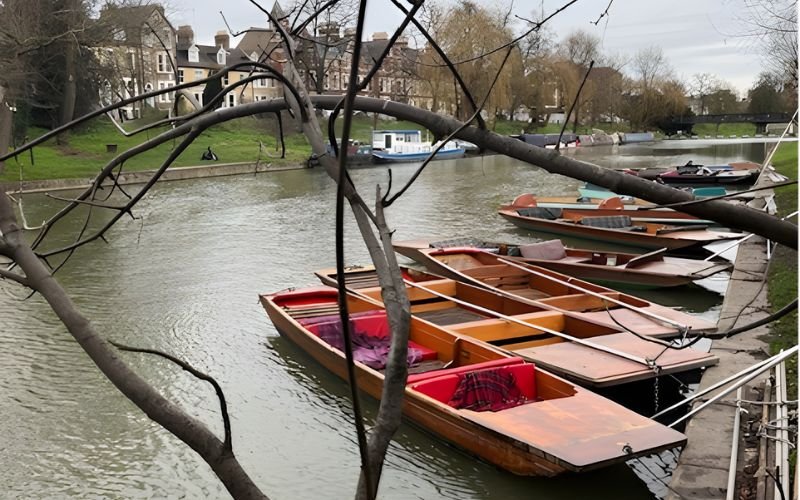
Strolling along The Backs is one of the most iconic—and completely free experiences you can have in Cambridge. This stretch of riverside parkland sits behind some of the university’s most famous colleges, offering postcard‑worthy views of grand bridges, manicured lawns and centuries‑old architecture. It’s the kind of place where you instantly understand why Cambridge feels so timeless.
The walk itself is wonderfully gentle. As we followed the River Cam, we passed under leafy trees, watched punts glide by and caught glimpses of college chapels and courtyards that looked straight out of a period drama. Each turn revealed a new angle: the elegant curve of the Bridge of Sighs and the sweeping lawns of King’s College.
What makes The Backs so special is how peaceful it feels despite being right in the heart of the city. Students cycle past, ducks paddle along the river, and the whole area has a soft, unhurried rhythm. It’s perfect for a slow morning wander, a sunset photo walk or simply sitting on the grass and watching the world drift by.
Tip: Early mornings and late afternoons are especially beautiful, with soft light that makes the college buildings glow. If you’re into photography, this is your moment.
The Back’s run parallel to Queen’s Street in central Cambridge and is area is easily accessible on foot.
Sculpture Trail
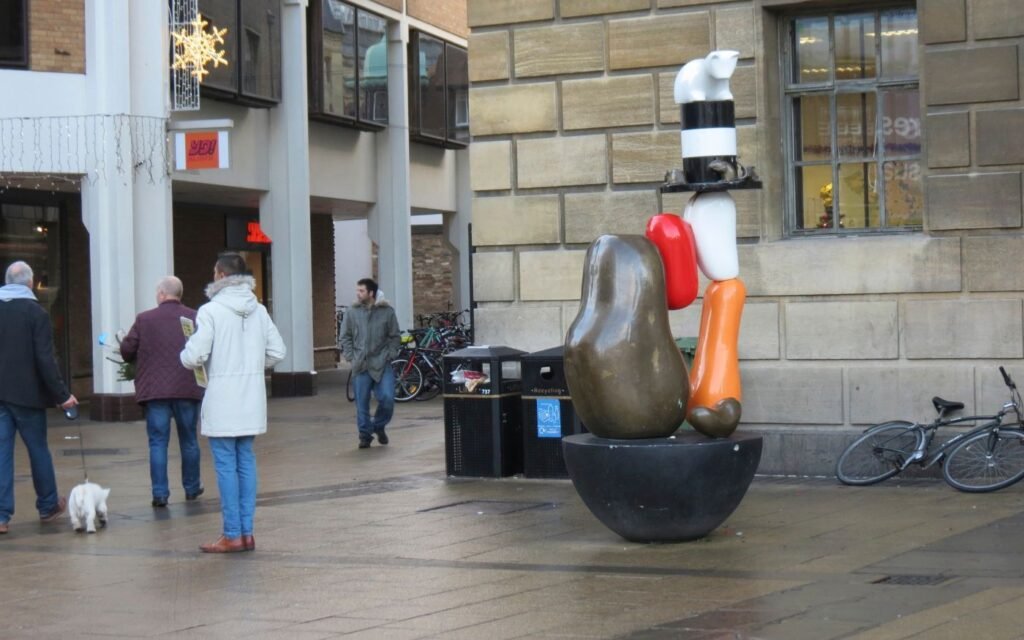
If you’re exploring Cambridge on the cheap, the Cambridge Sculpture Trail is one of the easiest ways to soak up the city’s creativity without spending a penny.
There are four different self-guided trails to choose from. During our visit we did Trail 2 which begins at the market square in the centre of historic Cambridge however they all look great! We just downloaded the sculpture trails app which gave a simple map which shows a route, direction and distance. You can find all the details here.
Churches
Great St Mary’s (The University Church)
Even if you don’t climb the tower (which has a small fee), the church itself is free to enter and full of history. This is where Cambridge University held its earliest meetings and the interior still carries that sense of academic tradition.
The church’s interior is elegant but we didn’t find it overwhelming. You’ll find memorials to notable Cambridge figures, an impressive organ and little architectural details that reward slow wandering.
Tip: If you’re exploring early in the morning, the church is often beautifully quiet. And even if you skip the tower climb, the exterior alone — especially the grand west door and soaring tower makes a lovely photo stop.
Located in the heart of Cambridge at Senate House Hill, between Market Square and the University Senate House, the church is open from Monday-Saturday from 9am-5pm. The tower and shop are open from 10am-5pm.
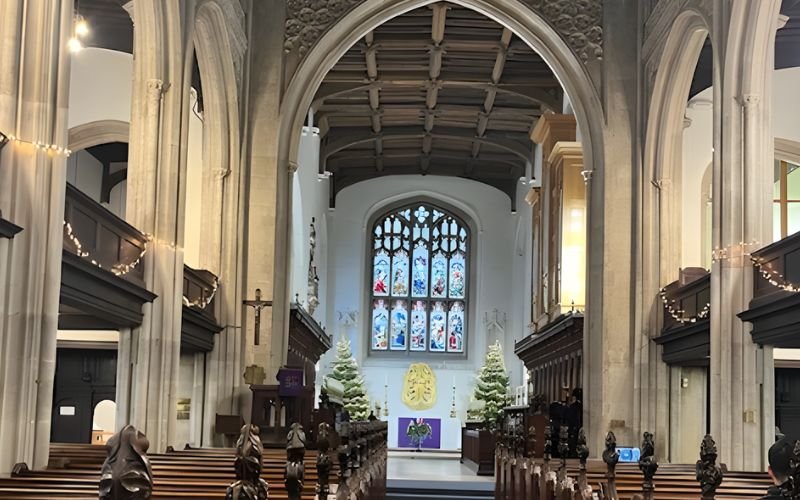
St Bene’t’s Church
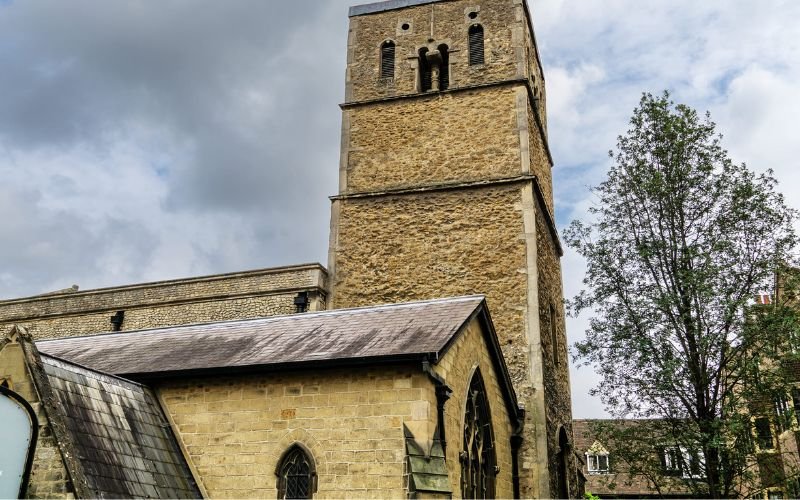
Tucked just off Bene’t Street, it’s easy to wander past St Bene’t’s Church without realising you’re looking at the oldest surviving building in Cambridge. Step a little closer though, and its history begins to unfold in the weathered stone and the unmistakable Anglo‑Saxon tower that has stood here since the 11th century.
We found the inside to be much smaller than many of Cambridge’s grander religious buildings, but that’s part of its charm. The thick stone walls, simple wooden pews and soft light filtering through the stained glass create an atmosphere that’s peaceful.
We were fascinated at how much of its original character remains. The tower, with its narrow windows and distinctive long‑and‑short stonework, is a rare example of Anglo‑Saxon architecture in the region.
Tip: Because it’s so central, St Bene’t’s pairs perfectly with a visit to the nearby Corpus Clock or a wander through the city’s market square.
You can find St Bene’t’s Church is located on Bene’t Street in the city centre, near Corpus Christi College and is open daily from 9am-6pm.
Round Church
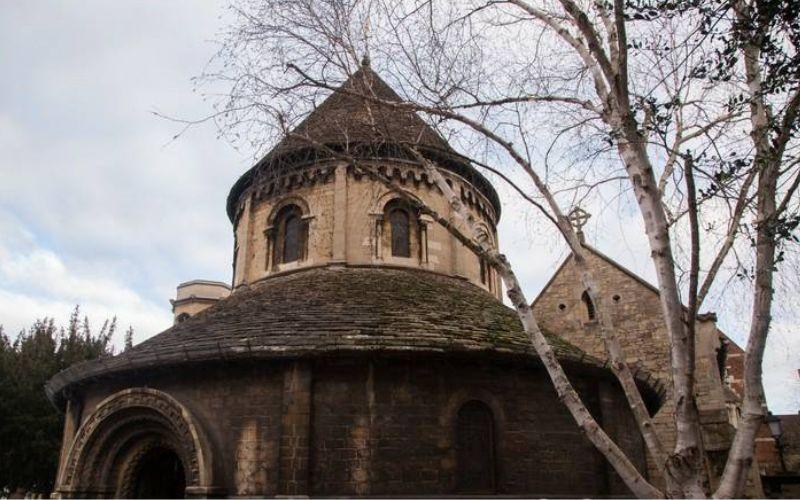
The Round Church is one of only four round churches in England, and its unusual shape makes it instantly recognisable. While the interior has an entry fee, admiring the exterior is completely free and well worth the stop. Its stone arches and circular design make it one of the most photographed buildings in Cambridge.
You can find the Round Church situated at the junction of Bridge Street and Round Church Street.
Markets
Cambridge Market Square
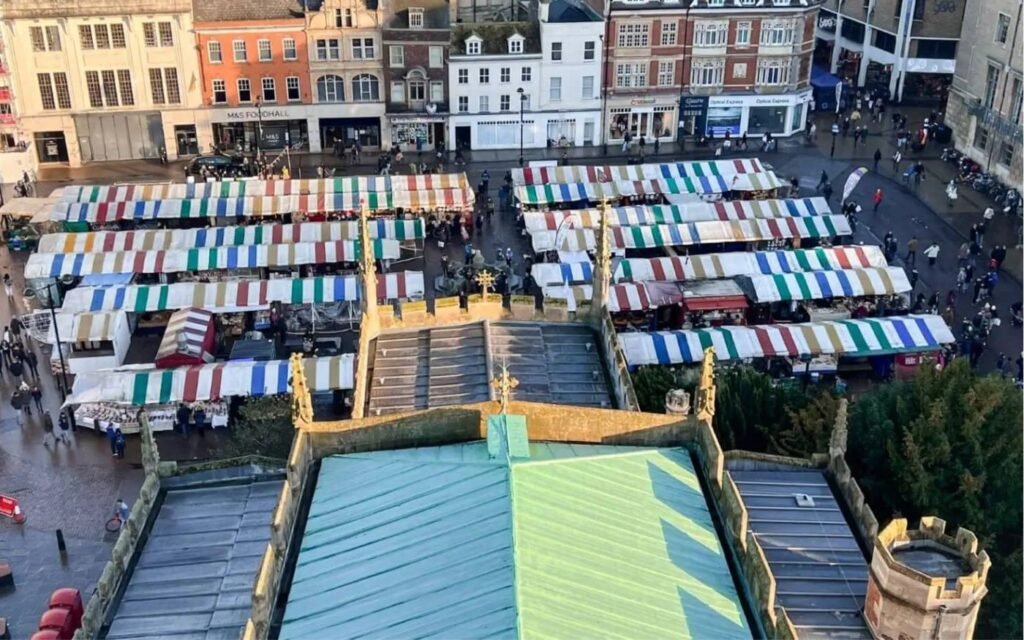
Right in the heart of the city, this is the market we stumbled into first and we loved having a look around. It’s fantastic for a lazy browse with stalls selling handmade jewellery and crafts, second-hand books and vinyl, local produce and affordable street food.
Even if you don’t buy anything, the people watching alone is worth the visit. You can find the market at Market Hill, near King’s College and is open 7 days a week from 10am-4pm.
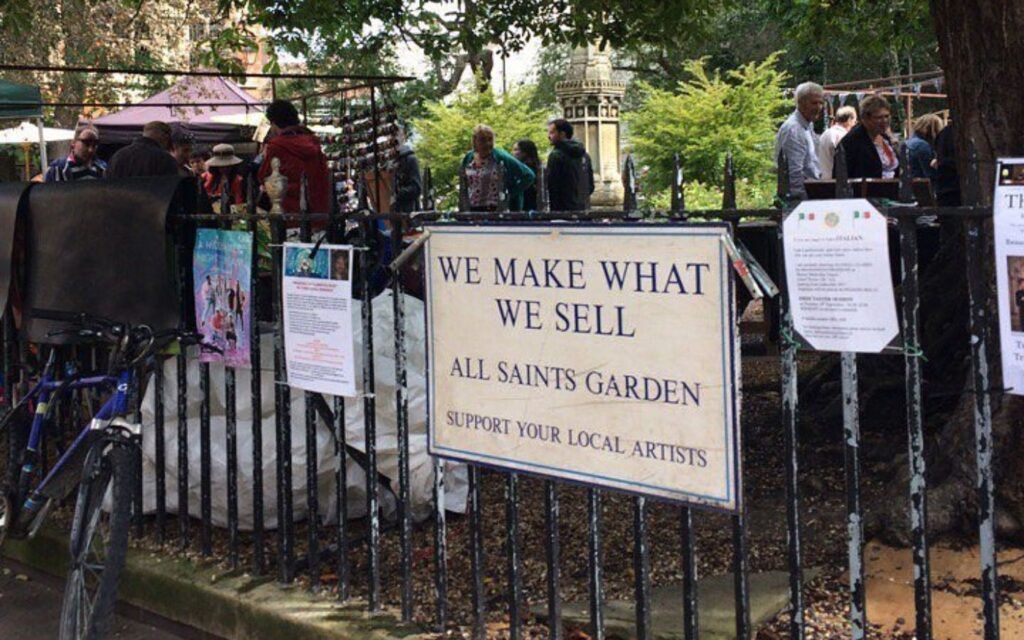
All Saints Garden & Craft Market
Just opposite Trinity College, this weekend market is a haven for local artists. Even if you’re not buying, it’s inspiring to wander through and check out original prints and paintings, handmade ceramics and unique gifts you won’t see anywhere else.
It’s free to browse, and we enjoyed chatting with the artists, giving a real sense of Cambridge’s creative community. The market is open on Saturday from 10am-4pm.
Ely Farmer’s Market
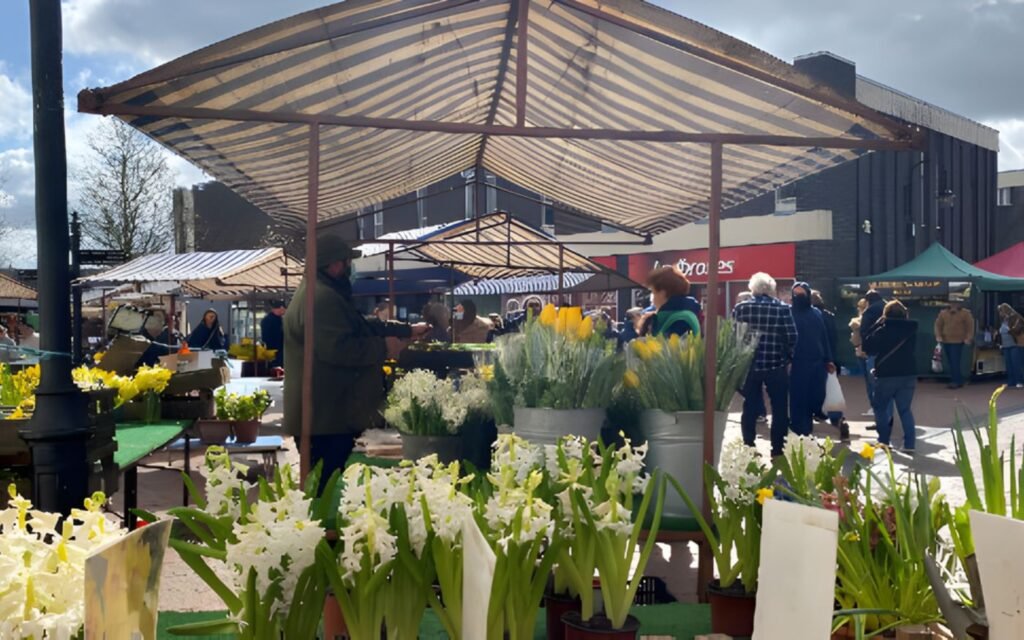
If you want a more local vibe, head to the Ely Farmers Market to find stalls selling seasonal fruit and veg, fresh bread and pastries and budget‑friendly snacks for picnics along the River Cam.
It is smaller and calmer than the city’s Market Square and felt like a peek into everyday Cambridge life.
They run on the second and fourth Saturday of the month and are open from 8:30am-2:30pm. We caught a local train from Cambridge city centre to the market which only took about 15 minutes and the markets are only a short stroll from the Ely train station. You can check out the train timetable here.
Well, there you have it, proof that Cambridge is full of charm, history, and little surprises that you can enjoy for free. Whether you’re wandering along the river, exploring markets, or spotting public art, there is something for everyone
If you’re travelling through England, check out our post on free things to do in London and our free London museum guide.