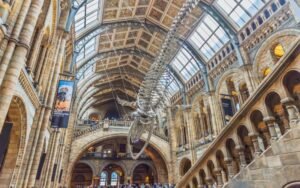
Madrid’s Old Town — El Madrid de los Austrias — is a maze of grand plazas, royal avenues, medieval corners, literary streets, and irresistible tapas stops.
This Complete Madrid Old Town Self‑Guided Walking Tour is designed to feel like a story you walk through: immersive, atmospheric, and rich with history. It covers the essential landmarks of the historic center while keeping the route intuitive and enjoyable.
This post may contain affiliate links. If you make a purchase, we may earn a small commission at no extra cost to you. Our goal is to provide valuable and helpful content, and any commissions help us to mantain this site.
To help you explore, we have included a walking map below. It highlights the full route and key stops along the way.
Contents
ToggleGet your Madrid Essentials!
- Find cheap flights to Madrid
- Find hotels or hostels in Madrid
- Find activites and tours for Madrid
- Compare hire car prices or train tickets
- Get an eSIM for Madrid. Use our code ‘TBTravellers to receive 5% OFF any eSIM!
Turn‑by‑Turn Map (Old Town Focus)
Puerta del Sol
Walk Calle Arenal → Plaza Mayor
Exit via Arco de Cuchilleros → Mercado de San Miguel
Continue west → Royal Palace & Almudena Cathedral
Walk east on Calle Mayor → Plaza de la Villa
Continue east → Barrio de las Letras
Walk southeast → Museo del Prado
Enter Retiro Park → finish at Crystal Palace or the lake
What This Self-Guided Tour Covers
This walk blends Old Town history, classic architecture, and local culture into one seamless route. You’ll explore:
Madrid’s most iconic squares
The Royal Palace and cathedral
Medieval streets and hidden courtyards
The Literary Quarter
The Prado area
Retiro Park as a relaxing finale
Distance: ~6 km Time: 2–3 hours Difficulty: Easy
1. Puerta del Sol – The Official Start of Spain
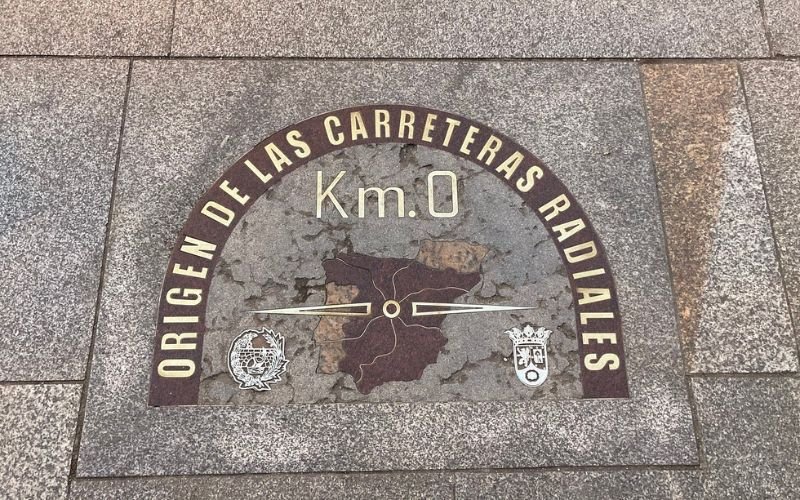
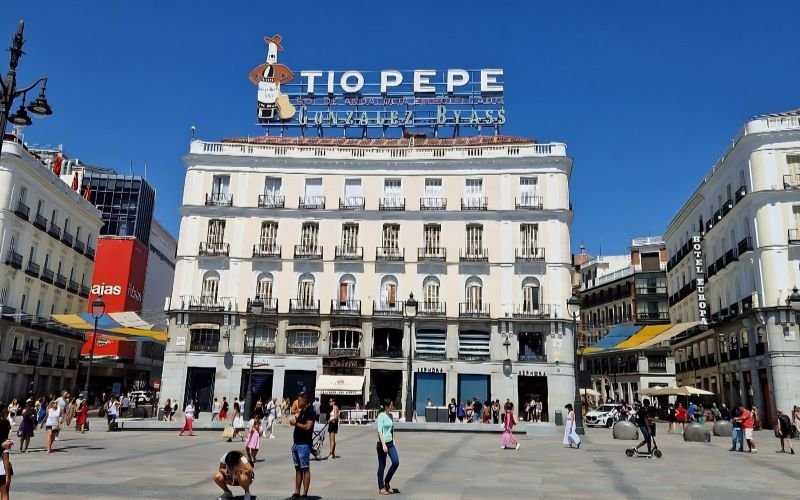
Begin your Old Town journey at Puerta del Sol, the symbolic heart of Spain and one of Madrid’s most energetic public squares. It’s the point from which the country’s radial roads spread outward, all anchored by the iconic Kilómetro Cero plaque set into the pavement.
What to look for as you explore
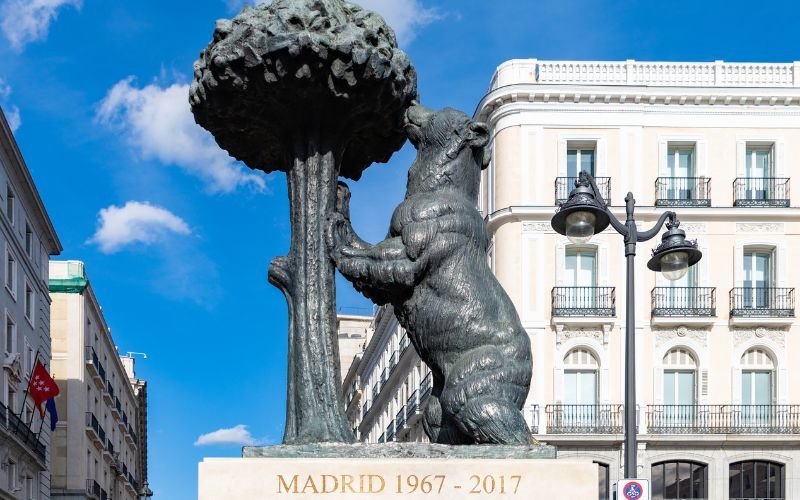
The Bear and the Strawberry Tree — Madrid’s beloved emblem, captured in bronze and represents the heraldic arms of the City of Madrid.
The Tío Pepe sign — A glowing piece of vintage advertising that has become a cultural landmark in its own right.
Casa de Correos — An 18th‑century building with a clock tower famous for marking Spain’s New Year’s Eve countdown.
From here, stroll west along Calle Arenal, a lively pedestrian avenue lined with cafés, bakeries, and street performers. The atmosphere shifts from grand plaza energy to a more intimate, bustling corridor — perfect for people‑watching or grabbing a quick pastry as you continue deeper into Old Town.
2. Plaza Mayor – The Heart of Old Madrid
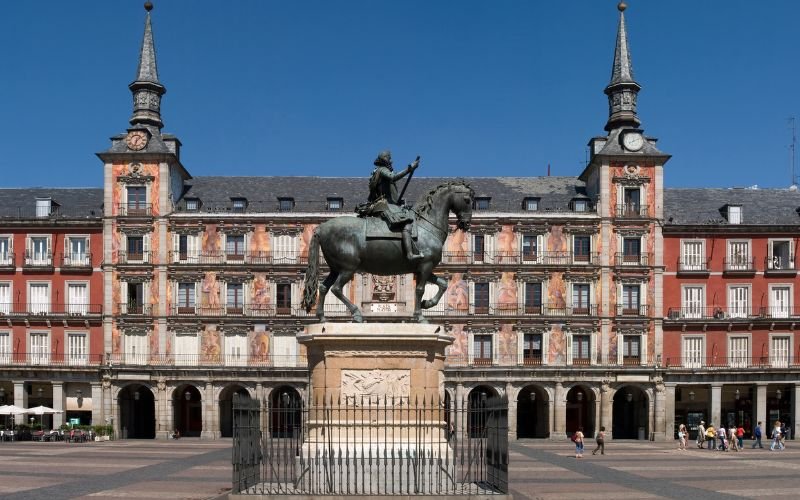
Step through one of the vaulted archways and you enter Plaza Mayor, Madrid’s grand stage — a perfectly proportioned rectangle framed by uniform red façades and elegant arcades. Built in the early 1600s under the Habsburgs, it has witnessed everything from royal coronations to bustling markets, religious ceremonies, public celebrations, and even the occasional bullfight.
Why it matters
Architectural soul of Old Madrid — Plaza Mayor embodies the city’s Habsburg identity: symmetrical, enclosed, atmospheric, and designed for civic life.
A living historical stage — Every layer of Madrid’s past has unfolded here, making it one of the most storied squares in Europe.
Perfect for lingering — Whether you sit under the arcades with a coffee or wander across the cobblestones, the space invites you to slow down and absorb its rhythm.
Your exit: Arco de Cuchilleros
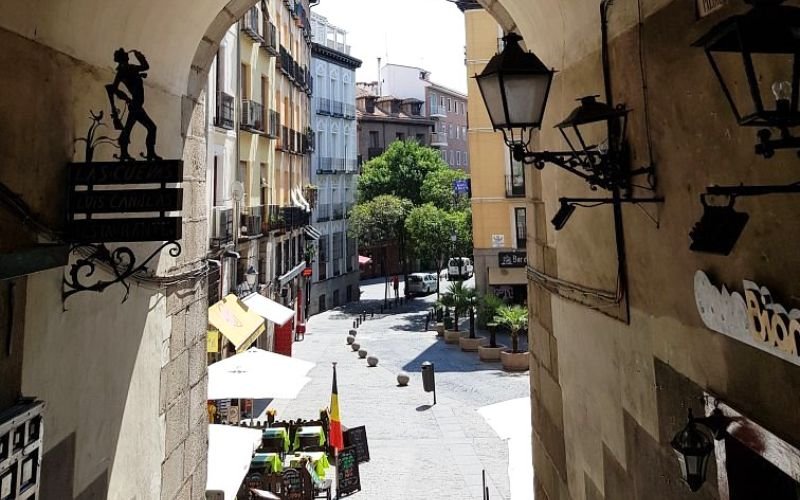
Leave the square through the dramatic Arco de Cuchilleros, the most striking of Plaza Mayor’s nine entrances. Its steep descent and towering façade create a cinematic transition from the orderly geometry of the plaza to the winding medieval streets below.
3. Mercado de San Miguel — Tapas in a Historic Market
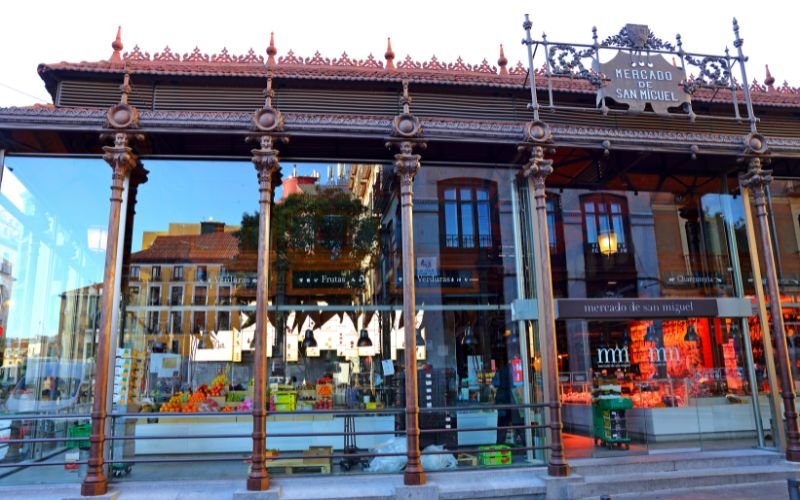
Just outside Plaza Mayor, the Mercado de San Miguel unfolds in a gleaming shell of iron and glass — a 1916 architectural gem reborn as one of Madrid’s most irresistible gourmet halls. Inside, the air buzzes with conversation, clinking glasses, and the aroma of sizzling tapas.
Dozens of specialty stalls line the interior, each devoted to a single craft: cured meats, seafood, pastries, pintxos, wine, and more. It’s the perfect place to graze your way through the flavors of Spain without committing to a full sit‑down meal.
What to try
Jamón ibérico — Silky, nutty, melt‑in‑your‑mouth ham carved to order.
Croquetas — Creamy béchamel fritters with fillings like jamón, mushroom, or cod.
Gildas — A Basque classic
Continue west toward the palace.

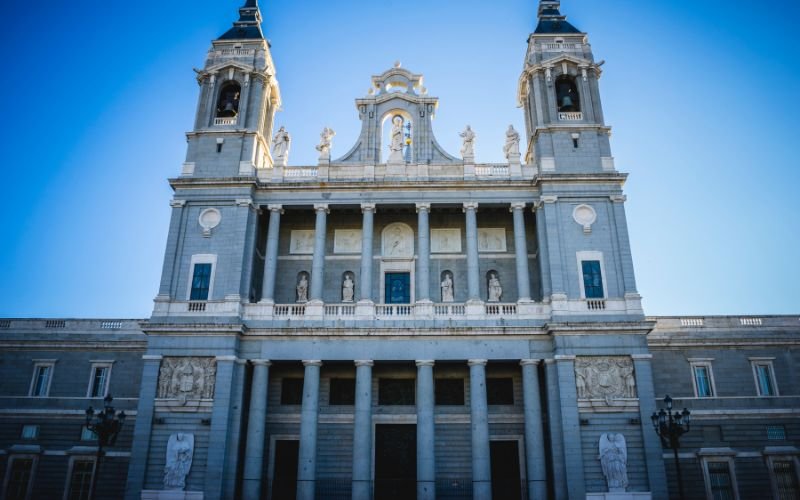
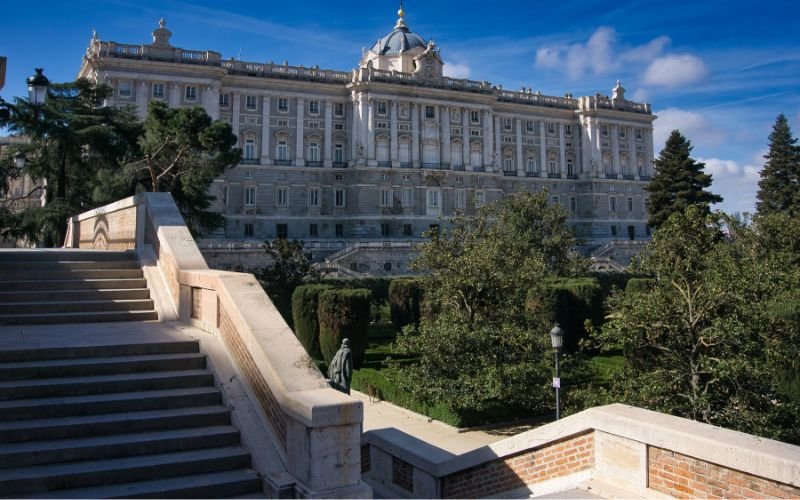
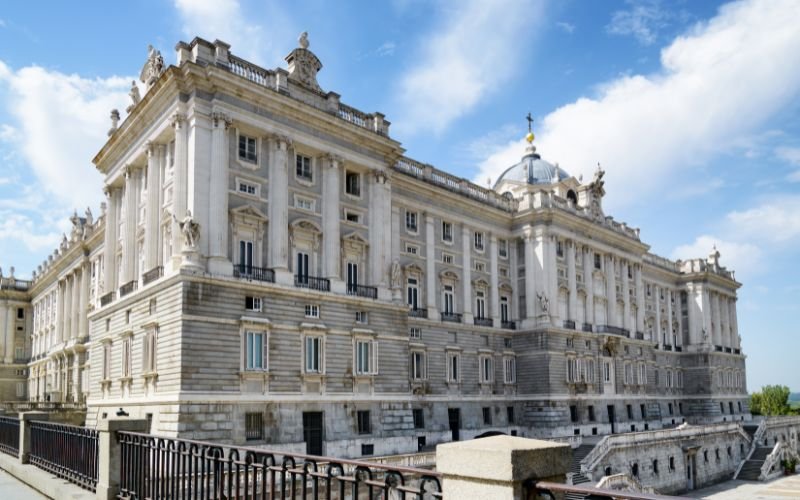
4. Royal Palace & Almudena Cathedral — Old Town’s Regal Edge
Best moment: Stand on the cathedral steps and look toward the palace gardens — a classic Madrid view.
Walk east along Calle Mayor.
5. Plaza de la Villa — A Medieval Time Capsule
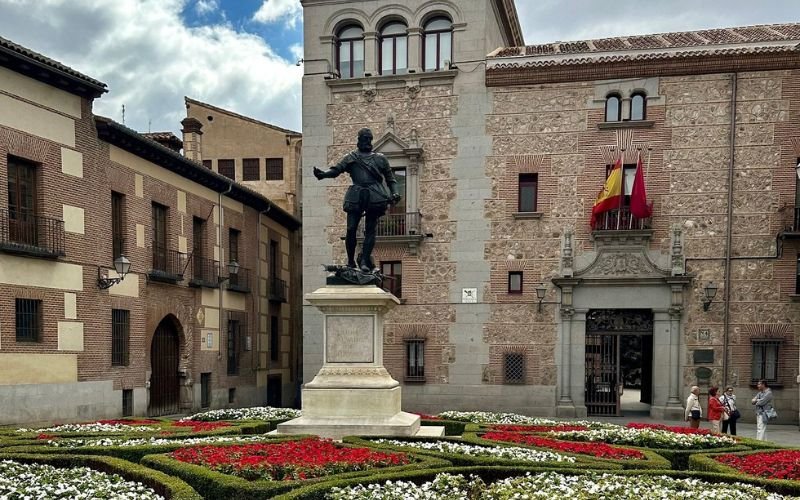
This quiet square is one of the oldest in Madrid. Plaza de la Villa preserves the city’s medieval character with its stone towers and narrow lanes.
Highlights
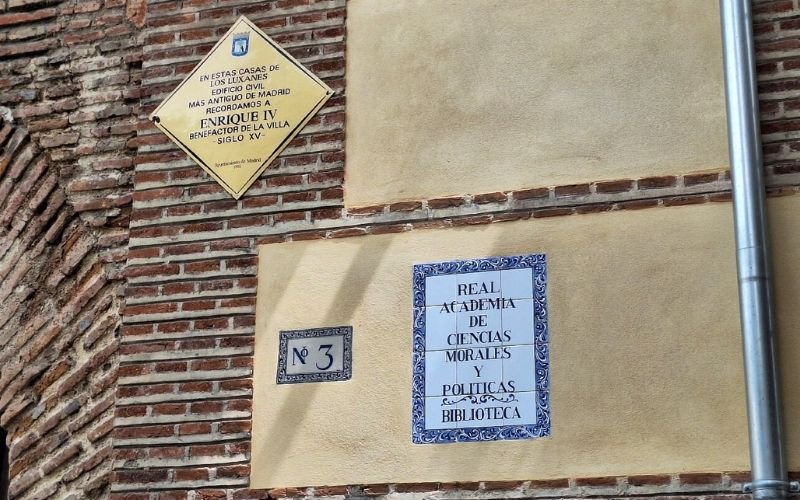
Torre de los Lujanes — A 15th‑century Gothic‑Mudéjar tower and one of the oldest surviving buildings in the city. Legend says King Francis I of France was held here after the Battle of Pavia.
Casa de la Villa — Madrid’s former city hall, a handsome 17th‑century Baroque structure with twin towers and a stately courtyard. It served as the seat of municipal power for more than 300 years.
From here, follow the narrow streets eastward as the medieval city gives way to the bohemian charm of the Literary Quarter, where writers, cafés, and centuries of stories spill into the streets.
6. Barrio de las Letras — Old Town’s Literary Soul
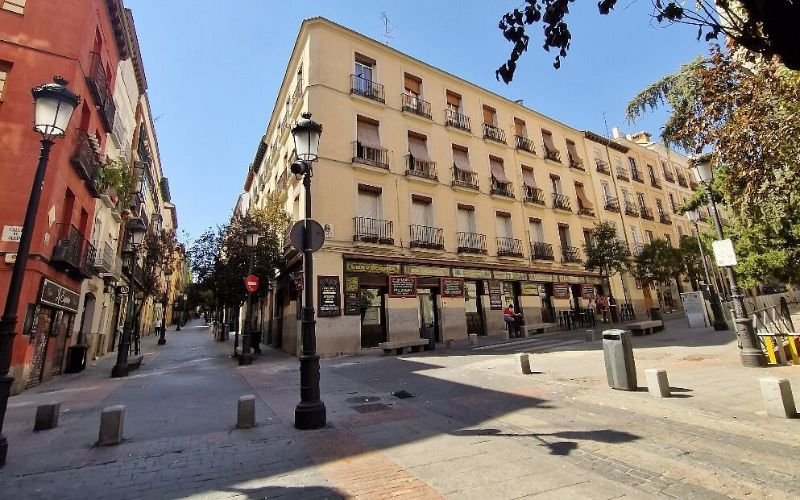
The Barrio de las Letras — Madrid’s Literary Quarter — is where the city’s Golden Age still feels alive in the streets. In the 16th and 17th centuries, this neighborhood was home to Spain’s greatest writers, a dense creative ecosystem where Cervantes, Lope de Vega, Quevedo, and Góngora lived, feuded, drank, and wrote.
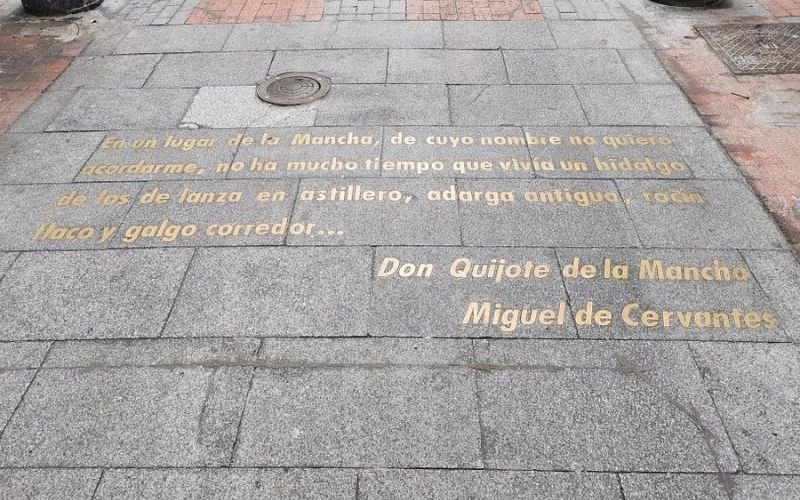
Today, their words are literally underfoot: bronze‑inlaid quotes run along the pavement of Calle Huertas, turning an ordinary stroll into a walking anthology.
What to enjoy
Calle Huertas — A lively, musical street lined with tapas bars, terraces, and engraved literary quotes. It’s the neighborhood’s social spine.
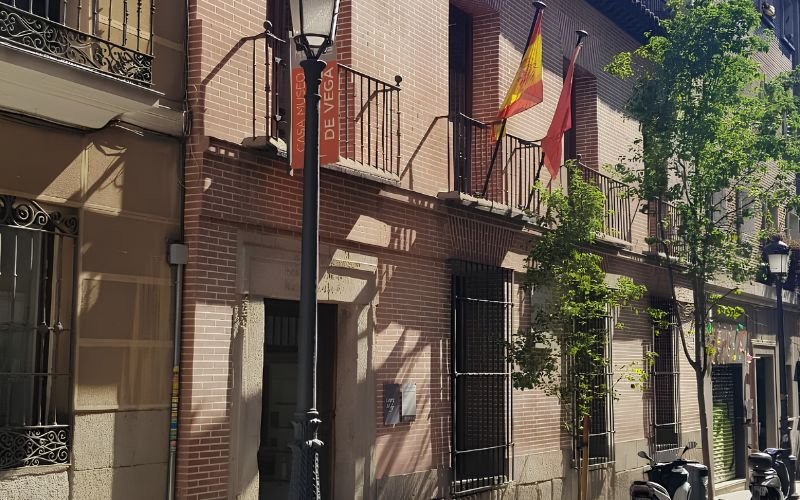
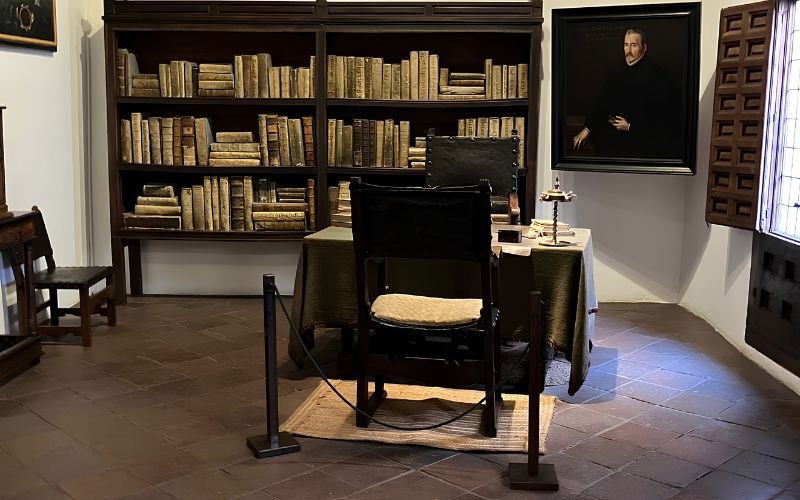
Lope de Vega’s house museum — A beautifully preserved 17th‑century home where the playwright lived and worked. A rare chance to step directly into the Golden Age.
Wine bars and indie bookstores — Cozy, creative spaces that keep the neighborhood’s bohemian spirit alive. Perfect for a glass of Rioja and a browse.
As you continue southeast, the streets open toward Madrid’s cultural axis. The literary cafés give way to elegant boulevards, and soon you’re approaching the Prado Museum, the crown jewel of Spain’s art heritage.
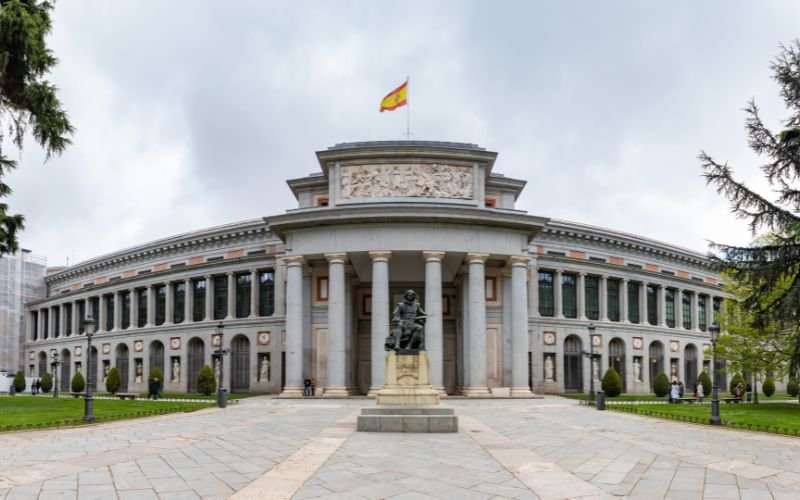
7. Museo del Prado — Old Town’s Artistic Gateway
The Prado Museum marks a graceful transition from Old Madrid into the city’s grand cultural boulevard. Though technically just beyond the historic core, it feels like a natural continuation of the walk — a place where the city’s artistic heritage takes center stage.
Inside, the collection is astonishing: Velázquez’s Las Meninas, Goya’s Black Paintings, El Greco’s luminous saints, and Bosch’s surreal Garden of Earthly Delights. Few museums in the world offer such a concentrated sweep of European art history.
Tip
Free entry — The museum opens its doors at no cost during the final two hours of the day, a perfect window for a focused visit.
Leaving the Prado, continue east into Retiro Park, Madrid’s great green refuge. The shift is immediate: from marble halls to leafy promenades, from masterpieces to murmuring fountains. Retiro is where the city exhales — a place of rowboats, rose gardens, and long, sun‑dappled paths.
8. Retiro Park — A Peaceful Finish to Your Old Town Walk
Don’t miss
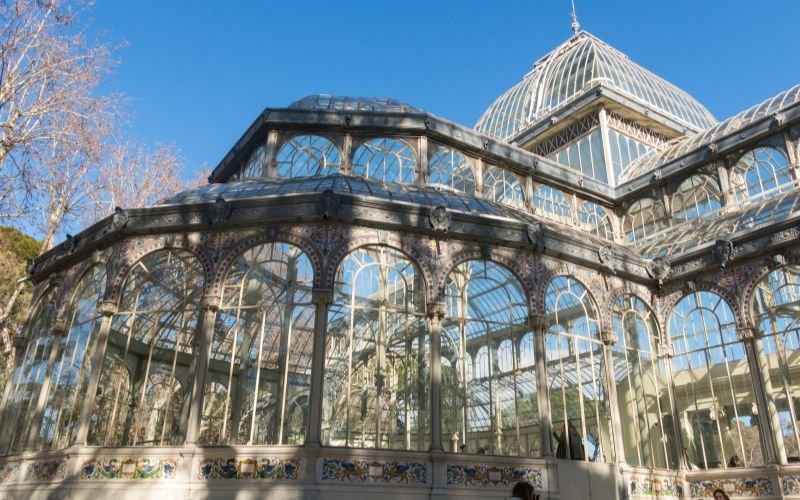
The Crystal Palace — A luminous glass pavilion overlooking a small lake, often hosting contemporary art installations. Its greenhouse‑like structure makes it one of the most photogenic spots in Madrid.
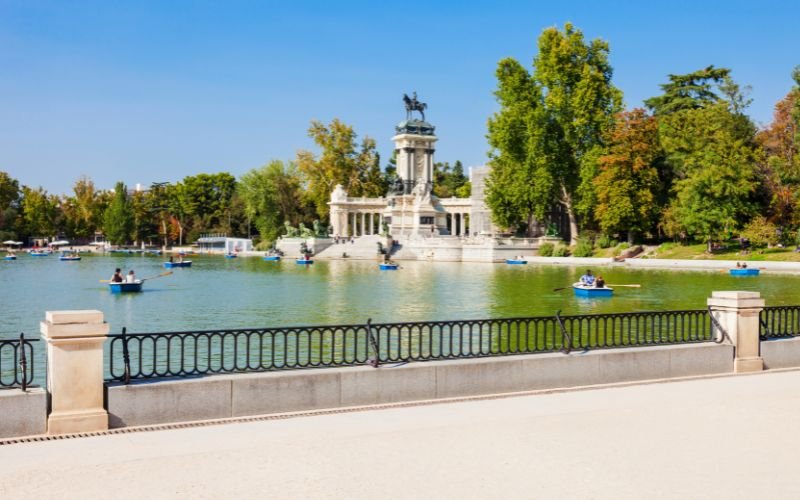
Retiro Lake — The park’s centerpiece, framed by the grand Alfonso XII monument. Rent a rowboat or simply watch the water sparkle in the afternoon light.
The rose garden — Best in spring, when hundreds of varieties bloom in a riot of color and scent.
That’s a wrap on our complete Madrid Old Town walking tour – thanks for coming along. If you’re hungry for more ways to enjoy the city, don’t miss our round up of free things to do in Madrid or our guide to the best free viewpoints in Madrid.